
At a Glance
Lot size matters in Northwest Hills, but usable lot space often matters more than the raw number of square feet.
A smaller, relatively flat lot can sometimes be more valuable to a buyer than a larger lot with steep slopes, difficult access, or limited usable yard.
Views, privacy, mature trees, and elevation can make a less usable lot highly desirable — especially when the terrain creates something buyers cannot easily recreate.
Pool potential, outdoor living, play space, parking, additions, and landscaping all influence how buyers perceive lot usability.
The best way to evaluate a Northwest Hills lot is to ask: “What can I realistically do with this property?”
Why does lot usability matter so much in Northwest Hills?
When buyers compare homes, the listing may tell them that one property has a 10,000-square-foot lot and another has 14,000 square feet.
At first glance, the larger lot appears to have more value.
But that's only part of the story.
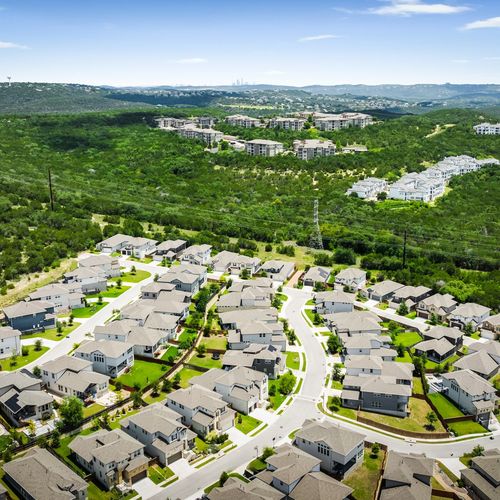
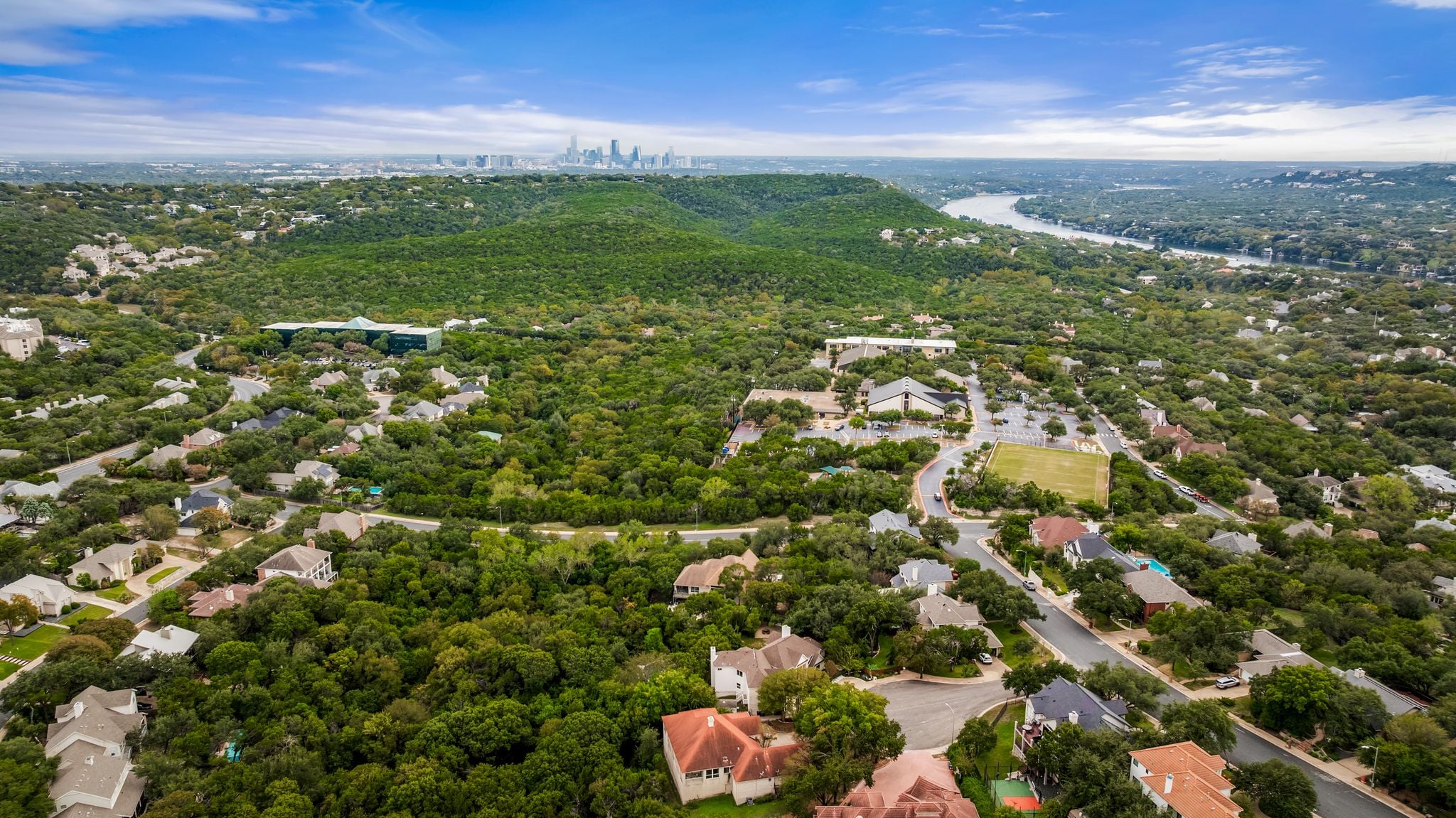
Northwest Hills has rolling terrain, ridgelines, mature trees, irregular lot shapes, and plenty of properties where the land changes elevation significantly. Local buyer guidance specifically recommends evaluating usable yard space, slope, tree coverage, views, and drainage rather than relying on lot size alone.
A 14,000-square-foot lot may sound impressive.
But if a large portion is too steep for a pool, lawn, play area, patio, or addition, the buyer may not experience it as a 14,000-square-foot property.
Meanwhile, a smaller lot might have a wide, relatively flat backyard that can actually be used every day.
That's why I think of lot usability as the practical value of the land.
What exactly makes a lot usable?
Usability depends on what you want to do with the property.
For one buyer, a usable lot means a large flat backyard for children.
For another, it means enough space for a pool and outdoor kitchen.
Someone else may care more about a private wooded setting and never want a large lawn.
So I would evaluate a lot based on several questions:
How much of the land is relatively level?
How much is accessible?
Can you comfortably walk around the property?
Is there room for outdoor furniture?
Is a pool realistic?
Is there room for children or pets?
Could you add an outdoor kitchen or covered patio?
Is there potential for an addition?
How much maintenance will the landscape require?
Does the terrain create privacy or views that compensate for lost yard space?
A lot doesn't have to be flat to be valuable.
It simply needs to work for the way you intend to live.
Is a larger lot always worth more?
No.
This is one of the biggest mistakes buyers and sellers can make.
Lot size absolutely matters. In fact, some current Northwest Hills market analysis reports substantial premiums for larger parcels compared with smaller ones. But those comparisons are most meaningful when the lots are otherwise similar.
Imagine two properties.
Property A
14,000-square-foot lot
Significant slope
Steep driveway
Small usable backyard
Mature trees
Excellent privacy
Property B
10,000-square-foot lot
Mostly level backyard
Easy garage access
Room for a pool
Large outdoor entertaining area
Less privacy
Which is worth more?
There isn't enough information to answer.
Some buyers will choose A immediately because the privacy and setting are exceptional.
Others will choose B because they actually want to use the backyard.
That's the point.
Raw acreage doesn't tell you how the property lives.
How does a flat yard affect value?
For many buyers, a flat or mostly flat yard is extremely useful.
It can make it easier to create:
A pool
Lawn
Playground
Outdoor kitchen
Patio
Garden
Dog run
Fire pit
Sports area
Entertaining space
And that's particularly relevant in Northwest Hills because usable flat space can be harder to find on some hillside properties. Local neighborhood guidance specifically notes that flatter lots can be easier for lawns, pools, play, and remodeling, while sloped lots trade some usability for views and privacy.
But there is a catch.
A completely flat lot may not provide the elevation that creates a great view.
So buyers are often choosing between two different types of value.
Usability versus elevation.
The best properties sometimes provide both.
Can a sloped lot still be highly valuable?
Absolutely.
A sloped lot can provide things a flat lot cannot.
For example:
Hill Country views
Treetop views
Privacy
Elevation
Dramatic architecture
Multiple outdoor levels
Walkout living spaces
Natural separation from neighboring homes
Northwest Hills' terrain is part of what creates many of its most desirable views and settings. Local market sources consistently identify views and elevation as meaningful value drivers.
The question isn't whether the lot is sloped.
The question is whether the slope creates enough value to justify the loss of flat, usable space.
A steep backyard with an incredible view can be much more desirable than a flat backyard looking directly into a neighboring house.
How does pool potential affect lot usability?
This is a big one.
If a buyer wants a pool, lot usability suddenly becomes much more specific.
You aren't simply asking:
“Is there a backyard?”
You're asking:
“Can a pool actually fit here?”
And then:
Where would the pool go?
How much decking would remain?
Where would equipment go?
How would construction equipment access the site?
Would retaining walls be necessary?
How would drainage be handled?
Would mature trees limit placement?
Is there enough usable space around the pool?
A backyard can look large in photographs and still have surprisingly little practical pool potential.
Conversely, a smaller but well-shaped lot may be perfect.
That's why buyers considering a pool should evaluate the actual site rather than relying on the listing's lot dimensions.
How does lot shape affect usability?
Lot shape can be almost as important as lot size.
Consider the difference between:
10,000 square feet in a relatively wide rectangle
and
10,000 square feet in a narrow or irregular shape.
The two lots have the same area.
But they may have completely different possibilities.
A wide backyard might accommodate a pool, patio, lawn, and outdoor kitchen.
A narrow backyard may leave you with very few practical options.
Look at:
Width
Depth
Side setbacks
Rear setbacks
Building footprint
Easements
Existing structures
Tree locations
Utility locations
This becomes especially important if you're considering an addition.
The question isn't just whether you own enough land.
It's whether the land is positioned where you need it.
How do mature trees affect lot usability?
Trees are one of the great Northwest Hills tradeoffs.
Mature trees can add enormous appeal.
They provide:
Shade
Privacy
Character
Beauty
A sense of permanence
But they can also limit what you can do with a lot.
A mature tree might affect:
Pool placement
Additions
Landscaping
Driveway expansion
Outdoor structures
Sunlight
Roof and gutter maintenance
So I wouldn't say trees automatically increase or decrease usability.
I'd ask whether the trees are working with the property.
A backyard surrounded by beautiful mature trees can be far more valuable than a barren yard.
But if several large trees occupy the only flat area where a buyer could reasonably build a pool or addition, they may reduce flexibility.
Can privacy make up for limited usable yard?
Sometimes.
This is where the value equation gets interesting.
Imagine a hillside property with only a modest amount of flat yard.
It might still have:
No direct neighbors behind it
Mature trees
A canyon or greenbelt setting
An elevated patio
Beautiful views
That could be highly desirable.
A buyer may happily sacrifice some lawn in exchange for feeling completely removed from neighboring homes.
Local Northwest Hills guidance identifies privacy, views, and mature tree canopy as important lot characteristics, even when they come with tradeoffs in yard usability.
This is why there isn't a single definition of the “perfect” lot.
The best lot is the one that delivers the features a particular buyer values.
How does outdoor living affect lot usability?
Outdoor living has become a major part of how buyers think about a property.
But outdoor living doesn't necessarily require a huge flat lawn.
A well-designed hillside property might have:
A covered patio
Outdoor kitchen
Pool
Fire pit
Multiple terraces
Deck
Balcony
View-oriented seating
The total yard may not be enormous.
But the usable spaces may be excellent.
That's an important distinction.
A small amount of well-designed outdoor space can be more valuable than a large amount of awkward outdoor space.
Local Northwest Hills buyer guidance similarly recommends prioritizing usable flat yard or deck space connected to the main living area for buyers who value outdoor living.
Does lot usability affect remodeling potential?
Very much.
If you're buying an older Northwest Hills home with plans to remodel, don't just evaluate the existing house.
Evaluate the land around it.
Ask:
Can the house expand?
Where would an addition go?
Is there room to move walls outward?
Could you add a garage?
Could you build a pool?
Is there room for an accessory structure?
Would slope make construction difficult?
Are there mature trees in the way?
Are there easements or setbacks?
Would drainage need to be redesigned?
A house can have a wonderful floor plan for today's needs but limited ability to change tomorrow.
Another house might be dated but sit on a lot with tremendous flexibility.
That second property could have more long-term potential.
How does driveway usability fit into the equation?
The lot doesn't stop being important at the front door.
A steep driveway can affect how usable the property feels every day.
Consider:
How easy is it to enter?
How easy is it to leave?
Is there guest parking?
Is there room to turn around?
Does water run down the driveway?
Is the garage easy to access?
Would the driveway work for you long term?
In Northwest Hills, elevation and driveway access are closely connected. Local neighborhood guidance specifically recommends evaluating driveway slope along with the lot and terrain.
A beautiful lot with an inconvenient driveway may still be worth buying.
But the inconvenience should be part of the equation.
Does lot usability affect resale value?
Yes, although there isn't a universal dollar adjustment.
Buyers generally respond to properties that solve real-life problems.
A lot with:
A usable backyard
Good privacy
Strong views
A pool
Excellent outdoor living
Easy access
Mature trees
Flexible expansion potential
can attract strong interest.
But the specific combination matters.
Current Northwest Hills sales analysis shows how dramatically values can vary based on lot size, views, condition, and property type.
That's why I wouldn't tell a seller:
“Your lot is worth $X because it has X square feet.”
I'd want to understand what the lot offers relative to the homes buyers are actually comparing it with.
How should buyers compare two Northwest Hills lots?
I recommend creating a simple mental scorecard.
Lot size
How much land is there?
Usable space
How much of it can you actually use?
Slope
Is the terrain helping or limiting you?
Privacy
How exposed are you to neighbors and the street?
Views
What do you actually see from the important rooms and outdoor spaces?
Trees
Do they add beauty and shade, or limit future plans?
Pool potential
Could you realistically build the pool you want?
Outdoor living
Is there enough practical space for the way you entertain?
Access
How easy is the driveway, garage, and pedestrian access?
Future potential
Could you remodel, expand, or rebuild?
That tells you much more than comparing lot sizes on a spreadsheet.
What should sellers know about lot usability?
If you're selling a Northwest Hills home, don't simply advertise the lot size.
Explain the experience of the lot.
Instead of:
“Large 12,000-square-foot lot.”
Think:
“Private, tree-lined backyard with a level lawn and room for a pool.”
Or:
“Elevated lot with treetop views and a private outdoor living area.”
The second descriptions tell buyers why the land matters.
This is especially important when selling an older home.
A dated kitchen can be remodeled.
A bathroom can be updated.
But the right lot is much harder to recreate.
If your property has an exceptional lot, that should be part of the home's value story.
What are the biggest mistakes buyers make when evaluating lot usability?
They look only at the lot size.
More land does not automatically mean more usable land.
They assume flat is always better.
A hillside may provide a view or privacy worth far more to a particular buyer.
They don't walk the entire property.
The backyard can look completely different once you're standing on it.
They forget about future plans.
A lot may work perfectly today but become frustrating if you later want a pool or addition.
They ignore drainage.
Usable land isn't very useful if water consistently creates problems.
They focus only on the backyard.
Driveways, side yards, access, trees, and the relationship between the house and street all matter.
They don't consider resale.
You don't have to buy a house based entirely on the next buyer.
But it is worth understanding which lot characteristics are broadly desirable.
So, how does lot usability affect Northwest Hills home value?
The simplest answer is:
Usable land is valuable because it gives you options.
A usable lot can give you room for a pool.
A place for children to play.
Space for dogs.
An outdoor kitchen.
A garden.
A future addition.
Better parking.
Or simply a backyard that you actually enjoy using.
But usability isn't just about flat ground.
In Northwest Hills, a hillside lot with a spectacular view and exceptional privacy may be far more valuable than a larger flat lot with little character.
That's why I look at the entire property.
How much land is there?
How much of it is usable?
What does the slope provide?
What does it take away?
Where does the water go?
How much privacy is there?
What can you build or change?
And what does the lot allow you to enjoy every day?
The best Northwest Hills lots aren't necessarily the biggest.
They're the ones where the land works.
Sometimes that means a flat backyard.
Sometimes it means a dramatic hillside.
Sometimes it means a private wooded setting.
And sometimes it means a combination of all three.
That's why, when you're comparing Northwest Hills homes, don't stop at the lot-size number.
Walk the land. Study the terrain. Look at the possibilities.
That's where a lot's real value starts to reveal itself.
#NorthwestHills #JamesLucas
Check out this article next