
At a Glance
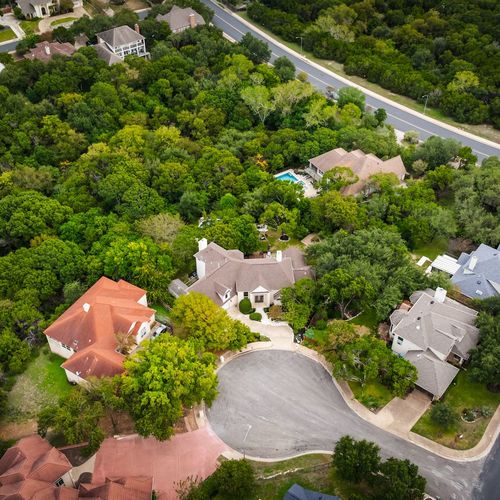
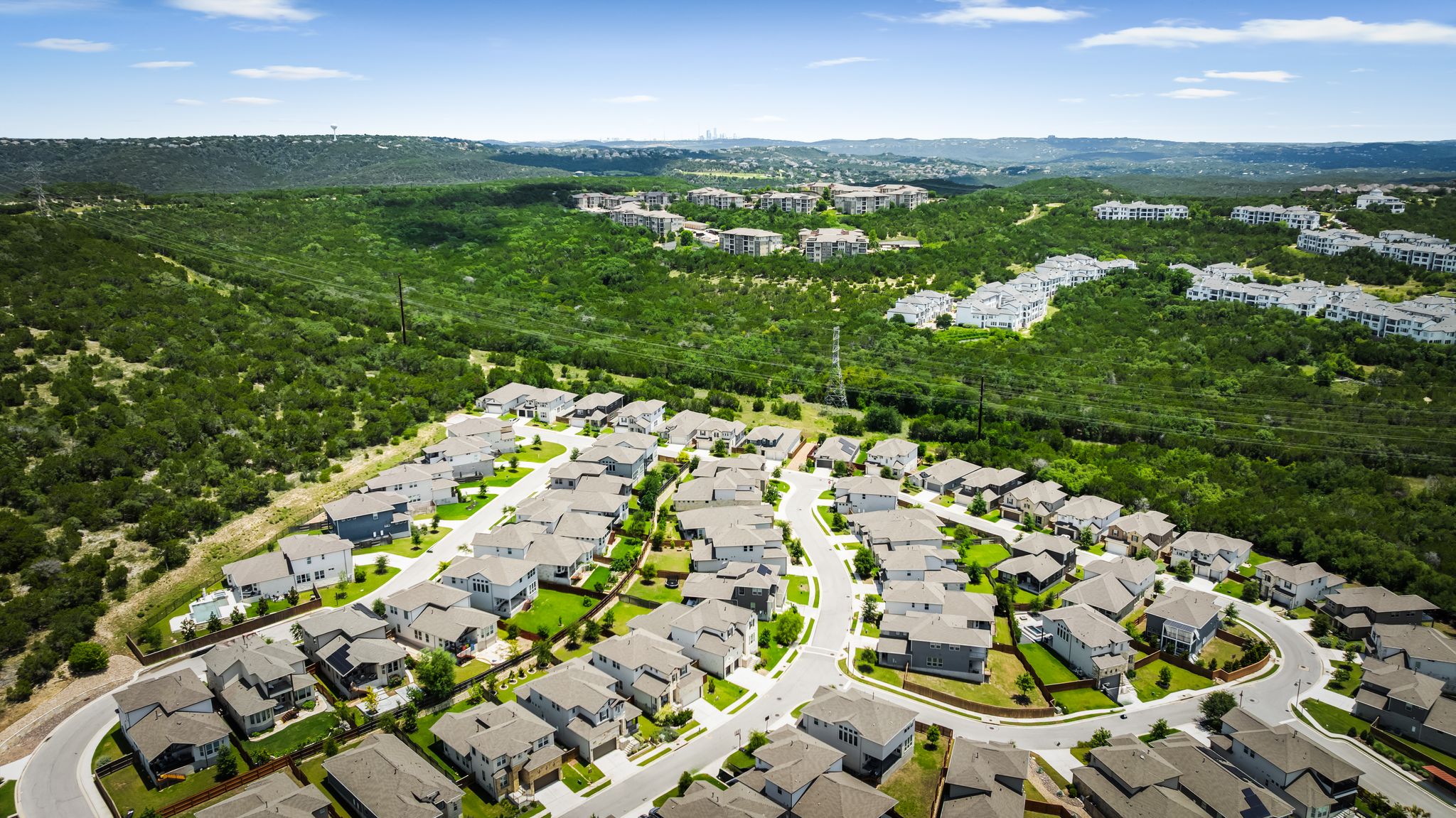
Steep driveways are fairly common in Northwest Hills because of the area's rolling terrain, ridges, and changes in elevation.
A steep driveway isn't automatically a problem. It can simply be part of owning a property that offers elevation, privacy, or views.
Buyers should evaluate driveway angle, surface condition, drainage, parking, garage access, and how the driveway feels in everyday use.
Water management is particularly important on sloped driveways because drainage problems can contribute to surface deterioration and direct water toward the home.
A steep driveway can affect resale value, but the impact depends on the property's overall package and what the lot provides in return.
Why are steep driveways common in Northwest Hills?
The name Northwest Hills isn't exactly subtle.
The neighborhood developed across rolling terrain and limestone mesas rather than a flat grid. Long, winding and sometimes steep streets are part of the area's character, and many homes are positioned on sloped or elevated lots.
That creates some of the things buyers love about Northwest Hills.
Elevation can provide views.
Hillside lots can create privacy.
Mature trees can surround the property.
Homes can have interesting architecture that follows the terrain.
But there is a tradeoff.
At some point, you have to get from the street to the garage.
That's where the driveway comes in.
A steep driveway isn't necessarily something to avoid. But it is something you should understand before buying.
How steep is too steep for a driveway?
There isn't one magic number that makes a residential driveway good or bad.
The actual experience depends on the grade, length, width, surface, drainage, curves, garage location, and surrounding terrain.
A short steep driveway may be easier to manage than a much longer driveway with a moderate but continuous slope.
The transition points matter, too.
Pay attention to where the driveway meets:
The street
The sidewalk
The garage
A flatter section
A drainage channel
A retaining wall
Austin's regulations can also impose slope-related requirements in certain contexts, particularly within designated Hill Country Roadway areas, so buyers considering substantial changes should verify the specific property's applicable requirements rather than assuming an existing driveway can simply be rebuilt or relocated.
For an existing home, though, the first test is much simpler:
Drive it yourself.
What should I look for when driving up a steep driveway?
Don't just pull into the driveway and immediately walk inside.
Take a minute.
Drive up normally.
Then drive back down.
Look at the transition between the street and driveway.
Notice whether your vehicle bottoms out.
Pay attention to how easy it is to see the street while leaving.
Then ask yourself:
Would I be comfortable doing this every day?
That's the real test.
A driveway can look dramatic in listing photos and feel completely different when you're sitting behind the wheel.
If possible, visit the property more than once.
Try it with different vehicles.
If you have a larger SUV, truck, or low-clearance car, use the vehicle you actually expect to own.
Does the driveway surface matter?
Absolutely.
A steep driveway puts more importance on the condition and traction of the surface.
Depending on the material, look for:
Cracking
Erosion
Settlement
Potholes
Loose gravel
Surface deterioration
Drainage channels
Areas where water crosses the driveway
Older Northwest Hills homes can have driveways that have been exposed to decades of weather, tree roots, soil movement, and repeated vehicle traffic.
That doesn't mean the driveway needs to be replaced.
It means you should understand its condition.
A driveway that is merely unattractive is one thing.
A driveway with significant movement, drainage problems, or deterioration is another.
Why is drainage so important on a steep driveway?
Because water is going downhill whether you planned for it or not.
A steep driveway can actually help move water away from a property when it is properly designed.
But uncontrolled runoff can also create problems.
Look for evidence of:
Water pooling
Erosion along the edges
Washed-out soil
Cracks caused by movement
Water flowing toward the garage
Water flowing toward the house
Blocked drains
Improperly directed downspouts
Recent guidance specific to Northwest Hills emphasizes drainage and driveway condition as important considerations on sloped properties.
After a significant rain, the driveway can tell you quite a bit.
Where does the water go?
Where does it collect?
Does it cross the walking path?
Does it move toward the garage?
Does it wash soil away?
You don't need to be a drainage engineer to notice that something isn't behaving properly.
Can a steep driveway cause problems for the garage?
It can.
The relationship between the driveway and garage matters.
Consider:
The angle entering the garage
Water entering the garage
Garage floor elevation
Drainage at the garage door
Vehicle clearance
Turning radius
Space for parking and unloading
Visibility when backing out
If the driveway drops or rises sharply right before the garage, the transition can matter just as much as the overall slope.
You also want to think about how water behaves during heavy rain.
A garage door at the bottom of a slope deserves a particularly close look.
How does a steep driveway affect parking?
This is one of the more practical drawbacks.
A property may technically have a two-car garage, but the driveway might offer very little convenient guest parking.
Or the slope might make street parking difficult.
Or the garage may be positioned in a way that makes backing out awkward.
Ask:
Where does everyone park?
Don't assume the garage tells the whole story.
Look at the entire approach.
If you regularly have guests, teenagers, service providers, or multiple vehicles, driveway and parking configuration can become much more important than it initially appears.
Can a steep driveway affect accessibility?
Yes.
And this is worth thinking about even if accessibility isn't currently a concern.
A steep driveway can make walking from the street to the house more difficult.
If the property also has stairs from the driveway to the front door, you've potentially created two separate challenges.
That matters for:
Older homeowners
People with mobility limitations
Young children
Deliveries
Moving furniture
Guests
Long-term ownership
If you're considering the property as a long-term or forever home, don't evaluate the driveway only for how it works today.
Ask whether it will still work for you years from now.
Does a steep driveway affect a home's value?
It can, but I wouldn't treat it as a simple deduction.
A steep driveway may be a negative for some buyers.
But what caused the steep driveway in the first place?
If it's because the home sits on an elevated lot with a beautiful view and excellent privacy, the driveway may simply be part of the tradeoff.
That property could still be more desirable than a flat property with no view.
On the other hand, a steep driveway with no meaningful benefit, poor parking, drainage issues, and difficult access could absolutely reduce buyer appeal.
That's why I look at the entire property.
A driveway doesn't exist in isolation.
It's part of the lot.
Can a steep driveway actually be an advantage?
Sometimes.
A steep driveway can reflect elevation, and elevation can create benefits.
For example, the driveway might lead to a house that sits high above the street.
That can provide:
Privacy
Views
Less street exposure
A stronger sense of separation
Interesting architectural positioning
In that situation, the driveway is essentially the price of admission for the lot.
And some buyers will happily pay it.
Others won't.
That's why the same feature can be a negative to one buyer and almost irrelevant to another.
What about landscaping around a steep driveway?
Landscaping can make a major difference.
A well-designed hillside driveway can feel intentional and attractive.
Poor landscaping can make it feel like you're navigating an obstacle course.
Look at:
Retaining walls
Trees near the driveway
Ground cover
Erosion control
Lighting
Stairs
Handrails
Drainage
Maintenance requirements
Mature trees can be beautiful, but roots near driveways and retaining structures deserve attention.
Likewise, landscaping that depends on extensive irrigation or difficult-to-access slopes may require more maintenance than a buyer expects.
Should I be concerned about retaining walls near the driveway?
Pay attention, but don't panic.
Retaining walls are common on sloped properties and can be an important part of making a hillside lot usable.
The question is whether the walls are functioning properly.
Look for:
Cracks
Leaning
Bulging
Separation
Water stains
Poor drainage
Soil movement
Previous repairs
If something looks questionable, have the appropriate professional evaluate it.
A retaining wall that has been properly designed and maintained can be perfectly fine.
A wall showing signs of movement deserves investigation.
What if I want to replace or change the driveway?
Don't assume it will be a simple paving project.
The slope, drainage, property boundaries, utilities, retaining structures, trees, easements, and applicable city requirements can all affect what is possible.
If you're considering:
Changing the driveway angle
Widening it
Relocating it
Adding parking
Building a new garage
Adding retaining walls
Improving drainage
investigate the project before assuming it will be straightforward.
This is especially important if the driveway is part of a larger renovation.
Sometimes the driveway is the easy part.
Sometimes the driveway is where the entire project gets complicated.
Should buyers avoid homes with steep driveways?
No.
That would eliminate a lot of perfectly good Northwest Hills properties.
Instead, ask whether the driveway works for you.
If you don't mind the slope and the property gives you a great view, privacy, and a beautiful lot, it may be a worthwhile trade.
If you have multiple vehicles, want easy guest parking, plan to age in place, or simply don't like steep drives, it may be a meaningful drawback.
There's no prize for forcing yourself to love a feature you don't actually like.
What should I check during a home inspection?
For a property with a noticeably steep driveway, I'd want to understand the relationship between the driveway and the rest of the site.
Pay attention to:
Drainage
Where does water go during heavy rain?
Surface condition
Are there cracks, settlement, erosion, or deterioration?
Retaining structures
Are nearby walls stable and properly draining?
Garage
Is the garage accessible and protected from runoff?
Foundation
Are there signs of movement or water-related concerns?
Trees
Could roots affect the driveway, retaining walls, or other structures?
Yard
How does the driveway connect to the rest of the property?
Future projects
Would the slope make a garage, addition, pool, or other improvement more complicated?
You don't need to turn every driveway into a forensic investigation.
But you do want to know whether you're looking at a cosmetic inconvenience or a genuine site issue.
How should sellers think about a steep driveway?
If you're selling a Northwest Hills home with a steep driveway, don't pretend it isn't there.
Buyers will notice.
Instead, put the driveway into context.
If the steep approach leads to:
A spectacular view
A private hillside setting
A beautiful elevated home
A secluded backyard
A rare lot
then those benefits should be presented clearly.
At the same time, make sure obvious maintenance issues are addressed.
A clean, well-maintained driveway with good drainage is a much easier feature for buyers to accept than a cracked, eroded driveway with questionable water management.
What are the biggest mistakes buyers make with steep driveways?
I see a few recurring ones.
They only drive it once.
One quick visit doesn't tell you much.
They ignore drainage.
The driveway looks fine when it's dry, so they don't think about what happens during a storm.
They focus on the view and forget the daily experience.
A spectacular view doesn't make parking, walking, and carrying groceries disappear.
They assume the driveway can easily be changed.
It may not be.
They don't think long term.
The driveway may be perfectly manageable today but less convenient later.
They evaluate the driveway separately from the lot.
The driveway is often a direct consequence of the terrain.
You have to understand the entire property.
So, should a steep driveway affect what you're willing to pay?
It should be part of the conversation.
But I wouldn't assign an arbitrary dollar amount to the slope.
Instead, compare the property with genuinely similar homes.
If you're comparing two Northwest Hills properties and one has a steep driveway but offers a significantly better view, privacy, or lot, the tradeoff may make sense.
If two properties are otherwise similar and one has a difficult driveway with poor drainage and limited parking, that difference may matter considerably.
This is where local comparable sales become important.
You want to know how buyers have actually responded to similar properties — not simply apply a generic adjustment for "steep driveway."
So, what should I know about steep driveways in Northwest Hills?
The biggest thing is this:
A steep driveway is not automatically a problem. It's a feature of the property that needs context.
In Northwest Hills, steep terrain is part of what creates the neighborhood's views, privacy, mature landscaping, and distinctive architecture.
But you need to understand the tradeoff.
A steep driveway can mean:
More difficult access
Less convenient parking
More attention to drainage
Greater wear on the driveway
More stairs
Potential accessibility concerns
More complicated future improvements
If the driveway leads to an exceptional lot, those tradeoffs may be completely reasonable.
If it leads to a property with no meaningful advantage, they may be harder to justify.
That's why I wouldn't ask simply:
"Is the driveway steep?"
I'd ask:
"What am I getting in exchange for the slope?"
If the answer is a great view, privacy, elevation, mature trees, and a home that was thoughtfully designed around the terrain, you may have a very good property.
If the answer is mostly inconvenience, that's something you should factor into the price.
In Northwest Hills, the land tells a lot of the story.
The driveway is one of the places where that story becomes very real.
#NorthwestHills #JamesLucas
Check out this article next