
At a Glance
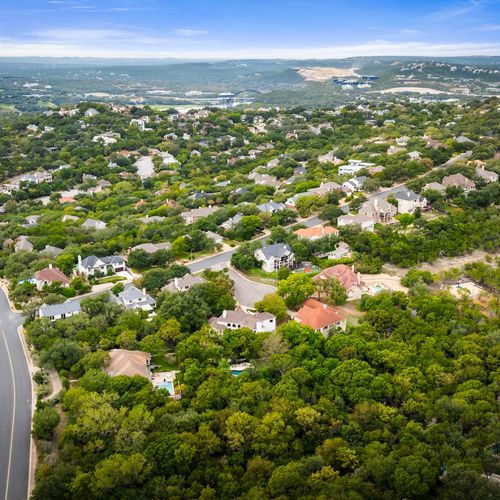
Hillside lots are one of the defining characteristics of parts of Northwest Hills and can create views, privacy, elevation, and architectural appeal.
The biggest tradeoffs are usually drainage, retaining walls, steep driveways, stairs, limited flat yard space, and potentially more complicated construction.
A hillside lot isn't automatically more or less valuable than a flat lot. The value depends on what the terrain provides and how well the property works with it.
Buyers should pay particular attention to drainage, retaining walls, foundation conditions, access, usable outdoor space, and future renovation plans.
The best hillside properties make the terrain feel intentional rather than something the homeowner has to fight every day.
Why are hillside lots so common in Northwest Hills?
One of the things that makes Northwest Hills different from flatter suburban neighborhoods is the terrain.
The area developed across rolling hills, ridges, and changes in elevation, which means homes can sit significantly higher or lower than neighboring properties. That terrain is part of what gives the neighborhood its mature, established character and creates opportunities for views and privacy. (propertysmith.com)
For some buyers, that is exactly what makes Northwest Hills appealing.
For others, it can be a headache.
And honestly, both perspectives are fair.
A hillside lot can give you something a flat lot simply can't.
It can also ask more of you.
The key is understanding the tradeoff before you buy.
What are the biggest advantages of a hillside lot?
1. Better views
This is probably the most obvious advantage.
Elevation can create sightlines over neighboring homes, mature trees, and surrounding terrain.
Depending on the property's location, that may mean:
Hill Country views
Treetop views
Canyon views
Sunset views
Downtown or skyline views
Long-distance western views
And views can be difficult to recreate.
You can renovate a kitchen.
You can add a deck.
You can replace a roof.
You can't simply manufacture another 30 feet of elevation.
That's why a hillside lot with a genuinely good view can command a premium over an otherwise similar property. Local Northwest Hills market commentary identifies elevated lots and views as meaningful value drivers. (thekeenangroup.com)
But remember: the quality of the view matters.
A small glimpse through trees isn't necessarily comparable to a broad, protected view enjoyed from the primary living areas.
2. More privacy
Elevation can create natural separation.
If your home sits above the street or neighboring properties, you may have fewer direct sightlines into your backyard and living spaces.
Mature trees can amplify that effect.
Instead of looking directly into a neighbor's windows, you might be looking over treetops or across a canyon.
For buyers who value privacy, that can be a major advantage.
And unlike a privacy fence, natural elevation and mature landscaping can feel much less artificial.
3. More interesting architecture
Hillside lots can create opportunities for home designs that simply wouldn't make sense on flat land.
You may see:
Walkout lower levels
Multiple outdoor terraces
Elevated decks
Split-level floor plans
Floor-to-ceiling windows
Outdoor spaces at different elevations
Garages below living areas
Homes designed around views
When the architecture responds well to the terrain, the result can be spectacular.
The house feels connected to the land rather than simply sitting on top of it.
4. Strong indoor-outdoor connection
Elevation can create some fantastic outdoor spaces.
A covered patio or deck positioned correctly may overlook the surrounding trees and terrain.
Instead of a backyard that feels like a lawn behind the house, you can have multiple outdoor areas with different purposes.
One level might have a pool.
Another might have a dining area.
Another could have a fire pit or garden.
The terrain can actually become part of the design.
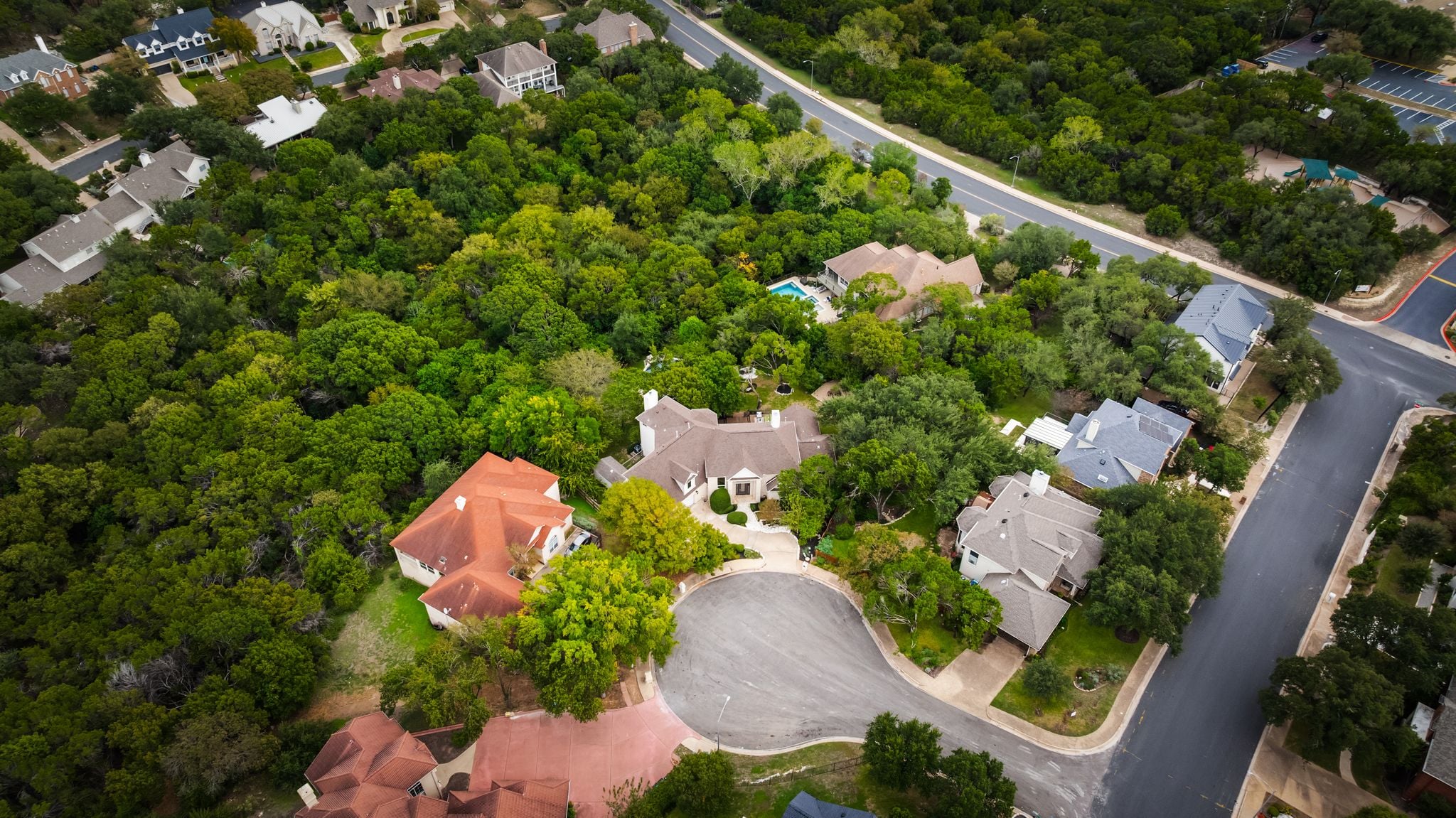
5. Mature trees and natural character
Hillside properties in established neighborhoods often have significant mature landscaping.
That can provide:
Shade
Privacy
Character
Wildlife
Natural beauty
A more established feel
In Northwest Hills, the combination of mature trees and elevation is one of the things that gives certain streets a distinctly different feel from newer developments.
For many buyers, that character is part of what they're paying for.
What are the biggest disadvantages of a hillside lot?
Here's where the romantic version of hillside living meets reality.
1. Less usable flat yard
This is probably the biggest drawback for families.
A 12,000-square-foot lot does not necessarily mean 12,000 square feet of usable outdoor space.
Some of that land may be too steep for:
Playing
Pool construction
Lawn
Furniture
Pets
Gardening
Entertaining
You may have plenty of land but relatively little flat land.
That's an important distinction.
If a backyard is important to you, don't just ask for the lot size.
Walk the property and determine how much of it you would actually use.
2. Drainage becomes more important
Water follows gravity.
That makes drainage especially important on sloped properties.
You need to understand:
Where does the water come from?
Where does it go?
What happens during heavy rain?
Look for:
Erosion
Standing water
Exposed soil
Poor grading
Downspouts
Drainage channels
French drains
Water flowing toward the house
Evidence of previous repairs
A hillside lot isn't automatically a drainage problem.
A well-designed property can manage water very effectively.
But drainage should never be treated as an afterthought.
Local Northwest Hills guidance specifically recommends paying attention to grading, drainage, retaining walls, and erosion on sloped properties. (livingwellinaustin.com)
3. Retaining walls can become a major consideration
Retaining walls are often necessary when a property has significant changes in elevation.
A good retaining-wall system can make a hillside lot dramatically more usable.
But walls have to be maintained.
When you're looking at a property with substantial retaining walls, pay attention to:
Cracks
Leaning
Bulging
Drainage behind the wall
Soil movement
Erosion
Previous repairs
Vegetation affecting the structure
A retaining wall isn't automatically a red flag.
It is simply another major component of the property that needs to be understood.
And if there are multiple large retaining walls, I'd want to know their history and condition before making a major purchasing decision.
4. Steep driveways can be inconvenient
This is one of those things that can sound minor until you've lived with it for years.
A steep driveway affects:
Daily vehicle access
Parking
Walking
Drainage
Garage access
Delivery access
Guests
Future accessibility
Drive the driveway.
Don't just look at it.
If possible, experience it in wet weather as well.
A driveway that feels perfectly manageable during a sunny afternoon showing may feel very different when you're backing out during heavy rain.
5. Stairs can become a daily issue
Some hillside homes require stairs to move between the street, garage, front door, backyard, and different levels of the house.
That can be perfectly fine for one buyer and a significant drawback for another.
If you're thinking about staying in the home for 10, 20, or more years, think beyond how the stairs feel today.
Ask yourself:
Will this layout still work for me later?
That is particularly important for buyers considering aging in place.
6. Landscaping can be more complicated
Flat yards are relatively straightforward.
You mow them.
You plant them.
You irrigate them.
Hillsides can require more thought.
You may have terraces, stairs, retaining structures, erosion-control measures, specialized plantings, or difficult-to-access areas.
Some buyers love that natural landscape.
Others would rather have a simple backyard.
Neither is wrong.
It's a lifestyle choice.
Can a hillside lot be more expensive to build on?
It can.
The cost depends heavily on the specific site and project.
A sloped property may require additional:
Grading
Engineering
Drainage work
Retaining structures
Foundation work
Site preparation
Construction access
Landscaping
Stairways
This matters if you're buying a property with plans to add on or build new.
A house addition that looks straightforward from inside the home may be much more complicated once you account for the terrain outside.
That's why I would not buy a hillside property based solely on a renovation vision.
Before committing to a major project, understand the site.
Does a hillside lot create foundation concerns?
A slope doesn't automatically mean foundation problems.
That's an important distinction.
Northwest Hills has many homes built successfully on sloped terrain.
But when you're evaluating a hillside property, foundation condition should be considered alongside:
Drainage
Grading
Retaining walls
Soil movement
Trees
Previous additions
Water intrusion
If you notice significant cracks, uneven floors, doors that don't operate properly, or movement around retaining walls, don't simply chalk it up to the age of the home or the fact that it's on a hill.
Get the right professional involved and determine what you're actually looking at.
A crack is a clue.
It isn't a diagnosis.
Are hillside lots harder to build a pool on?
They can be.
That doesn't mean pools are impossible.
In fact, some hillside properties have fantastic pools precisely because the pool was designed around the terrain.
But construction can be more complicated.
You may need to consider:
Excavation
Retaining walls
Structural engineering
Drainage
Access for construction equipment
Pool elevation
Relationship to the house
Decking and usable surrounding space
If a pool is high on your priority list, don't simply assume that a large backyard means a pool will fit.
Determine whether the site works for the type of pool you actually want.
How does a hillside lot affect resale value?
It depends on the buyer.
Some buyers will pay a premium for elevation, views, and privacy.
Others will immediately eliminate a property because they want a flat yard.
That means hillside properties can appeal strongly to the right buyer while narrowing the buyer pool for others.
The strongest hillside properties tend to balance the two sides:
They provide the benefits of elevation without creating overwhelming usability problems.
For example:
A steep lot with a spectacular view, excellent drainage, beautiful landscaping, and a generous terrace may be highly desirable.
A steep lot with no view, difficult stairs, poor drainage, and almost no usable outdoor space is a different story.
The slope isn't the deciding factor.
The experience created by the slope is.
Is a flat lot always better than a hillside lot?
No.
This is probably the biggest misconception to avoid.
Flat land is easier.
But easier isn't always more valuable.
A flat lot may provide excellent outdoor space but no privacy and no view.
A hillside lot may give you a spectacular outlook and complete backyard privacy.
The right choice depends on what matters to you.
If you're raising young children and want a pool and lawn, a flatter property may make more sense.
If you value views, privacy, mature trees, and architectural character, a hillside lot may be exactly what you're looking for.
What should buyers inspect before purchasing a hillside home?
I would pay particular attention to the following:
Drainage
Understand where water comes from and where it goes.
Retaining walls
Look for movement, cracks, drainage issues, and signs of previous repairs.
Foundation
Look for signs of movement and investigate anything concerning.
Driveway
Consider slope, drainage, parking, and long-term accessibility.
Yard usability
Don't rely on the lot's total square footage. Determine how much is actually usable.
Trees
Evaluate mature trees for both their benefits and potential impact on the house, foundation, roof, and future improvements.
Stairs and access
Think about how you'll use the property every day and how that could change over time.
Future projects
If you want a pool, addition, outdoor kitchen, or other improvement, investigate whether the terrain actually supports the project.
What should sellers know about marketing a hillside property?
If you're selling a hillside home, the terrain should be presented as part of the property's story.
Don't simply say:
"Large lot."
Explain what the lot provides.
Does it have a view?
Privacy?
A terraced backyard?
A pool overlooking the trees?
A covered patio at the perfect elevation?
A dramatic architectural setting?
Those are much more meaningful to a buyer than raw lot size.
At the same time, sellers should be prepared to provide information about drainage, retaining walls, foundation work, landscaping, and major improvements.
The more confidently you can explain the property, the easier it is for a buyer to understand why the lot is valuable.
So, is a hillside lot worth it?
For the right buyer, absolutely.
A hillside lot can provide some of the most desirable characteristics in Northwest Hills:
Views.
Privacy.
Elevation.
Mature trees.
Architectural character.
Outdoor living opportunities.
But those benefits come with responsibilities.
You need to understand drainage.
You need to maintain retaining walls.
You may have more stairs.
You may have less flat yard.
Future construction may be more complicated.
The trick is not finding a lot without a slope.
It's finding a property where the slope works in your favor.
When I evaluate a Northwest Hills home, I don't ask whether the lot is flat or steep and stop there.
I ask what the terrain is doing.
Is it giving the home a great view?
Creating privacy?
Making the backyard difficult to use?
Helping with drainage?
Creating expensive retaining structures?
Making the architecture more interesting?
The best hillside properties are the ones where you look around and realize the house was designed for the land — not forced onto it.
That's the difference between simply owning a hillside lot and actually getting the benefit of one.
#NorthwestHills #JamesLucas
Check out this article next