

At a Glance
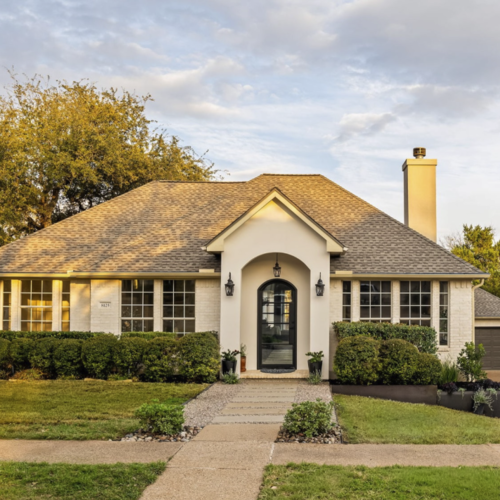
Character: A blend of 1960s-70s custom builds on large, sloping lots with mature oak canopies.
Value: High demand driven by proximity to UT and downtown, paired with top-rated AISD schools.
Considerations: Inventory often requires substantial renovation to meet modern layout preferences.
The Lifestyle: Quiet, hilly streets with a suburban feel only ten minutes from the urban core.
For decades, Northwest Hills Estates has held a specific place in the Austin psyche. It is the neighborhood people "move up" to and rarely leave. Unlike the rapid-fire development seen in modern suburbs to the north or the high-density shifts in central Austin, this pocket of 78731 has maintained a remarkably steady identity. But as the Austin market enters a more discerning phase, many buyers and long-time residents are asking the same question: Is the investment in Northwest Hills still worth it?
To answer that, you have to look past the surface-level statistics. While the Travis Central Appraisal District (TCAD) valuations tell one story, the reality on the ground—the walkability, the architectural integrity, and the specific nuances of street-by-street demand—tells another. Having walked these hills daily for years, I’ve observed that the value proposition here isn't just about square footage; it’s about a specific kind of Austin longevity.
What defines the Northwest Hills Estates lifestyle today?
The neighborhood was largely developed in the 1960s and 1970s, a period characterized by sprawling floor plans and a deep respect for the topography. When you drive down Far West Boulevard or Mesa Drive, you aren't seeing cookie-cutter blocks. You are seeing homes built into the limestone hills, often featuring multi-level layouts that maximize views of the canyon or the downtown skyline.
In sections like Cat Mountain or Chimney Corners, there is a palpable sense of privacy. The lots are generous—often a quarter-acre or more—providing a buffer that is increasingly rare in Austin’s core. The lifestyle is quiet. It is a place where you see neighbors walking dogs in the cool of the morning and families gathering at the Murchison pool in the summer. It lacks the flash of Westlake, but it possesses a grounded, established feel that appeals to those who prioritize stability over status symbols.
Is the local school system still a primary driver?
One cannot discuss the value of Northwest Hills without mentioning the Austin Independent School District (AISD). For many families, the trio of Doss Elementary, Murchison Middle School, and Anderson High School is the primary reason for the neighborhood's price floor. Doss, in particular, remains a focal point of the community after its recent multi-million dollar modernization.
I often tell my clients that while you can renovate a kitchen or open up a floor plan, you cannot "buy" a neighborhood's school culture overnight. The schools here act as a social glue. However, it is important to observe that even as household demographics shift, the educational reputation of Northwest Hills continues to protect property values during market dips. Buyers are often willing to trade a newer build in a different ZIP code for the peace of mind that comes with this specific school feeder pattern.
What should you expect from the aging housing stock?
The "worth" of a home in Northwest Hills often hinges on its "bones." Many of the original homes were built with high-quality materials—solid wood cabinetry, brick exteriors, and copper plumbing—but the layouts don't always align with modern living. We see a lot of "compartmentalized" floor plans where the kitchen is isolated from the living area.
In my experience, the homes that hold their value best are those where the owners have thoughtfully updated the systems (HVAC, roof, electrical) while preserving the mid-century character. There is a growing segment of buyers specifically looking for the "Austin Ranch" style—vaulted ceilings, large windows, and an indoor-outdoor flow. If you are considering a purchase here, you must factor in the "renovation tax." It is rare to find a turnkey home that doesn't need some level of cosmetic or structural adjustment to bring it into the current decade. For more on how to navigate these updates, you can view our guide to selling your home in Northwest Hills.
How does the topography affect your long-term value?
One of the most overlooked aspects of Northwest Hills real estate is the land itself. We are dealing with hills, which means drainage and foundation integrity are paramount. A home on the high side of the street with a view of the preserve will always command a premium over a home on a flat lot with no view, even if the flat lot home has a better interior.
The City of Austin has strict environmental regulations regarding building on slopes and near the Edwards Aquifer recharge zone. This limits new construction and teardowns, which, ironically, helps maintain the neighborhood's value by restricting supply. You aren't going to see a sudden influx of 20-unit condos in the heart of Northwest Hills Estates. That scarcity is a major component of why this area is a "safe" bet for long-term equity.
Are the amenities keeping pace with the neighborhood's growth?
Living in Northwest Hills means you are five minutes from the Jewish Community Center, the Northwest Hills surgical center, and the local H-E-B on Far West. It is a "self-contained" neighborhood. While we don't have the trendy, high-density retail of the Domain, we have a collection of legacy businesses and quiet cafes that serve the locals.
The "worth" here is found in convenience. You can be at a University of Texas football game or a downtown office in 12 minutes without having to jump on MoPac. For many professionals, that time savings is the ultimate luxury. The trade-off is that the nightlife is minimal. If you want a walkable bar scene, Northwest Hills isn't it. If you want a quiet evening on a deck overlooking a greenbelt, it’s arguably the best spot in the city. You can learn more about the specific pockets of the area in our Northwest Hills neighborhood guide.
What does the future look like for 78731?
As we move further into the decade, I expect to see a "gentle" modernization of the neighborhood. We are seeing more full-gut renovations rather than simple surface updates. The buyers moving in today are often the children of the original owners, returning to the area to raise their own families. This generational cycle creates a very stable market.
When you look at the buying in Austin guide for general market trends, Northwest Hills consistently stands out as an outlier for its low turnover. People buy here to stay. That lack of inventory is what will likely keep Northwest Hills Estates at a premium for the foreseeable future.
Common Questions About Northwest Hills Estates
Are home prices in Northwest Hills Estates stabilizing? Yes. While the frantic bidding wars of 2021 have cooled, we are seeing a return to a more rational market. Prices are holding steady because inventory remains low. Well-priced homes with updated interiors still move quickly, but buyers are no longer overlooking major deferred maintenance.
What is the most sought-after floor plan in the neighborhood? The single-story ranch with a converted garage or an added "flex" space for a home office is currently the highest-demand layout. Buyers are also prioritizing "sightlines"—the ability to stand in the kitchen and see into the backyard or the living room, which often requires removing walls in these older builds.
Is Northwest Hills a good place for retirees? Absolutely. Many residents have been here for 40 years. The proximity to medical facilities and the general quietude of the streets make it a top choice for those looking to downsize while staying in the city limits. However, the hilly terrain is something to consider if mobility is a primary concern.
How do property taxes here compare to other Austin luxury areas? Because Northwest Hills is within the City of Austin and AISD, the tax rate is consistent with other central neighborhoods. However, because valuations have stayed high due to demand, the absolute dollar amount can be significant. It’s always wise to check the latest data from the Travis Central Appraisal District for specific property histories.
Making the Decision
Is it worth it? If you are looking for a house that will appreciate 20% year-over-year in a speculative bubble, perhaps not. But if you are looking for a home in a community that values education, respects the natural landscape, and offers a commute that doesn't ruin your day, Northwest Hills Estates remains one of the most compelling options in Austin. It is a neighborhood built on substance rather than trends. After seeing hundreds of homes pass from one generation to the next here, I can say with confidence that the "worth" of this neighborhood is found in its permanence.
If you are exploring the neighborhood or considering putting your home on the market, I am always available for a quiet conversation about the current trends I'm seeing on your specific street. There is no substitute for local knowledge when navigating a landscape as unique as ours.
#NWHills
Check out this article next