

At a Glance
Cat Mountain is a hillside Northwest Austin neighborhood built into steep terrain with major view corridors
Homes range from original 1970s builds to fully remodeled modern luxury properties
Lifestyle is quiet, private, and heavily car-dependent with fast access to central Austin
Views of downtown, Hill Country, and Lake Austin define the neighborhood experience
Buyers choose it for privacy, elevation, and long-term resale strength
Cat Mountain isn’t flat.
That’s the first thing you notice.
The second thing is the silence—broken only by wind through trees and the slow rhythm of cars climbing the hills.
And then the view hits you.
Austin stretched out below like a map you can walk into if you had enough time.
That’s Cat Mountain in one breath.
It’s not trying to impress you.
It just… does.
Where Cat Mountain actually sits in Austin
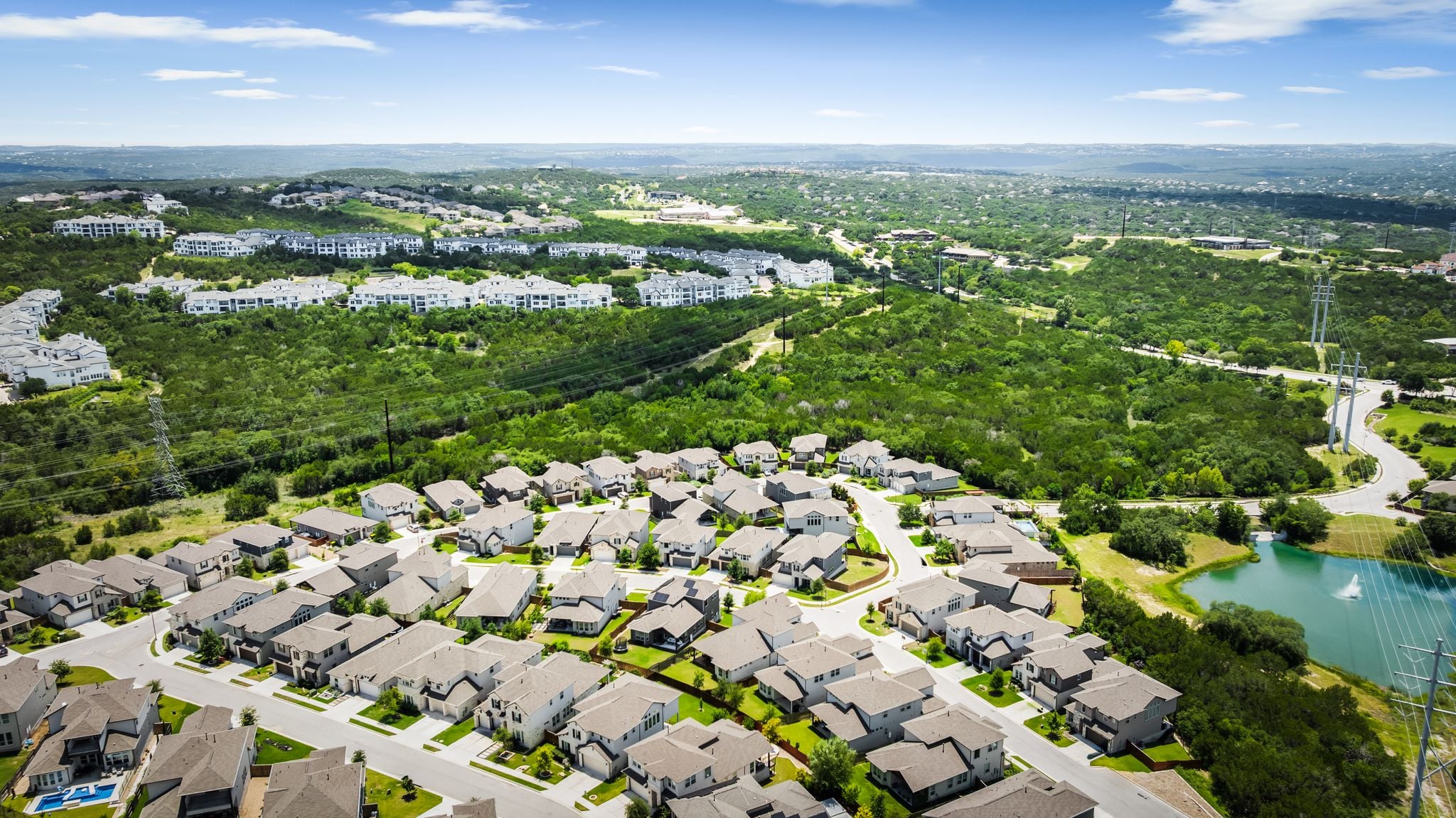
Cat Mountain sits in Northwest Austin, tucked into the hills between MoPac and Loop 360, just north of RM 2222.
It’s part of the broader Northwest Hills area, but feels more carved into the land than built on top of it.
The terrain is the whole identity here:
Steep streets
Terraced lots
Dense tree cover
Sudden elevation changes
This isn’t suburban flatland planning.
It’s hillside adaptation.
And that changes everything about how the neighborhood lives.
What the homes are like (and why they vary so much)
One of the most interesting things about Cat Mountain is the mix.
You don’t get a single architectural era—you get layers of Austin history.
Most homes fall into three categories:
1. Original hillside builds (1970s–1980s)
These are the bones of the neighborhood:
Split-level layouts
Smaller windows by today’s standards
Unique hillside foundations
Heavy remodeling potential
They often sit on some of the best lots—views included.
2. Fully renovated homes
These are where value concentrates now:
Open floor plans
Large glass openings toward views
Updated kitchens and baths
Modern lighting and finishes
They feel like a bridge between old Austin and current demand.
3. Tear-down or rebuild properties
These are rare but powerful:
Premium view lots
Larger footprints
Custom architecture potential
Long-term hold value
Buyers aren’t just paying for the structure here.
They’re paying for the land and elevation.
And in Cat Mountain, elevation is everything.
The views are not a feature—they’re the product
Let’s be honest.
People don’t move to Cat Mountain for square footage alone.
They move for what they see out the window.
Depending on the lot, views can include:
Downtown Austin skyline
Rolling Hill Country ridgelines
Lake Austin glimpses
Dense green canopy stretching for miles
Cat Mountain is known for its elevation shifts, and that topography creates natural viewing corridors that you simply don’t get in flatter parts of the city.
And here’s the subtle part:
The view changes the way the home feels inside.
Even a modest interior feels elevated when the backdrop is doing half the storytelling.
Daily lifestyle: quiet, private, and not built for walking everywhere
Cat Mountain lifestyle is not “walk-to-coffee” living.
It’s more like:
Drive down the hill for errands
Come home and disappear into trees
Watch the city lights from your deck at night
This is a car-dependent neighborhood. No sugar-coating it.
But that tradeoff buys you:
Privacy
Space between homes
Low through-traffic
A calmer residential feel
Locals consistently describe it as “close to everything, but feels removed.”
And that’s accurate.
Downtown Austin is roughly 10–15 minutes away depending on traffic, yet the experience feels much more detached once you’re in the hills.
The natural environment is part of everyday life
Cat Mountain isn’t just landscaped—it’s wooded.
You’ll see:
Deer regularly
Foxes and birds of prey
Dense tree canopy everywhere
It borders preserved green spaces like Bull Creek and Bright Leaf areas, which help maintain the neighborhood’s natural buffer.
There’s a reason homes here feel private even when they’re close together.
Nature does half the screening.
Community feel: quiet but not isolated
Cat Mountain has an active homeowners association in certain sections, especially Cat Mountain Villas, with shared amenities like pools and tennis courts.
But the social tone isn’t loud.
It’s more:
Low-key neighbors
Long-term owners
People who value space and quiet
You won’t get constant street energy here.
You get stability.
The commute reality (what it actually feels like)
Cat Mountain wins on location logic.
You can reach:
Downtown Austin in ~10–15 minutes
The Domain in ~15–20 minutes
Major employment corridors quickly via MoPac or 360
But here’s the nuance:
Commute time depends heavily on time of day because MoPac and 360 traffic can swing fast.
So it’s not about distance.
It’s about timing.
Locals learn this quickly.
Who typically lives here
The buyer profile in Cat Mountain is pretty consistent:
Professionals working in tech, healthcare, or law
Families wanting top AISD access without Westlake pricing
Long-term Austin residents upgrading for views and privacy
Remote workers prioritizing environment over walkability
It’s not a trendy crowd.
It’s a steady one.
People who usually stay longer than they plan to.
The tradeoffs (because there are always tradeoffs)
Cat Mountain is not perfect.
Here’s the honest breakdown:
What you give up:
Walkability
Flat terrain convenience
Quick corner-store lifestyle
Uniform modern housing stock
What you gain:
Views that never get old
Privacy that’s hard to replicate
Strong resale demand for view lots
A quieter, more insulated daily rhythm
It’s not about better or worse.
It’s about what kind of life you want your home to support.
Why buyers still compete for it
Even with its quirks, Cat Mountain holds strong demand because:
Location is still central Austin-adjacent
View properties are inherently limited
Remodeling upside is significant
Long-term desirability remains steady
In a city expanding outward, hillside neighborhoods like this don’t get replaced.
They get rarer.
Questions buyers ask most often
Is Cat Mountain a good place to live in 2026?
Yes—especially for buyers prioritizing views, privacy, and central access over walkability.
Are the homes mostly updated?
It’s mixed. Many are fully renovated, but original 1970s–80s homes still exist and often sit on premium lots.
How’s the commute to downtown?
Typically 10–15 minutes, but heavily dependent on MoPac traffic conditions.
Is Cat Mountain walkable?
Not really. The terrain is steep and car use is essential for most errands.
What’s the biggest appeal of the neighborhood?
The combination of elevation, views, and privacy this close to central Austin.
Final thoughts
Cat Mountain doesn’t compete on convenience.
It competes on experience.
The feeling of driving uphill after a long day, watching the city drop away behind you—that shift matters more than people expect when they first tour it.
It’s not the easiest place to live.
But it might be one of the most grounded.
Because once you’re up here, everything slows down just enough to notice what you actually came home for in the first place.
#NWHills
Check out this article next