
At a Glance
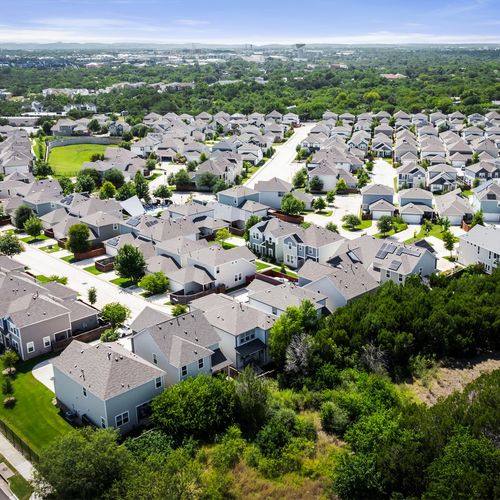
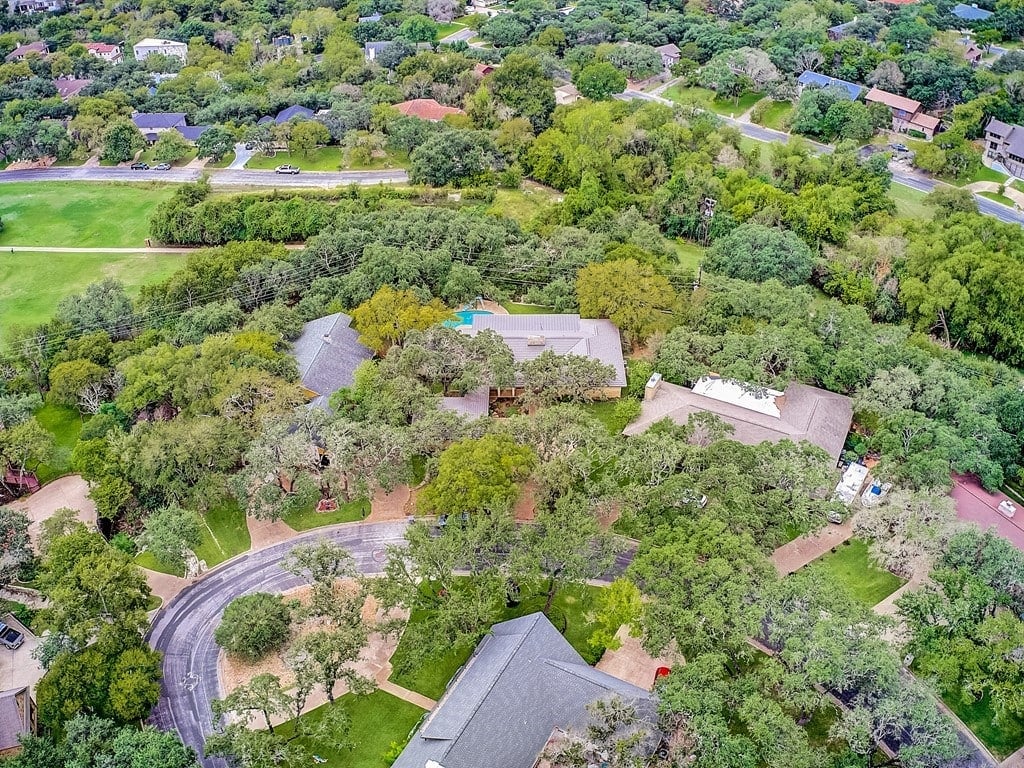
Balcones Village is a quiet, established Northwest Austin neighborhood built around mature trees and golf course pockets
Homes range from original 1970s builds to fully renovated modern interiors
Lifestyle is suburban, calm, and highly residential with strong school access
The neighborhood is known for large lots, privacy, and long-term homeowners
Buyers choose it for stability, location, and strong family-oriented demand
Balcones Village doesn’t try to introduce itself loudly.
It just sort of exists—steady, shaded, and quietly confident in what it’s been for decades.
You feel it most when you drive in.
The streets narrow slightly.
The trees get heavier.
And the pace drops without anyone telling you to slow down.
That’s usually the moment people realize:
This isn’t a “through” neighborhood.
It’s a “stay awhile” neighborhood.
Where Balcones Village sits in Austin
Balcones Village is tucked into Northwest Austin, just off Research Boulevard (US-183), anchored around the Balcones Country Club area.
It sits in that in-between space:
Close to major highways
Still deeply residential
Far enough from central chaos to feel buffered
You can be on 183 in minutes, but inside the neighborhood it feels like the city backed off a little.
Not gone.
Just quieter.
The homes: variety without uniformity
One of the defining traits of Balcones Village is that it doesn’t look like it was built all at once.
It wasn’t.
Most homes were originally built in the 1970s and 1980s, and that history shows up in the architecture.
You’ll find:
Ranch-style layouts
Mid-century influences
Heavily renovated modern interiors
Original-condition homes waiting for updates
Some homes feel fully contemporary inside but still carry that older Austin exterior shell.
Others are untouched and feel like time paused and never restarted.
That mix is exactly why buyers either love it or approach it cautiously.
There’s no “standard” here.
Only range.
The golf course effect (and why it matters)
A defining feature of Balcones Village is its relationship to Balcones Country Club.
Some homes sit near or back to golf course views, while others are tucked into wooded interior streets.
That creates two very different living experiences:
Golf course / open view pockets:
More open feel
Higher perceived value
Occasional activity and visibility
Interior wooded streets:
Heavier privacy
Quieter daily experience
More shade and enclosure
The golf course presence isn’t just visual—it shapes pricing, desirability, and even how buyers mentally categorize the neighborhood.
It creates micro-markets inside the same subdivision.
Daily lifestyle: calm, predictable, and intentionally low drama
Balcones Village isn’t built for excitement.
It’s built for consistency.
Daily life tends to look like:
Quiet mornings under tree cover
Quick drives to nearby retail on 183
Families moving through established routines
Evenings that stay local and low-key
There’s no real “scene” here.
And that’s exactly why people choose it.
It’s the kind of place where nothing is constantly asking for your attention.
Which, depending on your stage of life, can feel like luxury.
Schools: one of the biggest decision drivers
Balcones Village is served by Round Rock ISD, and school access is a major reason buyers target this area.
Commonly assigned schools include:
Spicewood Elementary
Canyon Vista Middle School
Westwood High School
These schools consistently rank among the stronger public school options in Northwest Austin and heavily influence long-term demand.
For many buyers, the decision isn’t even complicated:
It’s school quality first, everything else second.
That keeps demand steady even when the broader market cools.
Commute reality (no sugar-coating it)
Balcones Village is centrally located for Northwest Austin standards.
Typical commute expectations:
Downtown Austin: ~20–25 minutes
The Domain: ~10–15 minutes
Major tech corridors: ~10–20 minutes depending on traffic
But here’s the honest part:
US-183 traffic is real.
And like most Austin corridors, timing matters more than distance.
Morning and evening peaks can stretch drives longer than expected.
Still, compared to outer suburbs, this remains one of the more balanced locations for access vs. residential calm.
What the neighborhood feels like emotionally
This part is harder to quantify, but buyers notice it immediately.
Balcones Village feels:
Mature
Established
Slightly tucked away
Low turnover in many sections
Familiar in a way newer neighborhoods aren’t
You don’t get the “new development energy” here.
You get continuity.
And continuity has its own appeal in a city that changes quickly.
Who tends to live here
The buyer profile is fairly consistent:
Long-term Austin families
Professionals who want central access without central pricing
Buyers prioritizing schools over nightlife
People upgrading from starter homes into stability
It’s not a flashy demographic.
It’s a steady one.
And that steadiness shows up in how long people stay in their homes.
Tradeoffs (because every neighborhood has them)
Balcones Village isn’t trying to be everything.
So here’s the honest balance:
What you give up:
Walkability
Modern master-planned uniformity
Trendy retail within walking distance
New construction consistency
What you gain:
Large, established lots
Mature trees and shade
Strong school access
Central Northwest Austin positioning
Long-term neighborhood stability
It’s not about what it lacks.
It’s about what it prioritizes.
Why buyers still choose it in 2026
Even with newer neighborhoods expanding around Austin, Balcones Village holds demand because:
Location is hard to replicate
Schools anchor long-term desirability
Lot sizes and trees are mature (you can’t build that quickly)
Renovation upside is still strong in older homes
It sits in a stable Northwest Austin corridor
In a market where newer doesn’t always mean better, established neighborhoods like this stay relevant.
Because time has already tested them.
And they held.
Questions buyers ask most often
Is Balcones Village a good place to live in 2026?
Yes—especially for buyers prioritizing schools, privacy, and established neighborhood feel.
Are the homes mostly updated?
It’s mixed. Some homes are fully renovated, while others remain original 1970s–80s builds.
How is the school district?
The neighborhood is served by Round Rock ISD, which is a major draw for families.
Is it walkable?
Not particularly. Most errands require a short drive.
What’s the biggest appeal?
Large lots, mature trees, and long-term neighborhood stability in Northwest Austin.
Final thoughts
Balcones Village doesn’t sell itself on hype.
It sells itself on time.
On trees that have grown for decades.
On streets that have stayed mostly the same while the city around it expanded and sped up.
It’s not the newest part of Austin.
It’s one of the most settled.
And for a lot of buyers in 2026, that’s exactly the point.
Because sometimes the best version of home isn’t the one that’s trying to be impressive.
It’s the one that’s already comfortable being exactly what it is.
#NWHills
Check out this article next