

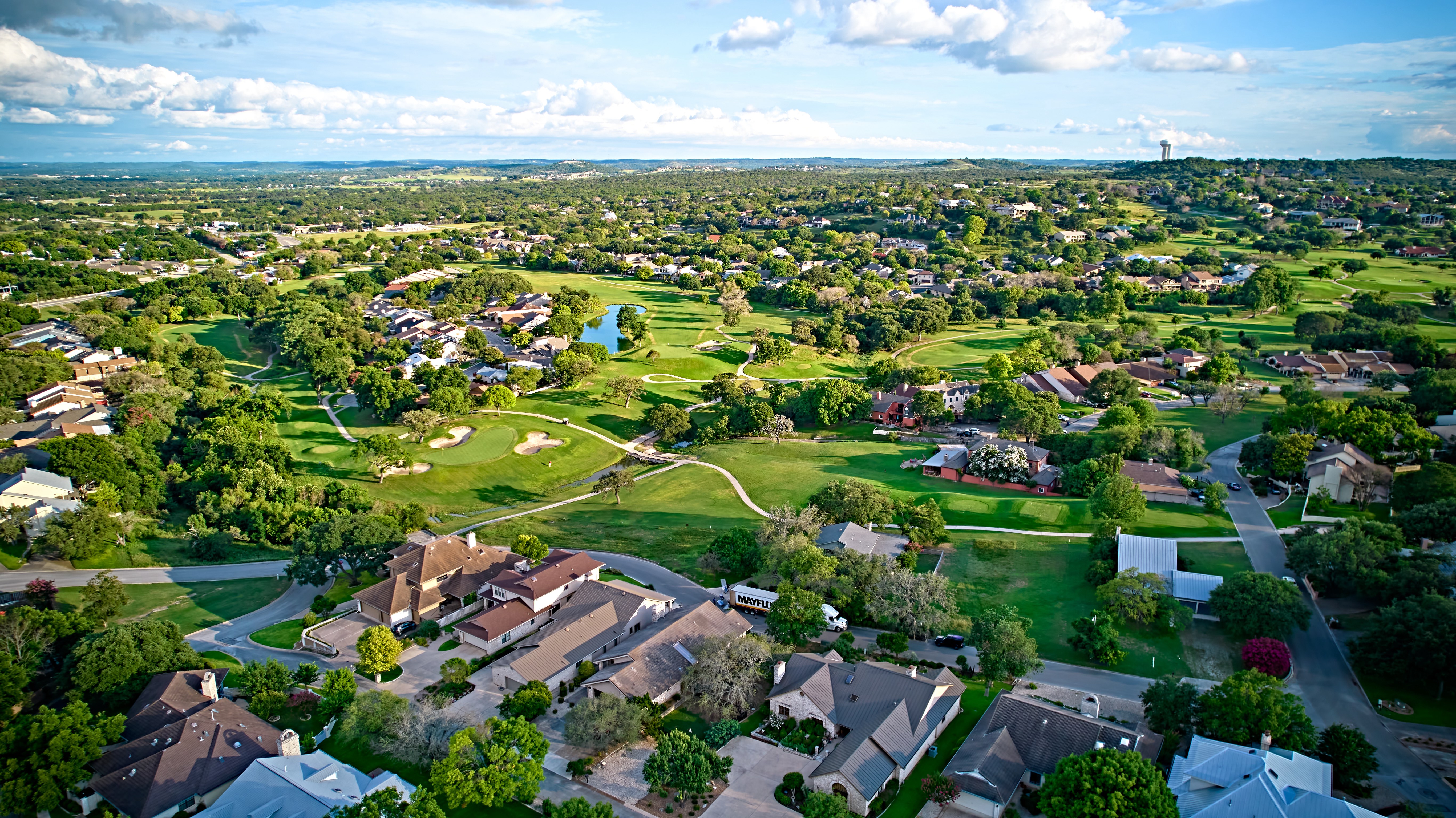
At a Glance
Current Average: Northwest Hills is currently averaging between $310 and $385 per square foot, depending on the specific section and renovation level.
The "Inverse" Rule: Larger homes in 78731 often have a lower price per square foot, even if their total sales price is significantly higher.
Condition Premium: Fully renovated "turnkey" homes can command a 20-30% premium per square foot over original 1970s builds.
Lot Value Distortion: In Northwest Hills, the land (and the view) often accounts for a larger percentage of the total value than in newer Austin suburbs, which can skew $/sqft metrics.
When neighbors talk about real estate over a fence in Northwest Hills, the conversation inevitably turns to "the number"—the price per square foot. It feels like an objective, scientific way to measure value. However, in a neighborhood defined by limestone cliffs, custom mid-century architecture, and sprawling 3,000-square-foot floor plans, the $/sqft metric is often more of a distraction than a definitive guide.
As of May 2026, the average price per square foot in Northwest Hills (78731) sits at approximately $315, but the range is incredibly wide. I’ve seen homes close at $290/sqft and others at over $500/sqft in the same month. To understand what your home is worth—or what you should pay for one—you have to look at what that number is actually hiding.
Why is the price per square foot lower here than in Allandale or Brentwood?
One of the most common questions I get from buyers is why Northwest Hills seems "cheaper" per foot than central neighborhoods like Allandale or Brentwood, where prices often soar past $450/sqft. The answer lies in the math of the denominator.
Northwest Hills homes are significantly larger on average—often 2,800 to 3,500 square feet compared to the 1,600 to 2,000 square feet common in Allandale. Because high-cost rooms like kitchens and bathrooms are spread over more total square footage, the "blended" price per foot naturally drops. It doesn't mean Northwest Hills is less valuable; it means our larger "ranch-style" footprints support a higher absolute price without compressing the per-foot metric.
How does topography and "The View" distort the metric?
In Northwest Hills, you aren't just buying a house; you are often buying a view. A home perched on a ridge in Cat Mountain with a panoramic view of the canyon has massive intrinsic value that has nothing to do with the air-conditioned square footage.
If two identical 3,000-square-foot homes sit side-by-side, but one has a 180-degree view and the other looks into a neighbor’s fence, the view home might sell for $200,000 more. On paper, this makes the view home look "expensive" per square foot, but in reality, the buyer is paying a premium for the dirt, not the drywall. This is why using $/sqft to value a "view lot" in 78731 is often an exercise in frustration for appraisers and sellers alike.
What is the "Renovation Tax" in today’s $/sqft?
The condition of the home is the second-biggest factor in price per foot variance. We are currently seeing a massive "spread" between homes in original 1970s condition and those that have been fully gutted and reimagined.
Original/Dated Condition: Often trading between $295–$315/sqft.
Partially Updated: Kitchen and baths refreshed; usually lands in the $330–$350/sqft range.
Fully Renovated/Modernized: These high-demand properties are pushing $400+/sqft.
Buyers in 2026 are increasingly wary of the "renovation tax"—the high cost of labor and materials in Austin. They are willing to pay a much higher price per square foot for a home where the work is already done, rather than taking on a project themselves. This "convenience premium" is a major driver of the record-breaking $/sqft numbers we see for renovated estates in Westover Hills.
Does the "Basement Factor" play a role?
Unique to Northwest Hills (due to our slopes) are "walk-out basements" or lower levels. In Austin, these are technically included in the total square footage, but they don't always carry the same value as the main level. A home with 2,000 square feet on the main level and a 1,000-square-foot "finished basement" might show a lower overall $/sqft than a 3,000-square-foot single-story home. Buyers simply value "living on one level" more highly in our neighborhood, which is reflected in the per-foot pricing.
Q&A: Understanding Your Home's Per-Foot Value
Is price per square foot a good way to set my list price? It’s a starting point, but it should never be the final answer. You must look at "line-item" adjustments for things $/sqft ignores, such as a pool (adds $80k-$150k), a three-car garage, or a cul-de-sac location.
How do I know if I’m overpaying per square foot? Compare the home to other sales within the same school zone (Doss vs. Highland Park Elementary) and of similar renovation quality within the last 6 months. If a home is $50/sqft higher than the nearest comp and doesn't have a view or a pool to justify it, you are likely paying for the "emotional appeal" of the staging.
Does a bigger house always mean a lower $/sqft? Generally, yes. This is known as the "principle of diminishing marginal utility." As a house gets larger, each additional square foot adds slightly less value than the one before it, which pulls the average down.
What is the "sweet spot" for $/sqft in 78731 right now? The most activity is happening in the $320–$345/sqft range for well-maintained, partially updated homes. This is where most families find the best balance of value and quality of life.
The Bottom Line
Price per square foot is a useful "macro" tool for tracking if the neighborhood is going up or down, but it is a blunt instrument for valuing an individual home. In Northwest Hills, the nuances—the slope of the driveway, the height of the oak trees, and the quality of the 1970s stonework—matter more than the raw numbers.
If you are trying to make sense of the "price per foot" for your specific home or a property you’re eyeing, I can help you break down the "why" behind the numbers. Every home in Northwest Hills has a story that the math alone can't tell.
#NWHills
Check out this article next
