

At a Glance
Northwest Hills' hills and elevation changes make drainage an important part of evaluating a home.
Look for water pooling near the foundation, soil erosion, poor grading, short downspouts, and drainage systems that appear overwhelmed.
Retaining walls and steep slopes deserve extra attention because water pressure can affect both the wall and surrounding soil.
A drainage problem does not automatically mean a home has foundation damage, but the two can be connected.
A standard inspection can identify certain visible drainage deficiencies, but it does not determine the performance of every underground drainage system.
If you're buying a home in Northwest Hills, don't just look at the house.
Look at the land around the house.
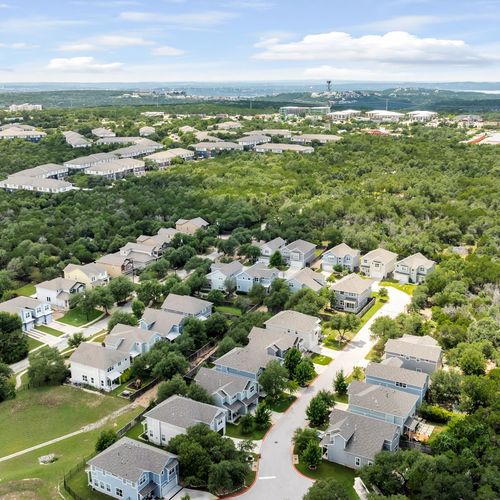
That matters because Northwest Hills has something that many Austin neighborhoods don't: significant changes in elevation. Those slopes create some of the area's best views and most interesting lots, but they also determine where rainwater goes.
And water tends to follow the easiest path.
If that path leads toward the house, retaining wall, driveway, or foundation, a relatively small drainage problem can become a much larger maintenance issue over time.
The good news is that you don't need to be a drainage engineer to identify potential warning signs.
You just need to know what to look for.
Why does drainage matter so much in Northwest Hills?
The terrain is a major part of what makes Northwest Hills desirable.
Some homes sit higher on the hillside with views. Others sit below neighboring properties and can receive runoff from higher ground. Steep or irregular lots may also require retaining walls, swales, French drains, or other methods of controlling water.
James Lucas has previously noted that drainage, retaining walls, erosion, and foundation movement are some of the biggest considerations when evaluating hillside homes in Northwest Hills.
The important thing is not to assume that every sloped property is a problem.
A well-designed hillside property can manage water extremely well.
The question is:
Where does the water go when it rains?
That should be one of the first questions you ask.
Is the ground sloping toward or away from the house?
Start with the simplest observation.
Walk around the entire exterior and look at the grade.
Ideally, you want water moving away from the foundation rather than collecting alongside it.
Pay particular attention to:
Soil that appears to slope toward the house
Low areas next to the foundation
Depressions created by settling soil
Landscaping that directs water toward the structure
Walkways or patios that funnel water toward the house
Areas where water appears trapped between structures
Texas inspection standards specifically require inspectors to report deficiencies in grade levels around the foundation and drainage around the foundation that is not performing.
But remember that the inspector's role has limitations.
A standard inspection isn't an exhaustive hydrology study of the property.
Are there places where water pools?
Look for evidence of standing water.
If you're able to visit the property during or shortly after a significant rain, that's particularly useful.
But even on a dry day, you can often find clues.
Look for:
Muddy areas
Dead or struggling grass
Dark soil that stays damp
Washed-out mulch
Sediment deposits
Erosion channels
Water stains
Moss or mildew in unusual locations
You are essentially looking for the evidence left behind by water.
One isolated damp area isn't necessarily a major concern.
Repeated pooling near the foundation is different.
Where do the downspouts send water?
This is one of the easiest drainage issues to identify.
Walk around the house and find every downspout.
Then follow it.
Where does the water go?
A downspout that dumps directly beside the foundation deserves attention. So does one that sends a concentrated stream toward a neighboring wall, retaining wall, walkway, or low portion of the yard.
Some properties use extensions, buried drainage lines, splash blocks, or other systems to carry water farther away.
Don't assume that a buried pipe is working simply because you can't see the water.
Ask:
“Where does this drainage system discharge?”
And if the answer isn't obvious, investigate further.
Austin structural guidance commonly calls for roof drainage to discharge away from the house and emphasizes keeping water from being directed into the backfill around the structure.
Are the gutters working properly?
Gutters aren't just cosmetic.
Their job is to collect roof runoff and control where that water reaches the ground.
Look for:
Missing gutters
Sagging sections
Leaking joints
Overflow marks
Downspouts that are disconnected
Downspouts that discharge too close to the house
Evidence that water regularly spills over the gutter
During heavy Austin storms, a roof can send a significant amount of water toward the ground very quickly.
If that water is concentrated beside the foundation, you want to know how the property handles it.
Is there erosion on the property?
Erosion is especially important on sloped Northwest Hills lots.
Look at the areas where the property drops in elevation.
Watch for:
Exposed roots
Bare soil
Channels carved into the ground
Washed-out landscaping
Exposed foundation material
Soil accumulating at the bottom of a slope
Gravel or mulch that appears to have moved
A little erosion doesn't necessarily indicate a major structural problem.
But active erosion tells you something important:
Water is moving through the property with enough force to move soil.
You want to understand where that water is coming from and where it ultimately goes.
Are retaining walls showing signs of trouble?
Retaining walls deserve their own inspection on many Northwest Hills properties.
A wall may be holding back soil on an uphill portion of the property, creating usable yard space or supporting a driveway or structure.
Water behind that wall can create additional pressure.
Look for:
Cracks
Leaning
Bulging
Separation
Displaced blocks or masonry
Soil washing through the wall
Poor drainage behind the wall
Water stains
Previous repairs
TREC's inspection standards specifically address deficiencies in retaining walls when they are related to foundation performance.
If a retaining wall appears significant or questionable, this may be a situation where additional professional evaluation is appropriate.
Could drainage problems be affecting the foundation?
This is where drainage becomes much more important.
Water management and foundation performance aren't completely separate subjects.
Poor grading can allow water to collect around the foundation. Changes in soil moisture can contribute to movement, particularly in properties affected by expansive soils.
That doesn't mean:
“There's a drainage issue, so the foundation is damaged.”
It means:
“There's a drainage issue, so I want to understand whether it is affecting the foundation.”
Look for a combination of signs:
Drainage problems outside
Cracks inside
Cracks in exterior masonry
Sloping floors
Sticking doors
Separations around windows or doors
Previous foundation repairs
When several of those appear together, I'd take the issue more seriously.
What about water coming from an uphill neighbor?
This is an easy issue to overlook.
On a hillside, the water affecting your property may not originate on your property.
Walk uphill and look at the surrounding lots.
Ask:
Where does the neighboring property's water drain?
Is runoff being directed toward the subject property?
Are there drainage channels between homes?
Are there walls or fences blocking an established drainage path?
Has landscaping changed the natural flow of water?
This is one reason looking only at the house isn't enough.
You are evaluating the lot and its surroundings.
Are French drains or other drainage systems already installed?
Don't automatically assume a drainage system is a positive.
Find out why it was installed.
A French drain, channel drain, swale, or other system may be an excellent solution. But you still want to know:
What problem was it designed to solve?
When was it installed?
Who installed it?
Where does it discharge?
Has it been maintained?
Has it ever been repaired?
Does the seller have documentation?
A drainage system is only useful if it is actually moving water where it needs to go.
And TREC notes that inspectors are not required to determine the efficiency or performance of underground or surface drainage systems.
That's an important limitation for buyers to understand.
Should I inspect the property after rain?
If you have the opportunity, absolutely.
A dry Texas day can hide a lot.
After rain, you can see:
Where water collects
How quickly it leaves
Whether gutters overflow
Where downspouts discharge
Whether slopes are eroding
Whether retaining walls are holding water
Whether the yard drains toward the house
You don't have to stand outside during a storm.
Even visiting several hours afterward can provide useful clues.
If the property is dry but shows obvious signs of repeated water movement, ask the seller or agent what happens during heavy rain.
Should I ask the seller about previous drainage repairs?
Yes.
Ask directly:
“Has the property ever had drainage problems or drainage work performed?”
Then ask what was done.
You may discover that the seller previously:
Regraded part of the yard
Installed French drains
Extended downspouts
Rebuilt a retaining wall
Added a swale
Installed underground drainage
Addressed water entering a crawl space
Corrected standing water near the foundation
Previous drainage work isn't necessarily a negative.
In some cases, it means the homeowner identified a problem and fixed it.
The important thing is understanding the history.
Does a drainage problem mean I should walk away?
Not necessarily.
This is where buyers can sometimes overreact.
A missing downspout extension might be a relatively straightforward maintenance issue.
A section of poorly graded landscaping may be correctable.
A failed retaining wall receiving water from an uphill slope is a different level of concern.
The question isn't simply:
“Does this house have a drainage problem?”
Ask:
“What is the problem, what caused it, how extensive is it, and what will it take to correct it?”
That is a much better way to evaluate the property.
When should I bring in a specialist?
A specialist becomes more important when the drainage issue is significant, recurring, or connected to other structural concerns.
Consider additional evaluation if you see:
Significant foundation movement
Major erosion
A leaning or failing retaining wall
Persistent water intrusion
Extensive standing water
Complicated hillside drainage
Previous foundation repairs
Multiple drainage systems with unclear discharge points
Evidence that water is affecting the structure
The goal isn't to turn every home purchase into an engineering project.
It's to spend additional money when the potential risk justifies it.
What are the biggest drainage red flags in Northwest Hills?
If I were walking a Northwest Hills property with a buyer, these are the things I'd put at the top of the list:
1. Water pooling next to the foundation
Especially if it happens repeatedly.
2. Downspouts discharging at the foundation
This is often visible and worth addressing.
3. Significant erosion
Particularly on steep portions of the lot.
4. Retaining walls showing movement
Cracks, leaning, or bulging deserve attention.
5. Drainage flowing toward the house
Whether from the yard, driveway, patio, or neighboring property.
6. Drainage problems combined with foundation symptoms
This combination deserves much more scrutiny than either issue alone.
7. An underground drainage system nobody can explain
Ask where it starts, where it ends, and whether it actually works.
What should Northwest Hills buyers remember about drainage?
The best question isn't simply:
“Does this home have good drainage?”
It's:
“Where does water go when it rains?”
Follow the water.
See where it comes from.
See where it travels.
See where it collects.
And see whether the property has systems in place to control it.
That's particularly important in Northwest Hills because the same slopes that create beautiful views and privacy can also create complicated water-management challenges.
A home doesn't have to be perfectly flat or completely free of drainage systems to be a good purchase.
In fact, a well-designed drainage system can be a sign that a homeowner has taken the property's terrain seriously.
What matters is whether the system works, whether the property has been maintained, and whether water is being kept away from the places where it can cause the most damage.
In Northwest Hills, don't just inspect the house. Follow the water.
#NorthwestHills #JamesLucas
Check out this article next