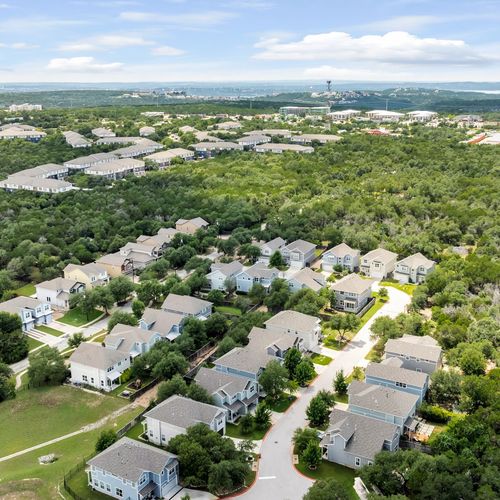


At a Glance
Northwest Hills remains one of Austin’s strongest family-focused areas because of schools, location, parks, and long-term neighborhood stability
Doss Elementary, Murchison Middle, and Anderson High continue to drive significant buyer demand in many sections of the neighborhood
Families are often choosing between different lifestyle priorities: larger lots, walkability, views, privacy, or proximity to schools
The best family neighborhood depends less on price point and more on daily routine
Most buyers underestimate how much street layout and neighborhood culture affect family life
When families start looking in Northwest Hills, they usually ask the wrong first question.
They ask:
"Which neighborhood is the best?"
The better question is:
"Which neighborhood fits the way our family actually lives?"
Because Northwest Hills isn't one neighborhood.
It's a collection of smaller pockets, streets, school zones, and micro-communities that all feel a little different once you're living there.
Some areas are built around parks.
Some around schools.
Some around privacy.
Some around views.
And once kids enter the equation, those differences start mattering a lot more than square footage.
Why so many families end up in Northwest Hills
There's a reason Northwest Hills keeps showing up on relocation shortlists.
The fundamentals are hard to beat:
Established neighborhoods
Large trees
Bigger lots
Strong schools
Central Northwest Austin location
Access to parks and trails
Unlike newer developments, Northwest Hills feels lived in.
The neighborhood grew gradually between the 1950s and 1980s, which created a mix of mature homes, winding streets, and larger residential lots.
For many families, that's exactly the appeal.
Northwest Hills Proper: the classic family choice
If someone says they're moving to Northwest Hills for schools and long-term livability, this is often where they mean.
The core Northwest Hills area is heavily influenced by:
Doss Elementary
Murchison Middle School
Anderson High School
Those schools remain major demand drivers for family buyers.
What families usually like:
Larger lots
Quiet residential streets
Strong bike-riding culture
Easy access to parks
Long-term neighbors
One thing I hear repeatedly from parents is that the neighborhood still feels surprisingly active for kids.
Not in a master-planned-community way.
In a neighborhood way.
Kids biking.
Families walking dogs.
Neighbors who actually know each other.
That atmosphere is becoming harder to find.
The Doss Elementary zones: where demand gets intense
For many buyers, the search begins and ends with Doss Elementary.
The school's reputation consistently pulls family demand into specific sections of Northwest Hills.
Homes here often receive attention because buyers are chasing:
School access
Larger yards
Long-term resale stability
What stands out isn't just the school.
It's the concentration of families.
You feel it when you're driving through.
More bikes.
More basketball hoops.
More weekend activity.
The neighborhood energy changes.
Cat Mountain: best for families who want views and privacy
Cat Mountain attracts a slightly different family profile.
Parents here often prioritize:
Views
Privacy
Larger custom homes
Hillside settings
The tradeoff?
Less of the traditional neighborhood-grid feel.
Cat Mountain is built into the terrain.
The streets curve more.
The lots vary more.
The homes vary more.
For some families, that's exactly what they're looking for.
Others prefer the flatter, more connected feel of core Northwest Hills.
Neither choice is wrong.
It's lifestyle preference.
Highland Hills: an underrated family option
Highland Hills doesn't always receive the same attention as Northwest Hills proper.
But many families quietly prefer it.
Why?
Because it often offers:
Larger lots
Lower traffic streets
Strong neighborhood feel
Good proximity to schools and parks
There's less spotlight.
Less hype.
And sometimes that's exactly what buyers want.
A neighborhood that simply works without needing to advertise itself.
Balcones Area: families who want convenience
Families who prioritize convenience often end up looking around the Balcones area.
The appeal:
Easy access to major roads
Nearby shopping
Practical daily routines
Strong connectivity to Northwest Austin
These neighborhoods may not always have the dramatic views of Cat Mountain.
But daily logistics tend to be easier.
And once you're juggling school schedules, sports, activities, and work commutes, logistics matter more than people expect.
The streets matter more than the neighborhood name
This is one of the biggest mistakes buyers make.
They focus on neighborhood names.
I focus on streets.
Because within Northwest Hills, one street can feel dramatically different from another.
Things I pay attention to:
Cut-through traffic
Side street layout
Hill steepness
Walkability to schools
Backyard usability
Park proximity
Two homes half a mile apart may create completely different family experiences.
That's why simply searching by neighborhood rarely tells the full story.
Parks and outdoor space: a major reason families stay
One of Northwest Hills' biggest advantages is access to recreation.
Families spend a lot of time at:
Bull Creek District Park
Balcones District Park
Neighborhood greenbelts
Local trails and playgrounds
Bull Creek especially functions almost like an extension of the neighborhood for many families.
It becomes part of the weekly routine:
Hiking
Swimming
Exploring trails
Walking dogs
Family weekends outdoors
That's a lifestyle feature you can't easily replicate.
What parents say after moving here
One of the more interesting things I've noticed is how often families mention the same themes after relocating.
Not the houses.
The neighborhood experience.
Comments like:
"Our kids are outside more."
"People actually walk around here."
"The commute is easier than we expected."
Those observations show up repeatedly in community discussions and relocation conversations.
The neighborhood culture ends up mattering just as much as the home itself.
Which neighborhood is best for younger kids?
For younger children, families often prioritize:
Lower traffic streets
Parks nearby
Elementary school proximity
Larger yards
Many sections of core Northwest Hills and Highland Hills fit that profile particularly well.
The goal becomes simple:
Make everyday life easier.
Which neighborhood is best for older kids?
As children get older, priorities often shift toward:
Middle school access
High school culture
Bike independence
Sports and activity logistics
That's one reason the Anderson High School feeder pattern remains such a major consideration for many buyers.
Questions families ask most often
What is the most family-friendly part of Northwest Hills?
Core Northwest Hills around the Doss–Murchison–Anderson feeder pattern is often the most sought-after for families.
Are there a lot of kids in Northwest Hills?
Yes. Many streets have a strong family presence, especially in school-focused sections.
Which area has the best parks?
Bull Creek access is one of the biggest recreational advantages for many Northwest Hills neighborhoods.
Is Cat Mountain good for families?
Yes. It tends to attract families who prioritize views, privacy, and larger custom homes.
Are schools a major factor in home values?
Absolutely. School demand continues to influence both pricing and long-term buyer interest throughout Northwest Hills.
Final thoughts
The best family neighborhood in Northwest Hills isn't necessarily the most expensive one.
And it isn't always the one with the biggest house.
Usually, it's the one that quietly makes daily life easier.
The street where your kids ride bikes.
The shortcut to school you learn after a month.
The park that becomes part of your weekend routine.
The neighbors you wave to often enough that eventually you know their names.
That's the thing about Northwest Hills.
Families rarely fall in love with it on day one.
It tends to happen gradually.
One routine at a time.
And before long, the neighborhood stops feeling like a place you moved to.
It starts feeling like home.
#NWHills
Check out this article next