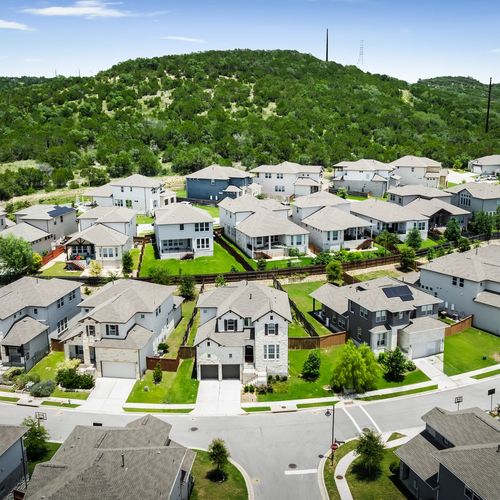


At a Glance
Sierra Vista sits in Far Northwest Austin near established residential corridors and major commuter routes
Homes range from moderately priced traditional builds to larger remodeled properties depending on section
The neighborhood is stable, low-turnover, and heavily owner-occupied
Buyers are drawn to location access, schools, and long-term livability
Value is driven more by condition and updates than neighborhood-wide uniformity
Sierra Vista is one of those names buyers hear and assume they already understand.
But it’s not one thing.
It’s a cluster of pockets, streets, and nearby subdivisions that all get bundled together under the same label.
And that matters—because pricing, lifestyle, and expectations change depending on exactly where you are within it.
So if you’re looking at Sierra Vista Austin homes for sale, you’re not just buying into a neighborhood.
You’re stepping into a layered map.
Let’s unpack it properly.
Where Sierra Vista actually sits in Austin
Sierra Vista is located in Far Northwest Austin, with access to major corridors like US-183 and nearby residential networks that connect toward Great Hills, Balcones, and surrounding established neighborhoods.
It’s not a flashy “destination” area.
It’s a connective one.
That’s actually part of its strength.
You get:
Quick access to major highways
Proximity to established North Austin employment corridors
Close reach to shopping, schools, and medical hubs
A residential feel without total isolation
It sits in that practical zone of Austin where most daily needs are within a 10–20 minute drive.
The homes: not uniform, very case-by-case
One of the most important things to understand about Sierra Vista is that there is no single home type.
You’ll find variation across:
Build eras
Renovation levels
Lot sizes
Architectural styles
Some homes lean traditional:
Brick exteriors
Standard suburban layouts
Original or lightly updated interiors
Others are fully remodeled:
Open-concept living spaces
Updated kitchens and baths
Modern finishes layered into older structures
Nearby related pockets like Sierra Oaks and Enclave at Sierra Vista show how much pricing and condition can vary even within similarly named areas.
For example, Sierra Oaks properties often trade at higher price points with larger footprints, while Enclave at Sierra Vista leans more moderate in size and pricing depending on condition and updates.
This isn’t a cookie-cutter neighborhood.
It’s a mixed-value ecosystem.
Pricing reality: condition drives everything
Unlike newer master-planned communities where homes are similar, Sierra Vista pricing is heavily condition-driven.
Two homes with similar square footage can behave very differently:
Updated home → faster absorption, stronger pricing stability
Original-condition home → more negotiation, longer days on market
Recent listings in the broader area show mid-range pricing that reflects this variability, with homes spanning from more accessible price points into higher-end renovated segments depending on location and upgrades.
The key takeaway:
In Sierra Vista, the neighborhood doesn’t set the price.
The house does.
Lifestyle: quiet, established, and low turnover
Sierra Vista doesn’t have a “scene.”
It has residents who tend to stay put.
That creates:
Stable streets
Predictable traffic flow
Lower rental turnover in many pockets
A strong sense of residential continuity
Daily life feels practical:
Commuting out for work
Returning to quiet neighborhoods
Spending weekends in nearby retail corridors or parks
It’s not built for walkability or nightlife.
It’s built for long-term living.
Commute and access: one of its strongest advantages
Sierra Vista benefits from being positioned near major arteries without being directly overwhelmed by them.
Typical travel times:
Downtown Austin: ~20–30 minutes depending on traffic
The Domain: ~10–20 minutes
North Austin employment hubs: ~10–25 minutes
The biggest variable is timing.
Like most Austin corridors, rush hour can shift experience significantly.
But overall, access is one of the reasons buyers stay interested here even when newer neighborhoods pop up further out.
Schools and long-term demand drivers
Depending on the exact location within Sierra Vista, school zoning may fall into different districts or feeder patterns, which is common in this part of Northwest Austin.
That variability matters.
Because buyers often anchor decisions to:
School ratings
Commute balance
Long-term resale confidence
Nearby districts and Austin ISD resources remain a key reference point for many buyers evaluating the area. (austinisd.org)
Even when schools aren’t the only driver, they influence long-term demand stability.
Nearby neighborhoods matter just as much
Sierra Vista doesn’t exist in isolation.
It’s surrounded by similar established neighborhoods that shape buyer expectations:
Great Hills
Balcones area
Northwest Hills edge zones
Sierra Oaks pockets
For instance, nearby homes in Sierra Oaks show higher-end renovation patterns and pricing bands, which often serve as indirect comps for certain segments of Sierra Vista.
That proximity creates a ripple effect:
Higher competition for updated homes
Strong sensitivity to condition gaps
Buyer comparison shopping across neighborhoods
In other words, you’re not just competing inside Sierra Vista.
You’re competing with everything around it.
The tradeoffs (no marketing gloss here)
Sierra Vista has strengths—but also clear tradeoffs.
What you give up:
Walkable urban feel
Uniform master-planned consistency
Predictable new construction layouts
Lifestyle amenities within the neighborhood itself
What you gain:
Central Northwest Austin access
Established residential environment
Strong long-term livability
Flexible price entry points depending on condition
Proximity to major employment corridors
It’s a practical trade.
Not a lifestyle flex.
Who typically buys here
The buyer profile tends to be consistent:
Professionals working in North or Central Austin
Buyers upgrading from starter homes
Long-term residents staying in Austin but repositioning location
Families balancing commute and affordability within established areas
It’s not a high-turnover investor market.
It’s an owner-occupier-driven one.
And that shapes how the neighborhood behaves.
What surprises buyers the most
A few patterns show up repeatedly:
1. “It’s more varied than I expected”
Homes don’t look uniform from street to street.
2. “Condition matters more than I thought”
Updated homes move much faster.
3. “It feels quieter than its location suggests”
Despite access to major roads, interior streets stay relatively calm.
Questions buyers ask most often
Is Sierra Vista Austin a good place to live?
Yes. It’s a stable, established Northwest Austin area with strong long-term residential demand.
Are homes mostly updated?
It’s mixed. Some homes are fully renovated, while others remain original and offer renovation potential.
What drives value most here?
Condition, updates, and exact location within the broader Sierra Vista area.
How is the commute?
Generally 20–30 minutes downtown depending on traffic, with strong access to North Austin hubs.
Is it a walkable neighborhood?
Not particularly. Most errands require driving.
Final thoughts
Sierra Vista doesn’t fit neatly into a single definition.
It’s not new.
It’s not uniform.
And it’s not trying to be a lifestyle brand.
It’s something more grounded than that.
A collection of established homes in a location that still makes sense for everyday Austin life.
And in a city that keeps stretching outward, that kind of positioning quietly holds its value.
Not because it’s loud.
But because it’s usable.
And in real estate, usability tends to outlast trends.
#NWHills
Check out this article next