

At a Glance
Buyers are choosing Northwest Hills for its balance of central location, privacy, and long-term stability
The neighborhood appeals strongly to families, tech relocations, and move-up buyers
Schools, mature trees, and commute access remain major demand drivers
In 2026, buyers are prioritizing “established Austin” over high-density new development
Northwest Hills continues to outperform many areas because of limited land and steady demand
There’s a funny thing happening in Austin right now.
For years, buyers chased whatever was newest:
New master-planned communities
Rooftop pools
Glass-box modern construction
Massive suburban expansion
And now?
A lot of those same buyers are circling back toward established neighborhoods with roots.
That shift is one of the biggest reasons Northwest Hills keeps pulling people in during 2026.
Not because it’s trendy.
Because it feels durable.
Buyers want central Austin without living inside the chaos
This is probably the single biggest reason people move here.
Northwest Hills gives buyers proximity to:
Downtown Austin
The Domain
UT Austin
Major tech corridors
without forcing them into the density and noise that now defines many central neighborhoods.
One 2026 buyer guide described the neighborhood as “comfortably, confidently exactly what it has always been: a hillside retreat for people who want to be close to the action but just far enough above it to breathe.”
That line honestly captures the appeal pretty well.
You stay connected to Austin while still feeling slightly removed from it.
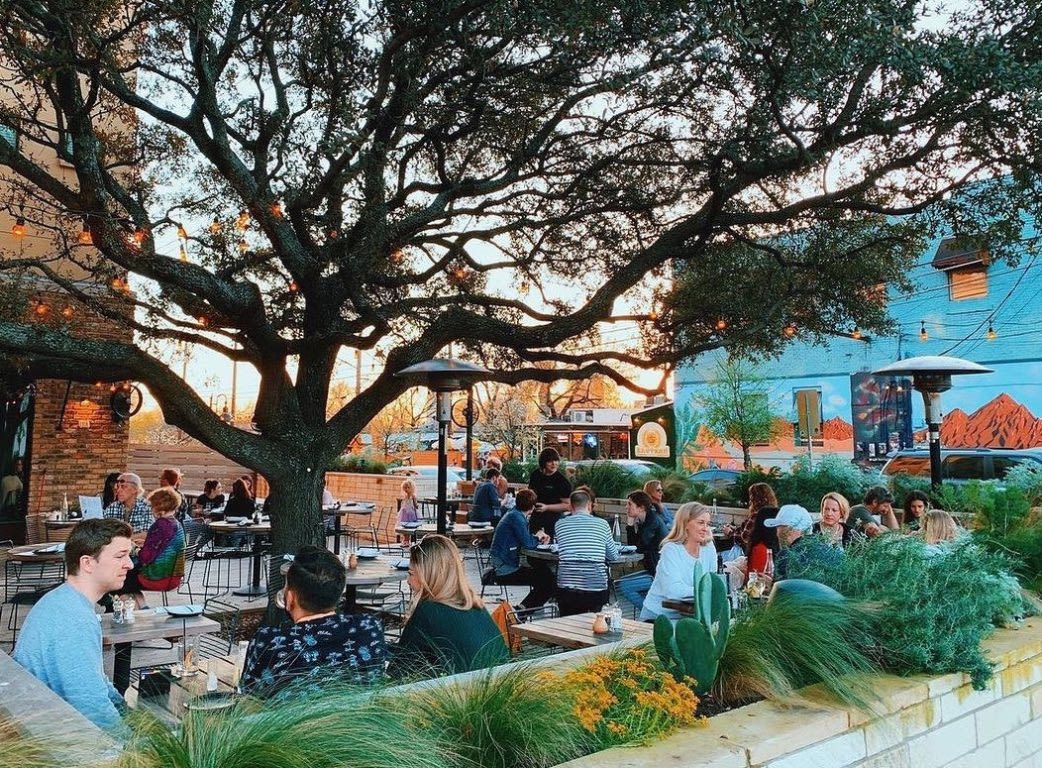
The trees and terrain still matter more than people expect
A lot of Austin’s newer development feels engineered.
Northwest Hills doesn’t.
The mature live oaks, winding roads, elevation shifts, and uneven terrain create something buyers increasingly struggle to find elsewhere:
Visual softness
Privacy
Shade
Neighborhood texture
The area’s tree canopy and established landscape are repeatedly mentioned as defining lifestyle features.
And after enough time touring newer construction communities in full Texas summer sun… people start realizing how much those older trees actually matter.
A mature canopy hits different in August. Real ones know.
Buyers are prioritizing stability over hype
This is a huge 2026 shift.
The pandemic-era frenzy trained buyers to chase momentum.
Now they’re chasing predictability.
Northwest Hills works because:
Turnover is relatively low
Streets feel established
Schools remain consistent demand anchors
Inventory stays constrained
That creates what many buyers now view as “safer” long-term positioning inside Austin.
One market analysis called Northwest Hills a “Blue Chip investment” because of its scarcity, proximity, and school stability.
That’s exactly how a lot of buyers are thinking now:
Not “What spikes fastest?”
But:
“What still feels valuable ten years from now?”
Schools remain one of the biggest magnets
The Doss → Murchison → Anderson pipeline continues to anchor a huge amount of buyer demand.
Families relocating from:
California
Seattle
New York
Chicago
often narrow their search heavily around school paths before they even tour homes.
And unlike some suburban districts that feel newer or more interchangeable, Northwest Hills schools carry long-standing neighborhood identity.
That matters emotionally to buyers.
A Reddit thread comparing Austin family neighborhoods noted that Northwest Hills consistently comes up in conversations around strong schools and long-term family living.
Move-up buyers are driving a lot of demand
This is one of the quieter market trends.
A growing number of buyers entering Northwest Hills already live somewhere else in Austin.
They’re not “new to Texas” buyers anymore.
They’re:
Condo owners needing space
Families leaving denser neighborhoods
Professionals upgrading after years in starter homes
Buyers tired of farther suburban commutes
One relocation guide specifically described Northwest Hills as a strong “move-up neighborhood” for buyers wanting more space without leaving the city behind.
That’s become increasingly common.
People want more room—but they don’t necessarily want Leander-level distance attached to it.
The commute math still works
Even with Austin traffic doing its usual “ancient curse upon civilization” routine, Northwest Hills still holds a strong positional advantage.
Approximate commute ranges:
Downtown: ~10–25 minutes
The Domain: ~10–20 minutes
UT Austin: ~10–15 minutes
That centrality keeps pulling buyers back toward the neighborhood.
Especially tech buyers.
One 2026 market report noted strong relocation demand tied to Austin’s tech economy and Apple-related expansion effects.
And here’s the thing:
When people first move to Austin, they underestimate traffic.
Then six months later they suddenly become amateur commute mathematicians.
Northwest Hills benefits from that realization.
Buyers like that the homes don’t all feel identical
This matters more than listing data can capture.
In Northwest Hills, buyers find:
Mid-century ranch homes
Hillside rebuilds
Contemporary remodels
Traditional family homes
Custom architecture layered over decades
The neighborhood feels accumulated rather than manufactured.
That appeals strongly to buyers burned out on copy-paste subdivisions.
Especially relocation buyers coming from older metro areas.
Privacy has become a luxury feature
One subtle 2026 trend:
People increasingly want distance from constant activity.
Northwest Hills naturally creates privacy through:
Terrain variation
Tree cover
Curving streets
Larger lot spacing in many sections
It’s not gated-community privacy.
It’s organic privacy.
And honestly, that tends to age better.
Buyers feel like they’re buying “real Austin”
This comes up constantly during tours.
Northwest Hills still feels tied to older Austin patterns:
Less performative
Less trend-driven
Less obsessed with being seen
It feels lived in.
That’s becoming surprisingly valuable in a city that often feels like it’s sprinting to reinvent itself every quarter.
One Compass neighborhood guide described Northwest Hills as a “densely populated residential refuge” with winding streets and scenic terrain.
That “refuge” part sticks with people.
What’s stopping some buyers?
To be fair, not everyone falls in love with Northwest Hills.
The biggest hesitation points are usually:
Older housing stock
Higher property taxes
Limited walkability
Hillside maintenance concerns
Fewer “new construction community” amenities
And honestly?
Those are valid tradeoffs.
This neighborhood works best for buyers prioritizing:
Stability
Character
Centrality
Privacy
not necessarily convenience packaged into a master-planned formula.
Questions buyers ask most often
Why are so many buyers moving to Northwest Hills right now?
Primarily for schools, central location, mature trees, and long-term neighborhood stability.
Is Northwest Hills mostly relocation buyers?
It’s a mix of relocation buyers and Austin move-up buyers upgrading from smaller homes or denser neighborhoods.
Are home prices still rising?
Pricing has stabilized compared to the frenzy years, but Northwest Hills remains more resilient than many Austin neighborhoods.
What kind of buyers fit best here?
Families, professionals, long-term homeowners, and buyers prioritizing central access with quieter living.
Does Northwest Hills still feel like “old Austin”?
Yes—and that’s a major reason people continue moving there.
Final thoughts
People are moving to Northwest Hills in 2026 for the same reason people have kept moving there for decades:
It solves problems quietly.
You get closer access without downtown intensity.
Trees without exurban distance.
Schools without master-planned uniformity.
Privacy without isolation.
And in a housing market that spent years chasing whatever was newest and loudest, Northwest Hills has benefited from something surprisingly simple:
It never stopped being itself.
That steadiness is starting to look very valuable again.
#NWHills
Check out this article next
