

At a Glance
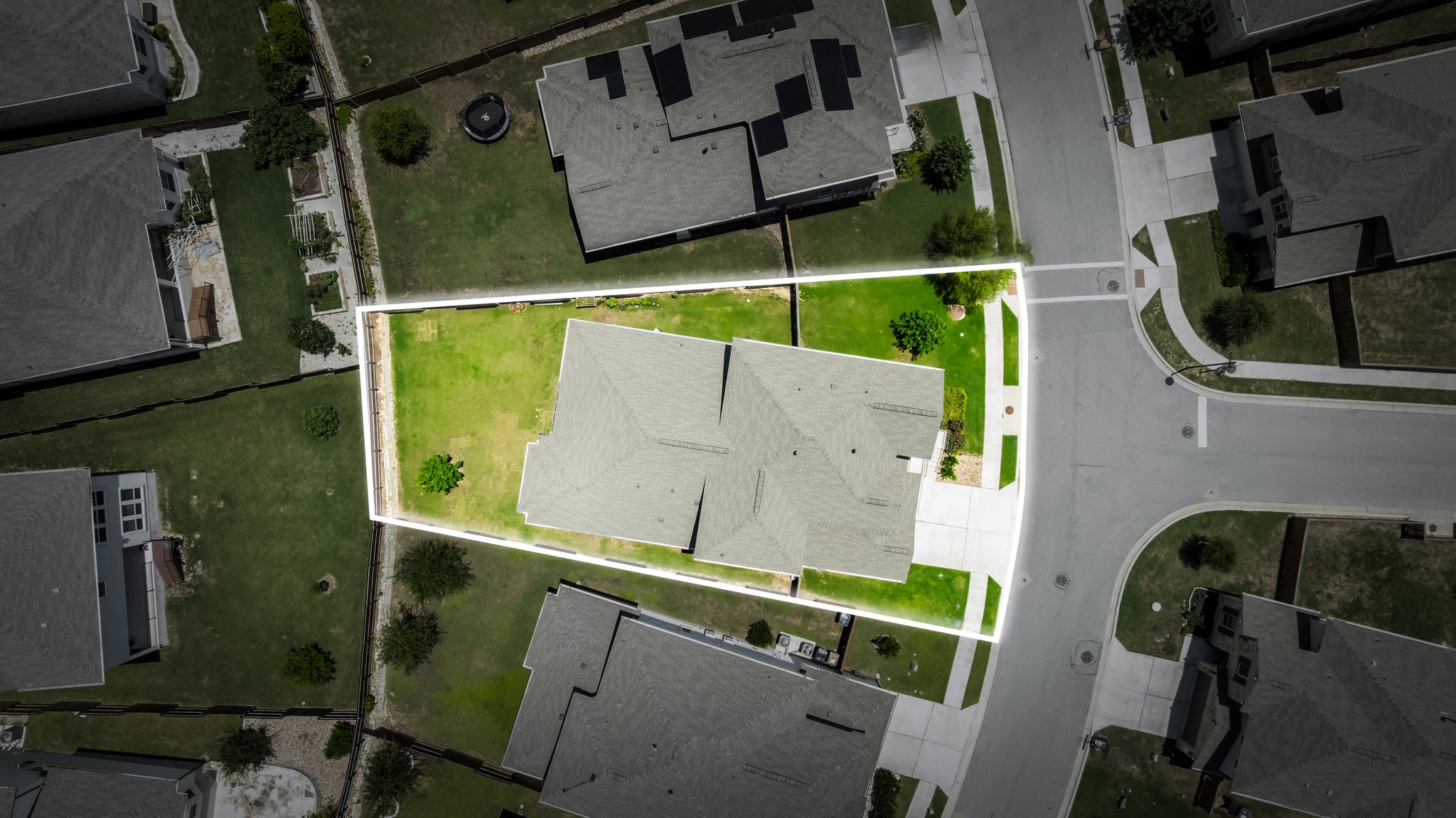
Lot size can have a meaningful effect on Northwest Hills home value, particularly when comparing otherwise similar properties.
Local Northwest Hills analysis indicates that half-acre and larger lots can command a 25–40% premium over quarter-acre parcels in the same area, although this is not a fixed appraisal formula.
The value of a larger lot depends on what the additional land actually provides: privacy, usable yard space, views, mature trees, redevelopment potential or simply more separation from neighboring homes.
A smaller lot with a renovated home and desirable location can still sell for more than a larger lot with significant deferred maintenance.
The best way to measure a lot-size premium is through comparable sales involving similar homes, locations, conditions and lot characteristics.
If you're looking at homes in Northwest Hills, you will quickly notice that lot size can vary considerably.
One property might sit on a relatively compact lot, while another nearby home may have substantially more land, mature trees, greater separation from neighbors or a more usable backyard.
That difference can matter.
Recent local Northwest Hills market analysis indicates that half-acre and larger lots can command a 25–40% premium over quarter-acre parcels in the same block. That figure should be treated as a local market indicator rather than a rule that applies to every property.
The reason is simple: buyers aren't really paying for dirt by itself. They're paying for what the land allows them to have.
Why does lot size matter so much in Northwest Hills?
Northwest Hills is different from many newer Austin subdivisions where homes were developed on relatively uniform lots.
The neighborhood has a mixture of established homes, larger lots, mature landscaping, rolling terrain and properties with different orientations and views.
That creates more variation from one property to the next.
A larger lot can provide:
More privacy
Greater separation from neighboring homes
Larger outdoor living areas
Room for pools or additions
Mature trees
Better views
More flexibility for future improvements
Potential redevelopment value
A stronger sense of space
These characteristics can influence what buyers are willing to pay.
But the key is that lot size and lot utility are not the same thing.
A 0.5-acre lot that is heavily sloped, difficult to access or constrained by drainage may not provide the same value as a 0.4-acre lot with a flat, usable backyard.
Is there a specific price premium for a larger Northwest Hills lot?
There isn't one number that can be applied to every Northwest Hills property.
A recent local market analysis estimates that half-acre and larger lots can command a 25–40% premium over quarter-acre parcels in the same block.
That's significant, but it needs context.
The comparison has to be between properties that are actually comparable.
For example, imagine two homes with similar square footage and similar renovation quality.
One sits on approximately 0.25 acres.
The other sits on approximately 0.50 acres and offers a usable backyard, mature trees and greater privacy.
If the larger property sells for considerably more, the difference may partly reflect the land.
But if the larger property needs $300,000 of work while the smaller property has been completely renovated, the renovation difference could overwhelm the lot-size premium.
That's why I wouldn't value a Northwest Hills property by taking an average price per acre and multiplying it by the lot size.
Real estate doesn't work that cleanly.
Does a bigger lot always mean a more valuable home?
No.
This is one of the most important distinctions for Northwest Hills buyers and sellers.
A larger lot can be valuable, but usable land is generally more meaningful than raw land area.
Consider two properties:
Property A
0.50 acres
steep slope
limited usable backyard
difficult driveway
significant drainage considerations
Property B
0.35 acres
relatively level yard
mature trees
strong privacy
room for a pool and outdoor living
Property A is larger.
But a buyer may prefer Property B.
The market ultimately determines value based on the combination of characteristics, not a single measurement.
What makes a large Northwest Hills lot especially valuable?
Privacy
Privacy can be one of the most noticeable benefits of additional land.
A larger lot may create greater separation between homes, especially when combined with mature trees or natural topography.
For buyers looking for a quieter residential setting, that separation can be meaningful.
Usable outdoor space
A large backyard that can actually be used is different from additional land that is difficult to access.
Flat or gently sloping areas can provide opportunities for:
Pools
Patios
Outdoor kitchens
Lawns
Play areas
Gardens
Additional landscaping
The more practical uses a lot provides, the easier it can be for buyers to see its value.
Views
Lot size can also interact with elevation.
A larger or elevated lot may provide more separation and potentially better views.
Local Northwest Hills analysis estimates that quality, permanent views can add another 15–25% premium over comparable interior lots, depending on the property.
This is important because you don't want to double-count value.
A property may be valuable because of both its larger lot and its view, but those characteristics overlap. The correct comparison is between similar properties where possible.
Mature trees
Northwest Hills has many established properties with mature landscaping.
Large trees can provide shade, privacy and character that would be difficult or impossible to recreate quickly.
At the same time, trees can affect construction plans, maintenance and the usable portion of a lot.
So again, more land doesn't automatically equal more value.
Does lot size matter more for older Northwest Hills homes?
It can.
Many Northwest Hills properties were built decades ago, and buyers sometimes view the underlying lot as part of the property's long-term potential.
An older home on a desirable large lot can attract buyers who are considering:
Remodeling
Expanding the existing house
Building a new home
Improving outdoor living
Preserving the lot's mature landscape
This is one reason a property's value can sometimes be substantially different from the value of the existing structure alone.
In other words, the buyer may be evaluating the house and the land separately.
How does lot size affect a home's redevelopment potential?
For some buyers, this is one of the most important questions.
A larger lot may provide more options, but you shouldn't assume that every large lot can be redeveloped however you want.
Potential development can be affected by:
Zoning
Setbacks
Easements
Topography
Trees
Drainage
Utilities
Impervious-cover restrictions
Site access
Existing structures
City regulations
A large lot that looks ideal on an aerial map may have considerably less usable building area than expected.
This is particularly relevant in Northwest Hills because of the area's rolling terrain and established development.
Before assigning significant value to redevelopment potential, buyers should verify the property's actual constraints.
Does lot size affect price per square foot?
It can make price-per-square-foot comparisons more complicated.
Northwest Hills currently has a wide range of property characteristics, and recent market data shows substantial variation in price per square foot. Redfin reported a median sale price of approximately $1.1 million and $378 per square foot for the three months ending August 2026.
But that $378 figure is a neighborhood-level statistic.
It doesn't mean a particular house should be worth exactly $378 per square foot.
Consider two homes that are both 2,500 square feet.
If one sits on 0.25 acres and the other sits on 0.50 acres, applying the same price-per-square-foot figure to both can overlook a major difference in the underlying land.
This is why price per square foot is best used as a comparison tool, rather than a standalone valuation method.
How should buyers compare Northwest Hills lots?
When I compare properties, I would look beyond the acreage number.
Ask:
How much of the lot is actually usable?
Acreage isn't particularly useful if much of the land is steep, inaccessible or constrained.
Is the lot private?
Look at neighboring homes, tree coverage, fences and the property's position relative to the street.
Is there a view?
If there is a view, determine whether it is likely to remain.
A view over a protected greenbelt is different from a view that depends on an undeveloped neighboring lot.
Is there room for future improvements?
Consider pools, additions, patios, landscaping and other improvements.
What are the site constraints?
Check for easements, drainage issues, slopes, trees and other factors that could affect how the property can be used.
What have similar lots actually sold for?
This is ultimately the most important question.
How should sellers price a large Northwest Hills lot?
A large lot shouldn't simply be priced by adding a fixed amount to the value of the house.
Instead, I would start with comparable sales and isolate the characteristics that buyers actually paid for.
For example, compare:
Similar lot sizes
Similar streets
Similar home sizes
Similar renovation levels
Similar views
Similar outdoor spaces
Similar topography
Similar privacy
Similar age and construction quality
Then look at how the market treated those differences.
This is especially important in Northwest Hills because the neighborhood's current market includes a wide range of property types. Recent local analysis notes that the area spans from original-condition homes to substantially renovated properties and custom homes, making lot size and condition important variables when selecting comparable sales.
What is more valuable: a larger lot or a renovated home?
There isn't a universal answer.
It depends on the buyer and the specific properties being compared.
A buyer who wants a move-in-ready home may place more value on a complete renovation.
Another buyer may prefer an original house on a large, private lot because they see an opportunity to remodel or rebuild.
That's why I wouldn't separate the two factors completely.
The real question is:
What combination of house, lot and location is the market rewarding right now?
That answer comes from comparable sales.
What should Northwest Hills buyers look for in a large lot?
If you're considering paying a premium for land, make sure you're actually receiving something you value.
Walk the entire property.
Look at the backyard rather than just the front of the house.
Pay attention to:
Slope
Drainage
Trees
Privacy
Neighboring structures
Outdoor living potential
Street noise
Views
Access
Potential building areas
And if future construction is part of your plan, investigate the property's development constraints before assuming that additional acreage equals additional building potential.
The bottom line on lot size and Northwest Hills home value
Lot size can have a substantial impact on Northwest Hills home value, but there is no universal formula for determining exactly how much each additional square foot is worth.
Local market analysis currently suggests that half-acre and larger lots can command a 25–40% premium over quarter-acre lots in comparable locations, while other characteristics such as views can add another premium.
But those numbers are starting points for understanding the market, not substitutes for a property-specific analysis.
A large lot is most valuable when it provides something buyers actually want: privacy, usable land, views, mature landscaping, outdoor living space or flexibility for future improvements.
In Northwest Hills, the land underneath the house can be just as important as the house itself.
Frequently Asked Questions
Does a larger lot always increase Northwest Hills home value?
Generally, additional usable land can increase value, but not every larger lot is worth more than a smaller one. Topography, drainage, privacy, views, condition and location all affect the comparison.
What is the typical lot size in Northwest Hills?
Recent local market analysis places many Northwest Hills lots in roughly the 0.3–0.5-acre range, although actual lot sizes vary considerably by location and property.
Is a half-acre Northwest Hills lot worth more than a quarter-acre lot?
It can be. One recent local analysis estimates a 25–40% premium for half-acre and larger lots compared with quarter-acre parcels in the same block. The actual premium for an individual property should be established through comparable sales.
Does a sloped lot have less value?
Not necessarily. Slopes can create views, privacy and architectural opportunities, but they can also increase construction, drainage and sitework costs. The market evaluates the advantages and disadvantages together.
Does lot size matter when pricing a Northwest Hills home for sale?
Yes. Lot size should be one of the factors considered when selecting comparable sales and determining a property's position within the local market. It should be evaluated alongside location, condition, views, floor plan and other characteristics.
About James Lucas
James Lucas is an Austin native and a member of The Leverage Team. His approach to Northwest Hills real estate is centered on being excellent, earnest and easy to work with. For buyers and sellers, that means looking beyond broad neighborhood statistics and understanding the property-level details that influence value.
Check out this article next