
At a Glance
Topography is one of the reasons Northwest Hills homes can vary so much in value from one street to the next.
Elevated lots can command a premium when the terrain creates desirable Hill Country, treetop, canyon, or city views.
Sloped lots can also bring additional costs, including retaining walls, drainage work, steep driveways, stairs, and more complicated landscaping.
Flat or mostly flat lots may be more valuable to buyers who prioritize pools, play areas, entertaining space, or easier maintenance.
The most valuable topography is usually the kind that provides a meaningful benefit without creating disproportionate maintenance or construction challenges.
Why does topography matter so much in Northwest Hills?
In Northwest Hills, the land is part of the property.
That sounds obvious, but it is easy to forget when you're comparing homes online.
Two houses might both have four bedrooms, three bathrooms, similar square footage, and comparable renovations. Yet one could be worth considerably more because it sits higher on the street, has a better view, more privacy, or a more usable lot.
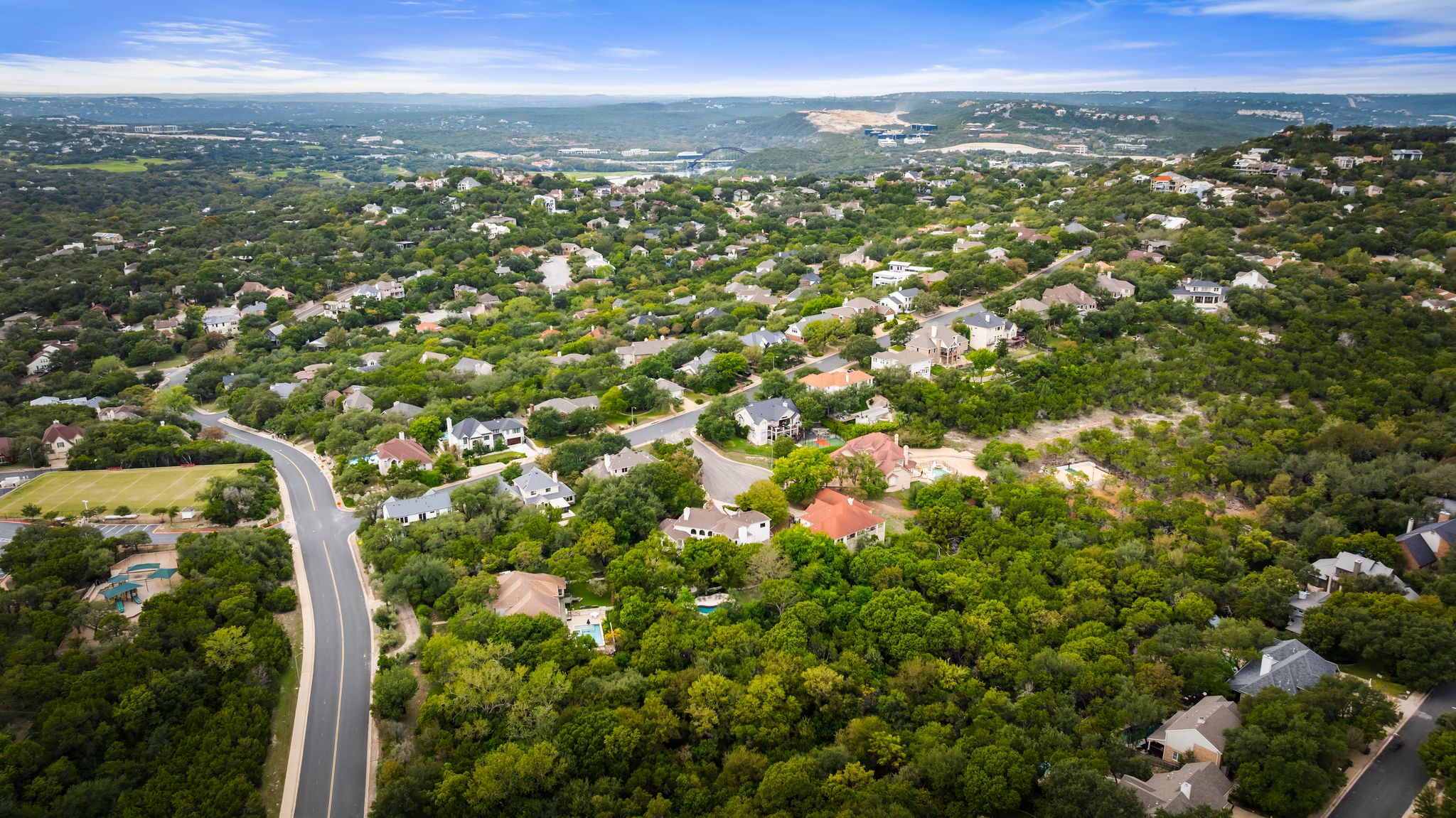
Northwest Hills is built across rolling terrain, limestone ridges, and slopes. Many homes were designed around that terrain rather than simply placed on flat parcels.
That creates a very different kind of real estate market.
The question isn't simply:
"How big is the lot?"
It is:
"What does the topography of this lot give me — and what does it require from me?"
That distinction is important when you're trying to determine what a Northwest Hills home is really worth.
How can elevation increase a home's value?
Elevation can be one of the biggest advantages a Northwest Hills property has.
A higher lot can create sightlines over neighboring homes and trees. Depending on the location, that can translate into Hill Country, treetop, canyon, or broader west Austin views.
And views are something buyers tend to value because they're difficult to recreate.
You can renovate a kitchen.
You can add a pool.
You can replace the floors.
You cannot easily manufacture elevation.
Recent Northwest Hills market analysis specifically identifies elevated lots with Hill Country views as selling above comparable flat-lot properties, although the exact premium varies considerably by location, view quality, condition, and other characteristics.
That last part matters.
Not every hill is valuable simply because it is a hill.
The elevation needs to create something buyers actually want.
Does a view always mean a higher home value?
No.
The quality of the view matters.
There's a big difference between:
A wide, unobstructed Hill Country view
A treetop view
A seasonal view through trees
A narrow view from one upstairs window
A view that could disappear if surrounding vegetation changes
A backyard view versus a street-facing view
I also look at where the view can be enjoyed.
Can you see it from the living room?
The kitchen?
The primary bedroom?
The patio?
The pool?
The best view properties don't just have a view somewhere on the lot. The architecture and outdoor spaces are often designed around it.
That can make the combination of topography + house orientation + outdoor living especially valuable.
Can a steep lot actually reduce value?
Absolutely.
This is where topography gets interesting.
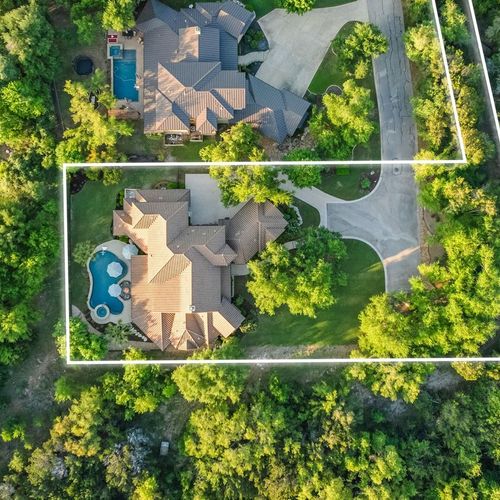
A steep lot can provide elevation, privacy, and views. But it can also make the property more difficult and expensive to maintain.
Potential issues include:
Retaining walls
Drainage systems
Erosion
Steep driveways
Multiple levels
Stairs
Limited usable backyard space
Difficult landscaping
More complicated pool construction
More complicated additions
Difficult access for construction equipment
Local Northwest Hills buyer guidance makes the same distinction: hillside lots can provide privacy and views, but drainage, retaining walls, and landscaping require additional attention.
So a steep lot isn't inherently good or bad.
The question is whether the benefits outweigh the complications.
Why can a flat lot command a premium?
Flat land is valuable for a completely different reason.
A mostly level lot can be easier to use.
That can mean:
Pool potential
Lawn space
Children's play area
Dogs
Outdoor entertaining
Gardens
Easier landscaping
Easier access
Fewer stairs
Simpler future additions
For some buyers, those things are more important than a view.
This creates an interesting tradeoff in Northwest Hills.
One buyer might choose the elevated lot with the spectacular view.
Another might happily choose the flatter lot with a less dramatic setting because they want a backyard where their kids can run around and a pool can be built without turning the project into an engineering exercise.
Neither buyer is wrong.
They're paying for different things.
How does topography affect usable yard space?
This is one of the most important distinctions between lot size and lot value.
Suppose one property has a 12,000-square-foot lot with a steep backyard.
Another has a 9,000-square-foot lot with a large, relatively flat backyard.
The first property has more land.
But the second may have more usable land.
That's why I would never evaluate a Northwest Hills lot by acreage alone.
Ask:
How much of the lot can actually be used?
If you want a pool, measure the potential pool area.
If you want a large patio, look at where it could go.
If you have children, look at the usable play area.
If you want an addition, consider where the house could realistically expand.
Topography becomes much more meaningful when you translate it into everyday use.
How does slope affect drainage?
This is one area where topography can have a major practical impact.
Water follows gravity.
If your property sits below another property or on a significant slope, you need to understand where water comes from and where it goes.
Look at:
Grading around the house
Downspouts
Gutters
Drainage channels
French drains
Retaining walls
Areas of erosion
Standing water
Soil movement
Water coming from uphill properties
A sloped lot can actually have excellent drainage when it is properly designed.
But poor grading or inadequate drainage can turn a beautiful hillside property into a long-term maintenance problem.
This is one reason I would pay close attention to drainage during inspections rather than assuming the slope itself tells you whether a property is good or bad.
What does topography have to do with foundation concerns?
A home's relationship with the ground matters.
On a sloped property, foundation performance should be considered alongside grading, drainage, retaining walls, trees, and the way the house was constructed into the terrain.
That doesn't mean a hillside home automatically has foundation problems.
It means the surrounding site conditions deserve attention.
If you see:
Significant cracking
Sloping floors
Doors that don't close properly
Retaining-wall movement
Soil erosion
Water-management issues
those observations should be investigated rather than dismissed as normal because "it's a hill."
The right question is always:
What is the cause, and is it active?
How do retaining walls affect property value?
Retaining walls can be both an asset and a liability.
A well-designed retaining wall can make a sloped property dramatically more usable.
It can create terraces.
It can provide outdoor living areas.
It can stabilize a slope.
It can make landscaping possible.
But retaining walls also require maintenance.
When evaluating a property with significant retaining walls, look for:
Cracking
Leaning
Bulging
Drainage behind the wall
Erosion
Age
Previous repairs
Vegetation growing through the structure
A retaining wall isn't something I would automatically treat as a negative.
I'd treat it as another system of the property that needs to be understood.
Can topography affect a home's driveway and garage?
Definitely.
This is one of those details buyers sometimes notice only after they've lived in the house for a while.
A steep driveway can affect:
Vehicle access
Parking
Drainage
Winter conditions
Garage usability
Walkability to the front door
Delivery access
Future accessibility
A home with a spectacular view isn't quite as appealing if getting in and out of the garage every day feels like a small expedition.
For buyers thinking about aging in place, this becomes even more important.
The lot doesn't just determine what you see from the backyard.
It determines how you move through the property.
Does topography affect renovation costs?
It can.
A relatively flat lot can make certain projects more straightforward.
A steep lot may require additional engineering, grading, drainage work, retaining structures, stairs, specialized foundations, or more complicated construction access.
That doesn't mean you shouldn't renovate a hillside home.
Some of the most interesting Northwest Hills homes take advantage of the terrain beautifully.
But buyers should understand that a renovation plan that looks simple on paper may become more complicated once the land is involved.
Before buying with major plans, determine whether the project is physically and financially realistic.
Can topography make an older home more valuable than a newer one?
Yes.
This is one of the reasons I would never evaluate Northwest Hills strictly by age or square footage.
An older home on an exceptional lot may have something a newer home cannot easily reproduce:
the land.
If the property has:
A strong elevation
Excellent views
Privacy
Mature trees
A desirable street
A usable yard
Good orientation
the underlying lot can support significant value even if the house itself needs work.
That's one reason you sometimes see buyers willing to renovate or completely rebuild an older property when the lot is exceptional.
The house can change.
The location and basic topography cannot.
How should buyers compare a flat lot with a hillside lot?
I would avoid asking which one is "better."
Instead, compare what each property gives you.
Flat or mostly flat lot
Potential advantages:
Easier outdoor living
Pool potential
Easier landscaping
Better play space
Easier accessibility
Simpler construction in some situations
Potential tradeoffs:
Less elevation
Fewer views
Potentially less privacy
Smaller lot in some areas
Hillside or elevated lot
Potential advantages:
Views
Privacy
Elevation
Dramatic setting
Treetop outlook
Architectural opportunities
Potential tradeoffs:
Retaining walls
Drainage considerations
Steep driveway
Stairs
Less flat yard
More complicated landscaping
Potentially higher construction costs
The right choice depends on how you intend to use the property.
Does topography affect resale value?
Yes, but not in a simple mathematical way.
The market doesn't say:
"Add $100,000 because this lot is on a hill."
Instead, buyers respond to the combination of characteristics.
An elevated lot with a beautiful view, privacy, mature trees, and a well-designed home can command a meaningful premium.
An elevated lot with drainage problems, a steep driveway, no usable backyard, and expensive retaining-wall issues is a different story.
Recent Northwest Hills market commentary consistently points to lot shape, slope, views, tree coverage, and overall condition as reasons similarly sized homes can sell for very different prices.
That's why comparable sales need to be genuinely comparable.
A flat interior lot isn't necessarily the right comp for a hillside view property just because both houses have 3,000 square feet.
What should sellers know about topography?
If you're selling a Northwest Hills home, don't hide the property's terrain.
Show it.
If the lot has a great view, make the view part of the marketing.
If the backyard has a beautiful terraced design, photograph it.
If mature trees create exceptional privacy, make sure buyers understand that.
At the same time, be prepared to answer questions about drainage, retaining walls, foundation history, landscaping, and access.
Buyers are going to notice the slope.
The best strategy is to explain what the topography provides and demonstrate that the property has been properly maintained.
A hillside home should not be marketed as though it were a flat suburban lot.
Its terrain is part of its identity.
So, how does topography affect Northwest Hills home values?
The short answer is:
Topography creates both opportunity and cost.
Elevation can create views.
Slopes can create privacy.
Trees can create shade and separation.
Flat areas can create usable outdoor living space.
But the same terrain can also create drainage issues, retaining walls, steep driveways, construction challenges, and additional maintenance.
The most valuable Northwest Hills properties tend to be the ones where the terrain works with the house rather than against it.
That's why, when I compare Northwest Hills homes, I don't just look at square footage, bedroom count, or price per square foot.
I look at the lot.
Where does the house sit?
What can you see?
Where does the water go?
How usable is the yard?
How private is the property?
What does the slope make easier?
What does it make harder?
And perhaps most importantly:
Is the topography giving the homeowner something that another property can't easily reproduce?
That's often where the real value is.
#NorthwestHills #JamesLucas
Check out this article next