
At a Glance
Lot size is only one part of lot value. A smaller flat lot can be more desirable than a much larger steep lot if it offers more usable space.
Flat or gently sloped land can be easier to use for pools, patios, play areas, gardens, additions, and outdoor entertaining.
Steep lots can offer views, privacy, elevation, and mature trees, so they are not automatically less valuable.
Retaining walls, drainage systems, stairs, grading, and difficult access can reduce the practical value of a steep lot.
In Northwest Hills, the best lot isn't necessarily the biggest one. It's the lot that gives you the combination of usability, setting, privacy, views, and future potential that buyers actually want.
When buyers compare two Northwest Hills homes, one of the first numbers they may notice is lot size.
One property has 8,000 square feet.
Another has 12,000.
Another has 15,000.
It's tempting to assume the 15,000-square-foot lot must be worth more.
But that's not necessarily how the market works.
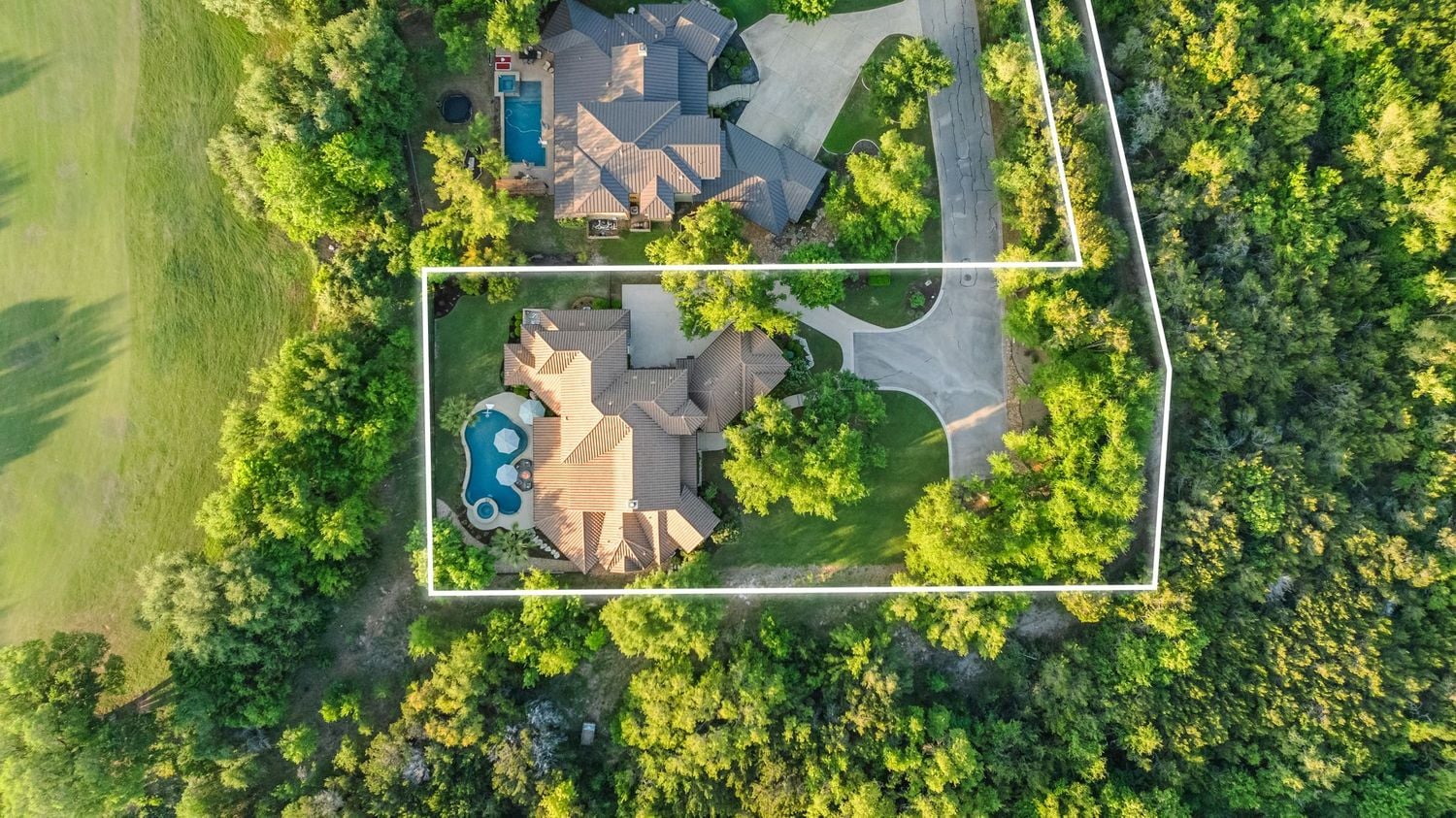
Imagine a 7,500-square-foot lot that is mostly flat, has a usable backyard, easy driveway access, room for a pool, and a comfortable connection between the house and outdoor space.
Now compare it with a 12,000-square-foot lot that drops sharply behind the house, requires retaining walls, has limited usable yard space, and is difficult to navigate.
The second lot is larger.
But the first lot may be more useful.
And usefulness can matter more than raw square footage.
Why doesn't more land always mean more value?
Because buyers aren't purchasing acreage by the pound.
They're purchasing what they can actually do with the property.
A 12,000-square-foot lot isn't necessarily twice as valuable as a 6,000-square-foot lot.
The additional land only creates additional value if the buyer can meaningfully use it or if it provides something desirable such as privacy, views, additional building potential, mature trees, or separation from neighbors.
This is particularly relevant in Northwest Hills because the neighborhood's terrain varies significantly.
Some lots are relatively flat.
Others sit on hillsides, ridges, or slopes.
That terrain can create beautiful properties, but it can also reduce the amount of land that is practically usable. (homes.com)
So when comparing lots, I would ask a different question:
How much of this lot can I actually use?
What does "usable lot" really mean?
Usable doesn't necessarily mean completely flat.
A gently sloped yard can be highly functional.
The important distinction is between land you own and land you can comfortably use.
A usable lot might provide space for:
A pool
Patio
Outdoor kitchen
Lawn
Children's play area
Garden
Pets
Fire pit
Additional landscaping
Future improvements
A steep lot may technically contain all the same square footage, but the usable portion could be much smaller.
That's why two lots with very different dimensions can have surprisingly different market appeal.
Why is a flat backyard valuable in Northwest Hills?
Outdoor living is an important part of how many Austin buyers evaluate a home.
A relatively flat backyard can make outdoor space easier to use for entertaining, recreation, gardening, pets, or a pool.
Northwest Hills has plenty of properties where elevation and slope are part of the appeal, but local buyer guidance also points out the tradeoff between hillside views and usable outdoor space. (livingwellinaustin.com)
Think about the difference between these two backyards.
Yard A: 8,000-square-foot lot with 3,000 square feet of comfortable, usable backyard.
Yard B: 12,000-square-foot lot with 2,000 square feet of usable area and a steep slope beyond it.
Yard B is technically larger.
But Yard A may provide the better lifestyle.
That's what buyers are ultimately paying for.
Does a flat lot make a pool easier?
Often, yes.
And that can matter in Northwest Hills.
A pool isn't right for every buyer, but for buyers who want one, the lot can determine whether the project is relatively straightforward or significantly more complicated.
On a sloped property, you may need to consider:
Retaining walls
Excavation
Drainage
Structural engineering
Pool elevation
Access for construction equipment
Landscaping
Changes to existing grades
A flatter lot may provide more flexibility.
That doesn't mean every flat lot can accommodate a pool.
Setbacks, easements, utilities, trees, drainage, site access, and local requirements still need to be evaluated.
But the starting point can be considerably different.
Can a steep lot actually be worth more?
Absolutely.
This is an important distinction.
I wouldn't want buyers to hear "flat is better" and assume every steep lot is inferior.
Some of the most compelling Northwest Hills properties are valuable precisely because of their elevation.
A steep or elevated lot may offer:
Hill Country views
Downtown views
Greater privacy
Mature trees
A dramatic setting
Separation from neighboring homes
Architectural opportunities
Those characteristics can be difficult or impossible to recreate.
A flat lot may provide more usable yard space, while a hillside lot may provide a much better setting.
The market has to decide which combination buyers value more.
How do views change the equation?
Views are one of the clearest examples of why lot size alone doesn't tell the whole story.
Suppose you have:
Lot A: 10,000 square feet, relatively flat, no meaningful view.
Lot B: 7,500 square feet, significantly sloped, but positioned above surrounding properties with a beautiful view.
A buyer who prioritizes outdoor entertaining and a pool may prefer Lot A.
A buyer who cares deeply about the view may pay substantially more for Lot B.
Neither buyer is wrong.
They're simply assigning value to different characteristics.
That's why comparable sales need to be carefully selected in Northwest Hills.
A view lot shouldn't necessarily be compared directly with a flat interior lot simply because the properties have similar square footage.
How does privacy affect the value of a steep lot?
Privacy can be another advantage.
Elevation can sometimes place a home above neighboring properties, creating separation that a flat lot doesn't provide.
Mature trees can amplify that effect.
A smaller elevated lot with excellent privacy may therefore be more appealing than a larger flat lot where the neighboring homes are very close.
This is another reason I like to think about a lot as a setting, not just a measurement.
What do you see?
What do you hear?
What do you overlook?
How close are the neighbors?
How much usable outdoor space do you have?
Those questions can tell you much more about the property's practical value than the lot-size number alone.
What costs can make a steep lot less attractive?
This is where the equation can change.
Slope isn't necessarily a problem.
But slope can create additional construction and maintenance considerations.
Depending on the property, buyers may encounter:
Retaining walls
Retaining walls can be essential on sloped properties, but they are also structures that require inspection and maintenance.
Drainage
Water behaves differently on a slope. Grading, downspouts, erosion control, and drainage systems deserve careful attention.
Stairs
A steep backyard may require multiple levels and stairs to access different areas.
Landscaping
Maintaining a steep landscape can be more difficult and expensive than maintaining a relatively level yard.
Construction access
Future projects may be more complicated if equipment cannot easily reach the backyard.
Foundation considerations
The relationship between slope, drainage, retaining structures, and the home's foundation deserves attention during due diligence.
None of these automatically makes a steep property a bad purchase.
But they can affect what the land is worth to a buyer.
Does a larger steep lot cost more to maintain?
Potentially.
The cost isn't necessarily determined by the number of square feet.
A large, relatively flat lawn may actually be easier to maintain than a smaller but steeply landscaped property.
Think about mowing.
Think about trimming.
Think about irrigation.
Think about drainage.
Think about moving materials around the yard.
Think about accessing trees.
A steep lot can require more specialized landscaping work.
If you're buying for long-term ownership, those ongoing costs deserve consideration.
Can a smaller flat lot be easier to remodel?
Often, yes.
A relatively flat lot may give you more flexibility for future outdoor improvements or additions.
But again, don't assume that flat automatically means buildable.
Before planning an addition, pool, guest house, or other major improvement, you would need to understand the property's setbacks, easements, utilities, drainage, trees, zoning, and other applicable restrictions.
The important point is that usable land gives you options.
And options have value.
What about the driveway?
This is one of the most overlooked differences between lots.
A steep lot may have a steep driveway.
That's not automatically a problem, especially in Northwest Hills.
But the driveway affects everyday life.
Ask:
Is it easy to enter?
Is it easy to exit?
Is there enough room for two vehicles?
Is there space for guests?
Does the slope make unloading difficult?
Is the garage easily accessible?
How does water move during heavy rain?
A smaller lot with an easy driveway can sometimes be much more functional than a larger property where getting in and out is cumbersome.
How should buyers compare two Northwest Hills lots?
Don't start with square footage.
Start with function.
I would compare them in this order:
1. Usable outdoor space
How much of the lot can you actually enjoy?
2. Setting
What do you see from the house and backyard?
3. Privacy
How close are the neighboring homes?
4. Terrain
Is the slope manageable?
5. Drainage
Where does water go during heavy rain?
6. Access
How easy is it to reach the house, garage, and backyard?
7. Future potential
Could you reasonably make improvements later?
8. Maintenance
How much work will the lot require?
9. Trees and landscaping
Are there mature trees that add value or create maintenance constraints?
10. Lot size
Yes, square footage matters—but it's only one part of the picture.
Is a smaller flat lot always better?
No.
That's just the opposite version of the same mistake.
A small flat lot with no privacy, poor drainage, difficult neighbors, and limited outdoor space may be less desirable than a larger hillside lot with a spectacular view and mature trees.
The goal isn't to find the flattest lot.
The goal is to find the best combination of characteristics for the buyer.
That's why one buyer might pay a premium for a flat backyard while another might gladly sacrifice yard space for an exceptional view.
What should sellers know about lot value?
If you're selling a Northwest Hills home, don't market the property using lot size alone.
If you have a smaller lot with excellent usability, explain what makes it work.
For example:
Flat backyard
Pool-ready space
Easy garage access
Private outdoor area
Large patio
Mature landscaping
Easy indoor-outdoor connection
If the lot is larger but steep, highlight the things that make the slope valuable.
Maybe it has:
Exceptional views
Privacy
Mature trees
Multiple outdoor spaces
A dramatic setting
Architectural opportunities
The goal is to communicate what the buyer gets from the land, not just how much land there is.
How does lot value affect pricing?
This is where Northwest Hills becomes particularly interesting.
Two homes that look similar online can have very different values because the lots are different.
One may have:
Better elevation
Better views
More privacy
More usable yard
Better driveway access
Fewer drainage challenges
Better outdoor living potential
Those differences can matter just as much as the size of the house.
That's why I would be cautious about pricing a Northwest Hills home simply by taking the average price per square foot and applying it to the house.
The lot is part of the property.
And in some cases, it is one of the most important parts.
So, why can a smaller flat lot be worth more than a larger steep lot?
Because usable value isn't the same thing as measured size.
A smaller flat lot can give a buyer more practical outdoor space, easier access, simpler maintenance, better pool potential, and more flexibility for future improvements.
A larger steep lot may give you something else: views, privacy, elevation, mature trees, and a more dramatic setting.
Neither is automatically better.
The right comparison is not:
"Which lot has more square feet?"
It's:
"Which lot gives me more of what I actually value?"
That's the question I would use when comparing Northwest Hills properties.
Because when you're buying a home here, you're not just buying the structure.
You're buying the house, the lot, the setting, and the possibilities that come with all three.
#NorthwestHills #JamesLucas
Check out this article next