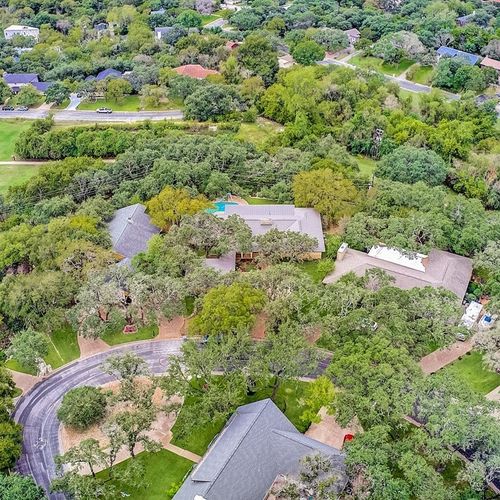


At a Glance
Northwest Hills offers central Austin access, mature neighborhoods, and shorter commute times.
Lakeway delivers a true Lake Travis lifestyle with newer homes, master-planned communities, and resort-style amenities.
Northwest Hills generally has older homes but stronger location value; Lakeway offers newer construction and more space.
Commutes are significantly easier from Northwest Hills, while Lakeway wins on recreation and lake access.
The choice comes down to daily convenience versus lake-focused suburban living.
This comparison usually shows up when buyers start zooming out.
They’ve looked at Northwest Hills.
They’ve looked at Westlake.
And then Lakeway enters the conversation like a different version of Austin entirely.
Because it is.
Lakeway isn’t just another suburb.
It’s a lake-centered lifestyle built on space, water, and distance from the city.
Northwest Hills is the opposite.
It’s city-adjacent living built on access, trees, and established neighborhoods.
Neither is trying to compete in the same lane.
But they often compete for the same buyer.
Where are Northwest Hills and Lakeway located?
Northwest Hills
Northwest Hills sits in Northwest Austin near:
MoPac (Loop 1)
Far West Boulevard
RM 2222
Mesa Drive
It’s one of the most centrally positioned residential areas in Northwest Austin.
You’re typically:
15–25 minutes to Downtown
10–15 minutes to The Domain
Close to major employment corridors
It feels connected to the city’s daily rhythm.
Lakeway
Lakeway sits on the south shore of Lake Travis, west of Austin along:
RM 620
Lakeway Boulevard
Lake Travis shoreline
It’s part of a larger lake-focused region that includes:
Rough Hollow
Serene Hills
Flintrock Falls area
It feels like a resort town that grew into a suburb.
How do home prices compare?
Northwest Hills
Northwest Hills pricing reflects:
Central location
Established housing stock
Renovation-driven value
Limited land availability
Typical range:
~$650K entry level
$850K–$1.5M mid-range
$1.5M–$3M+ hillside and view properties
You’re paying for land and location more than newness.
Lakeway
Lakeway pricing reflects:
Newer construction
Master-planned development
Lake proximity
Larger homes and lots
Typical range:
~$600K entry level
$750K–$1.2M family homes
$1.2M–$3M+ lake and luxury properties
You often get more house per dollar in Lakeway.
Pros and cons of Northwest Hills
Pros
Central Austin access
Shorter commute times
Mature trees and established neighborhoods
Strong long-term land value in key pockets
Close to The Domain and major job centers
Cons
Older homes in many areas
Less uniform housing quality
Smaller lots in some sections
Higher price per square foot than suburbs
Northwest Hills rewards buyers who value location over newness.
Pros and cons of Lakeway
Pros
Lake Travis access and recreation
Newer homes and master-planned communities
Larger floor plans and lots
Resort-style amenities in many neighborhoods
Strong family-oriented suburban structure
Cons
Longer commute to Downtown Austin
More distance from central job hubs
Heavier reliance on RM 620 traffic patterns
Less “central Austin” feel
Lakeway rewards buyers who value space and lifestyle over proximity.
Which has better schools?
Northwest Hills
Typically zoned to Austin ISD, including:
Doss Elementary
Murchison Middle School
Anderson High School
Strong demand driven by central Austin families.
Lakeway
Most Lakeway homes fall under Eanes ISD, including:
Lakeway Elementary (in some zones)
Bee Cave Elementary (nearby zones)
Hudson Bend Middle School
Westlake High School
Eanes ISD is one of the most consistently high-performing districts in Texas.
This is one of Lakeway’s biggest advantages.
Which has a better commute?
Northwest Hills
15–25 minutes to Downtown (typical)
Quick access to MoPac and central Austin
Strong access to North Austin employment hubs
Lakeway
30–60+ minutes to Downtown depending on traffic
Heavily dependent on RM 620 corridor
More predictable for remote or hybrid workers
If commute matters daily, Northwest Hills usually wins.
Which lifestyle feels better?
Northwest Hills lifestyle
Mature residential feel
Established trees and streets
Quiet but central
More “old Austin” energy
It feels grounded, stable, and integrated into the city.
Lakeway lifestyle
Lake-focused recreation
Golf courses, marinas, trails
Master-planned communities
Weekend resort energy year-round
It feels like living where other people vacation.
Which is better for families?
Northwest Hills
Strong school feeder patterns
Shorter commutes for parents
Older, quieter neighborhoods
Less master-planned structure, more organic living
Lakeway
Strong Eanes ISD access (major draw)
More community amenities
Newer homes with more space
Highly family-oriented development design
Lakeway often wins for space and schools.
Northwest Hills often wins for convenience.
Which has better long-term value?
Northwest Hills
Scarcity of central land
Strong renovation demand
Location-driven appreciation
Limited expansion potential
Lakeway
Continued development west of Austin
Strong luxury and lake-driven demand
More supply flexibility over time
Northwest Hills tends to behave like “fixed land value.”
Lakeway behaves more like “expanding lifestyle value.”
What surprises buyers most?
Northwest Hills surprises
How close everything actually is
How much variation exists street-to-street
How much value renovation adds
Lakeway surprises
How far it feels from Downtown during peak traffic
How self-contained the lifestyle becomes
How large homes are compared to price
Questions buyers ask most often
Is Lakeway too far from Austin?
For daily Downtown commuters, it can feel far. For hybrid or remote workers, it often feels ideal.
Which has better schools?
Lakeway (Eanes ISD) is often considered stronger overall, depending on zoning and specific campuses.
Which is more expensive?
They overlap, but Lakeway often gives more square footage for the price, while Northwest Hills commands higher location value.
Which has better commute times?
Northwest Hills is significantly closer to central Austin employment hubs.
Which is better for lake access?
Lakeway is the clear winner with direct Lake Travis proximity.
Final Thoughts
Northwest Hills and Lakeway aren’t really competing neighborhoods.
They’re two different answers to the same question:
How do you want Austin to fit into your everyday life?
Northwest Hills keeps you close to the city’s center—older trees, shorter drives, and a life built around access.
Lakeway pulls you toward the water—space, newer homes, and a rhythm built around the lake instead of the city.
One is built for connection.
The other is built for separation.
And neither choice is wrong.
But they do lead to very different versions of Austin living once the keys are in your hand.
#NWHills
Check out this article next