
At a Glance
Northwest Hills is one of Austin’s most “remote-buyable” neighborhoods due to stable demand and consistent housing patterns
Successful remote purchases depend more on street-level context than photos or listings alone
Virtual tours, inspection reports, and school zoning verification become non-negotiable tools
The biggest risk in remote buying isn’t the house—it’s misunderstanding the micro-location
Buyers who structure the process correctly can relocate confidently without an initial visit
Buying a home without stepping foot in it used to sound reckless.
Now it’s just… normal.
Especially in Austin.
And Northwest Hills is one of those neighborhoods where remote relocation actually works—if you treat it like a process instead of a gamble.
Because the truth is simple:
You’re not really buying a house remotely.
You’re buying information.
And deciding if it’s enough.
Why Northwest Hills works well for remote buyers
Northwest Hills is unusually suited for remote decision-making because it’s:
Established (homes built mostly 1960s–1990s)
Predictable in structure and layout patterns
Less dependent on new-construction “surprises”
Highly documented through past sales and renovations
Strongly defined by school zones and geography
That last part matters.
In newer neighborhoods, what you see online can change quickly.
In Northwest Hills, the neighborhood “shape” is already set.
You’re not guessing what it will become.
You’re evaluating what it already is.
Step 1: Start with the right mental model (this is where most people mess up)
Remote buyers often start with listings.
Wrong move.
Start with lifestyle zones:
In Northwest Hills, you’re really choosing between:
Flat, walkable pockets near schools
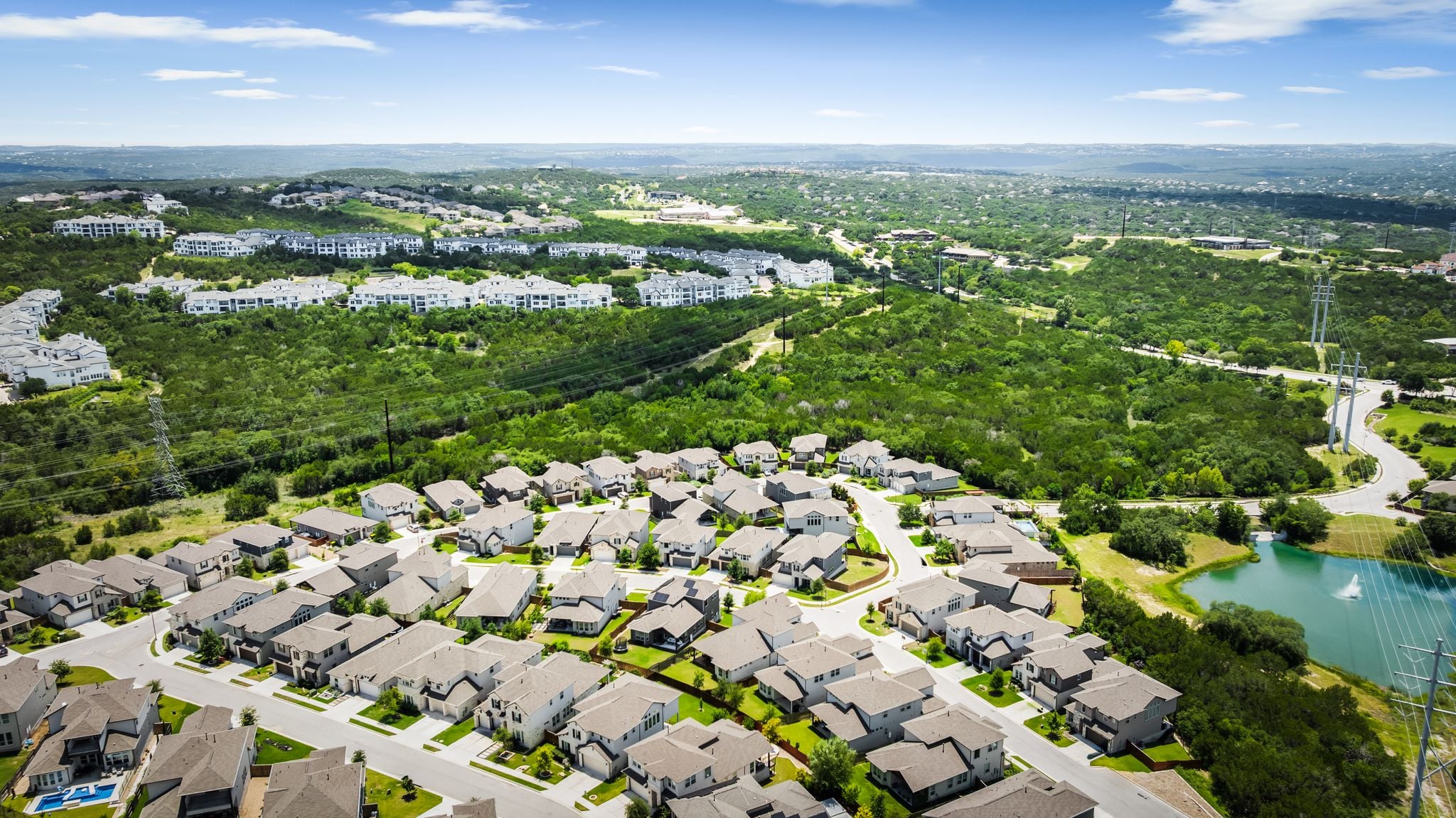
Hilly streets with views and privacy
Renovated corridors with higher turnover
Quiet cul-de-sac-style sections with low traffic
The house matters.
But the street energy matters more here than almost anywhere else in Austin.
You can’t feel that from a listing.
You have to map it.
Step 2: Treat virtual tours like reconnaissance, not marketing
A virtual tour is not a showing.
It’s intelligence gathering.
When done right, it should answer:
What does the street sound like at 3pm?
Where does sunlight hit the backyard?
How steep is the driveway really?
What’s the immediate neighbor situation?
Does the home feel renovated or staged-to-look-renovated?
Most listings won’t tell you this directly.
But a good agent or video walkthrough will.
And if they won’t show it?
That’s your first signal.
Step 3: The real Northwest Hills risk is “micro-location blindness”
Here’s the thing nobody warns remote buyers about:
Northwest Hills is not one uniform experience.
Two homes within half a mile can feel completely different because of:
Elevation changes
Cut-through traffic patterns
School zoning boundaries
Tree canopy density
Renovation cycles on the block
This is where remote buyers get tripped up.
They fall in love with the house.
Then arrive later and realize the street personality wasn’t what they expected.
That’s not a dealbreaker issue.
That’s a preview issue.
And previews matter more than photos.
Step 4: School zones become your anchor point
Even if you don’t have kids, school zoning is one of the most important filters in Northwest Hills.
Why?
Because it shapes:
Buyer demand
Long-term resale stability
Neighborhood demographics
Traffic patterns around peak hours
Austin ISD boundaries—especially around schools like Doss, Murchison, and Anderson—can shift value perception dramatically.
So remote buyers need to verify:
Exact address zoning
Boundary maps (not assumptions)
Historical feeder consistency
Don’t trust listing summaries alone.
Confirm it independently.
Always.
Step 5: Inspections matter more when you’re not physically there
When you’re buying remotely, inspections aren’t a formality.
They are your physical presence substitute.
In Northwest Hills, where many homes are older, inspections should go deeper:
Foundation movement (common in hillside areas)
Plumbing age and material
Electrical updates vs original systems
Roof condition (especially older builds)
Drainage and slope runoff behavior
And here’s the real move:
Don’t just read the report.
Have it translated.
Because raw inspection PDFs don’t tell you what matters most.
Patterns do.
Step 6: Use a “three-layer verification system”
If you’re relocating without visiting, don’t rely on one source.
Use three:
Layer 1: Listing data
Square footage, price, basic features.
Layer 2: Real walkthrough video
Actual sound, light, flow, and condition honesty.
Layer 3: Street intelligence
What’s happening around the home:
Renovation activity
Neighbor condition
Traffic flow
Noise patterns
Future build risk
This third layer is where deals are won or lost.
Most buyers ignore it.
Remote buyers can’t afford to.
Step 7: Expect emotional lag (it’s real)
Here’s something nobody talks about:
When you buy remotely, your brain doesn’t fully “attach” until later.
You’re making a high-stakes decision without physical memory.
That creates:
Doubt after closing
Over-analysis of details
Second-guessing normal imperfections
This is normal.
It doesn’t mean the decision was wrong.
It means you didn’t experience it in person.
Northwest Hills, with its older homes and varied character, amplifies this feeling slightly.
But it fades once you’re physically living there.
Routine fixes it.
Step 8: The smartest remote buyers do this one thing
They don’t chase the perfect house.
They define:
Their non-negotiable street type
Their school zone priority
Their commute tolerance
Their renovation willingness
Then they buy the right version of imperfect.
Because in Northwest Hills, perfection doesn’t exist.
Alignment does.
Common mistakes remote buyers make
Let’s keep it real:
1. Falling for staged interiors
Pretty doesn’t equal functional.
2. Ignoring slope and drainage
Hills = hidden infrastructure variables.
3. Overweighting square footage
Layout beats size in older homes.
4. Assuming all streets feel the same
They don’t. Not even close.
5. Skipping second opinion walkthroughs
Always have boots-on-ground validation.
Questions buyers ask most often
Can you really buy in Northwest Hills without visiting?
Yes—if you rely on layered data, strong video walkthroughs, and street-level analysis rather than photos alone.
What’s the biggest risk of buying remotely?
Misreading the immediate street environment, not the house itself.
Do homes in Northwest Hills vary a lot in condition?
Yes. Many homes are older and range from fully renovated to original condition.
Is it safe to buy in Austin without visiting?
It’s common now, but it requires disciplined process and reliable local representation.
Should I rent first instead?
Sometimes yes—but many buyers successfully purchase remotely if they structure the decision properly.
Final thoughts
Relocating to Northwest Hills without visiting isn’t about removing uncertainty.
It’s about managing it intelligently.
Because there will always be things you can’t feel through a screen:
The way the light hits the trees at 6pm.
The quiet hum of a weekday street.
The slope you only notice when you’re walking it.
But you can get close enough.
Close enough to decide with confidence instead of guessing.
And that’s the real shift in modern relocation:
You don’t eliminate distance.
You just stop letting it decide for you.
Northwest Hills rewards people who do their homework.
Even from far away.
Especially from far away.
#NWHills
Check out this article next