
At a Glance
Luxury buyers in Northwest Hills are looking for calm, not clutter
Staging now focuses on “lived-in elegance,” not showroom perfection
Neutral design, lighting, and flow matter more than expensive décor
Over-staging can actually hurt perception in 2026
The goal is to reduce hesitation, not impress with excess
Luxury real estate in Northwest Hills doesn’t move on spectacle anymore.
It moves on restraint.
That’s the shift most sellers don’t fully see until they’ve already gone too far with staging.
Because here’s the truth in 2026:
Luxury buyers in Austin aren’t walking into homes looking for drama.
They’re looking for ease.
A feeling that says:
“This already works. I don’t need to fix anything.”
That feeling is what sells homes faster than any statement chandelier ever will.
Luxury staging is not decoration—it’s editing
The biggest mistake sellers make is assuming staging means adding things.
In reality, high-end staging is about removing friction.
In Northwest Hills especially, buyers are:
Analytical
Comparison-heavy
Condition-sensitive
Time-aware
They’re not reacting emotionally to clutter or color—they’re scanning for signals.
Signals like:
How updated the home feels
How easy it would be to move in
Whether maintenance issues are hiding
Whether the layout flows naturally
A staged home should feel like a pause in a noisy market.
Not a performance.
1. Start with neutrality, but don’t go cold
Luxury staging in 2026 has evolved.
Pure white, sterile spaces don’t perform as well anymore.
Buyers respond better to:
Warm neutrals
Soft earth tones
Natural textures (linen, wood, stone accents)
Balanced contrast without bold design statements
Think less “gallery” and more “quiet hotel suite you want to stay in.”
The goal is emotional calm, not visual emptiness.
Because empty doesn’t feel premium anymore—it feels unfinished.
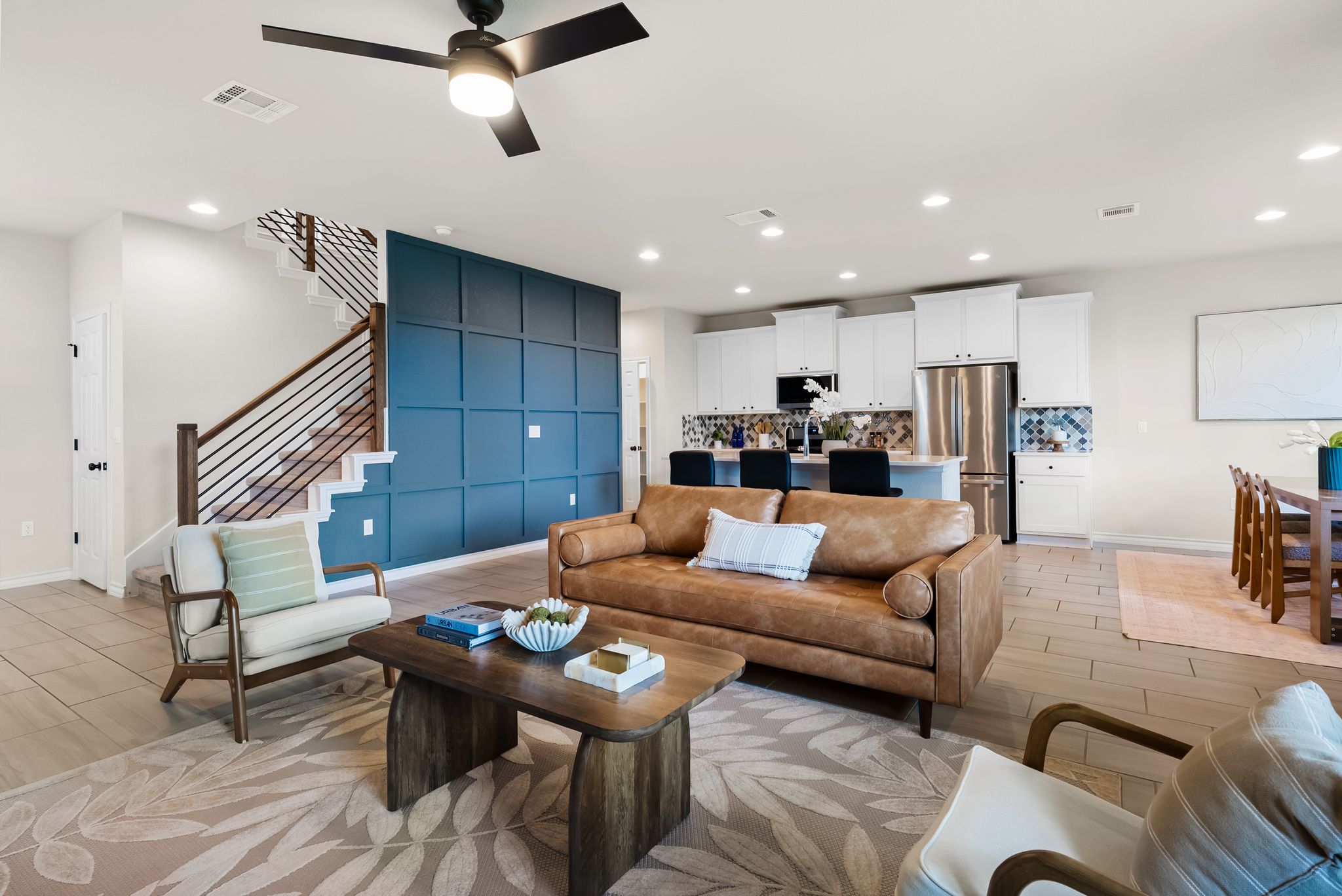
2. Scale matters more than décor
Northwest Hills homes often have:
High ceilings
Large windows
Open living areas
Split-level layouts
If staging is too small or under-scaled, the home feels awkward.
If it’s too large, it feels staged for ego instead of livability.
Luxury buyers are sensitive to proportion.
What works best:
Properly sized furniture that fits the room footprint
Fewer pieces, better placed
Clear walking flow through spaces
Defined conversation areas in large rooms
You’re not filling space.
You’re guiding movement.
3. Lighting is doing more selling than furniture
This is where luxury staging quietly wins or loses deals.
Even a beautifully staged home falls flat under poor lighting.
In Northwest Hills, where many homes have mature trees and filtered natural light, interior lighting becomes critical.
What works:
Warm LED recessed lighting
Layered lighting (ambient + task + accent)
Table lamps that soften corners
Clean, modern fixtures that don’t distract
A well-lit home feels newer—even when it isn’t.
And buyers unconsciously associate “bright” with “well-maintained.”
That association drives offers more than people think.
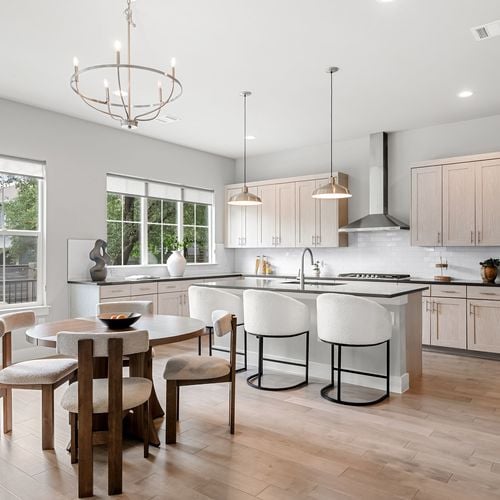
4. The kitchen should feel effortless, not dramatic
Luxury buyers in this neighborhood aren’t impressed by over-designed kitchens.
They’re evaluating:
Functionality
Flow
Storage
Condition
Cleanliness
Staging here should do one thing:
Make the kitchen feel easy to live in.
That means:
Clear countertops (but not sterile)
One or two intentional accents (not clutter)
Fresh but subtle styling (wood board, simple bowls, neutral florals)
Clean lines in seating and bar areas
If a kitchen feels like it’s trying too hard, buyers start wondering what else is being overcompensated for.
5. Bedrooms should feel quiet, not styled
Bedrooms in luxury staging are often overdone.
But buyers don’t want a showroom—they want rest.
What works:
Soft bedding layers in neutral tones
Minimal wall décor
Balanced symmetry (nightstands, lamps)
No overly bold artwork or patterns
What hurts:
Over-styled hotel looks
Heavy color palettes
Too many pillows or decorative elements
Anything that feels performative
A bedroom should feel like a reset button.
Not a design statement.
6. Bathrooms: the “clean signal” rooms
Bathrooms don’t sell luxury—they confirm it.
Buyers are subconsciously asking:
“Does this feel maintained or neglected?”
Simple staging wins:
Crisp white towels
Minimal countertop items
Clean glass and mirrors
Neutral soap dispensers
Subtle greenery if anything
What kills perception:
Visible clutter
Strong scents or artificial fragrances
Over-decoration
Anything that suggests daily mess
Bathrooms are less about beauty and more about trust.
7. Outdoor spaces matter more in Northwest Hills than most sellers realize
This is where the neighborhood quietly separates itself.
Luxury buyers in Northwest Hills are deeply responsive to:
Shade
Trees
Privacy
Views
Usable outdoor seating
Even simple staging upgrades outside can shift perception dramatically:
Clean patio furniture
Defined seating areas
Soft outdoor lighting
Minimal, well-kept landscaping
Recent home staging data shows that well-staged outdoor areas increase buyer engagement significantly in lifestyle-driven markets like Austin. (thespruce.com)
And in this neighborhood, outdoor space is part of daily living—not just aesthetics.
8. Avoid the “luxury overload” trap
This is the quiet mistake that hurts high-end listings the most.
Over-staging can signal:
Trying too hard to impress
Masking underlying issues
Misalignment with neighborhood expectations
Examples:
Overly formal furniture arrangements
Excessive decorative objects
High-contrast modern styling in traditional homes
Hotel-lobby aesthetics in residential spaces
Luxury buyers don’t want performance.
They want authenticity with polish.
There’s a difference.
And they can feel it immediately.
9. Staging should match price tier expectations
In Northwest Hills, staging is not one-size-fits-all.
A $900K home and a $2M home should not look staged the same way.
Higher-end homes require:
More restraint
Better materials in staging furniture
Stronger architectural emphasis
Less visual noise
Lower luxury tiers benefit more from clarity and function.
Misalignment here can confuse buyers—and confusion slows offers.
The psychology behind luxury staging in 2026
Today’s buyers are not just buying homes.
They’re buying reduction of uncertainty.
Staging works when it answers unspoken questions like:
“Is this home cared for?”
“Will I need to renovate immediately?”
“Does this feel easy to maintain?”
“Can I move in without stress?”
The more those answers feel like “yes,” the faster decisions happen.
Not because buyers are rushed—but because hesitation disappears.
Questions sellers ask most often
Is staging really necessary for luxury homes in Northwest Hills?
Yes. In 2026, staged homes consistently outperform unstaged homes in showing activity and perceived value.
How much staging is too much?
When the home stops feeling livable and starts feeling performative.
Should I stage if my home is already updated?
Yes. Updates reduce friction, but staging reduces hesitation.
Does staging increase sale price or just speed?
Both. Proper staging improves buyer perception, which often translates into stronger offers.
What room matters most for staging?
Kitchen and main living areas carry the most influence, followed closely by primary bedroom and outdoor space.
Final thoughts
Luxury staging in Northwest Hills isn’t about creating a perfect version of a home.
It’s about removing everything that makes buyers think twice.
Because in this market, hesitation is the real competition—not other listings.
When staging is done right, a home doesn’t feel decorated.
It feels resolved.
And resolved homes don’t sit.
They move.
Quietly.
Confidently.
Like they already know they’re the right answer.
#NWHills
Check out this article next