
At a Glance
Northwest Hills privacy usually comes from terrain, trees, and lot placement more than gates or fences.
Streets in Cat Mountain, Chimney Corners, and canyon-edge sections tend to feel the most secluded.
Cul-de-sacs, winding roads, and homes backing to greenbelt areas often provide the strongest long-term privacy.
Some of the quietest streets in Northwest Hills are hidden several turns off the main roads and barely appear on buyers’ radar.
Buyers should evaluate elevation, backyard orientation, and traffic flow — not just lot size alone.
One of the reasons Northwest Hills has held value for so long is that it still feels tucked away.
Not isolated. Just removed enough from the noise.
You drive a few minutes off Mopac or 360 and suddenly the pace changes. The roads curve with the hills. Trees close in around the streets. Houses sit deeper into their lots. You stop hearing traffic quite as much.
That feeling matters to buyers more now than it did even five years ago.
Privacy has quietly become one of the biggest drivers in Northwest Hills real estate — especially for buyers relocating from denser urban neighborhoods or newer suburban developments where homes can feel stacked shoulder to shoulder.
But privacy here is nuanced.
The best streets are not always the flashiest streets.
What actually creates privacy in Northwest Hills?
In Northwest Hills, privacy usually comes from four things:
Topography
Mature trees
Street layout
Lot orientation
The neighborhood’s winding roads and hilly terrain naturally create separation between homes. Many properties back to wooded canyons or greenbelt pockets, which helps reduce visibility from neighboring lots.
And unlike newer developments where streets often follow predictable grids, Northwest Hills roads bend, climb, and narrow organically with the landscape.
That changes the atmosphere dramatically.
Some streets feel almost hidden once you get several turns inside the neighborhood.
Which areas tend to offer the most privacy?
Why do buyers gravitate toward Cat Mountain?
Cat Mountain consistently attracts buyers looking for a quieter, more secluded setting.
The elevation changes help enormously.
Homes are often staggered vertically rather than sitting directly side-by-side at the same grade. Combined with mature trees and canyon backdrops, many properties feel far more private than their actual lot size would suggest.
Certain interior streets in Cat Mountain especially stand out because they:
Have minimal through traffic
Back to hillsides or canyon space
Feature larger setbacks
Sit farther from major corridors
One thing I’ve noticed repeatedly: buyers initially focus on the views, but long-term owners usually value the privacy even more.
Views attract attention. Privacy keeps people there.
There’s also a practical side to it. Northwest Hills terrain naturally absorbs some street noise depending on elevation and orientation. The difference between one block and the next can be surprisingly noticeable.
Which streets feel especially quiet in Northwest Hills?
A few streets and pockets consistently stand out in conversations with buyers and longtime residents.
Greystone Drive
Greystone has a distinctly Northwest Hills feel:
Rolling elevation
Mature tree canopy
Curving streets
Limited commercial intrusion
Parts of Greystone feel surprisingly insulated despite being centrally located within the neighborhood.
The farther interior sections especially tend to feel calmer because traffic naturally disperses throughout the surrounding hillsides rather than funneling heavily through one corridor.
Adirondack Trail
Adirondack has always felt slightly tucked away compared to nearby connector streets.
The lots vary significantly, which actually helps privacy because homes don’t sit in a repetitive rhythm. Some homes sit elevated above the road while others nest deeper into heavily treed lots.
The mature landscaping here does a tremendous amount of work.
Valburn Drive
Valburn tends to appeal to buyers wanting larger trees and a quieter residential feel without feeling disconnected from the rest of Austin.
Parts of the street back toward greener spaces and interior terrain, helping reduce the sense of density.
You also avoid some of the heavier cut-through traffic patterns found closer to Far West Boulevard.
Interior Chimney Corners streets
Chimney Corners has several quieter interior sections where homes sit on broader lots with stronger backyard privacy.
The atmosphere here feels different from Cat Mountain.
Less dramatic elevation. More grounded lot layouts. Larger backyard footprints in some sections. Buyers wanting usable outdoor space alongside privacy often end up preferring these streets over steeper hillside locations.
Does backing to greenbelt matter?
Absolutely.
Some of the strongest privacy in Northwest Hills comes from homes backing to:
Canyon space
Wooded ravines
Protected greenbelt sections
Undeveloped hillsides
These lots tend to age well because the surrounding terrain limits future encroachment.
That’s a huge deal in Austin.
Buyers are increasingly sensitive to the possibility of future redevelopment behind or beside them. A property that feels private today may not feel nearly as secluded if neighboring lots redevelop aggressively later on.
Protected terrain creates more predictability.
The flip side is that canyon lots sometimes come with:
Steeper grading
Wildlife activity
Drainage considerations
More tree maintenance
Still, many buyers gladly accept those tradeoffs for the privacy.
Are cul-de-sacs worth prioritizing?
Usually, yes.
Cul-de-sacs and low-traffic pockets tend to create noticeably calmer environments in Northwest Hills.
Several reasons:
Less vehicle traffic
Reduced street noise
Fewer headlights crossing front windows
More pedestrian feel
Better separation from commuter shortcuts
Northwest Hills was never designed around rigid suburban grids, which helps. The winding road patterns already reduce some through traffic naturally.
But homes deeper within cul-de-sac sections often feel even quieter.
Especially at night.
What privacy mistakes do buyers make?
One of the biggest mistakes is assuming privacy equals acreage.
It doesn’t.
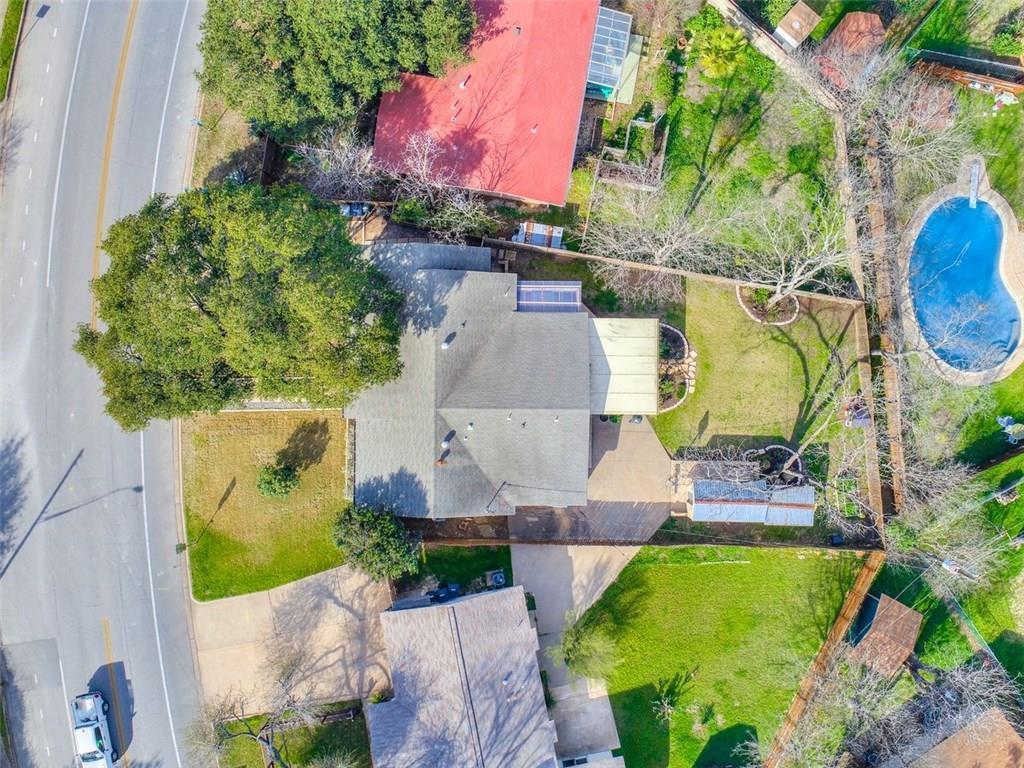
I’ve walked plenty of half-acre lots in Austin that felt fully exposed. Meanwhile, a smaller Northwest Hills property with the right orientation and tree coverage can feel incredibly secluded.
Buyers should pay closer attention to:
Window-to-window sightlines
Rear elevation differences
Tree positioning
Neighboring second-story exposure
Future redevelopment potential
Another common oversight is traffic noise.
Some streets appear private during a mid-morning showing but pick up substantial background noise during commute hours depending on their proximity to Mopac or 2222. Testing different times of day matters.
Why do longtime owners stay so long on these streets?
Because they’re difficult to replicate now.
Northwest Hills developed during a different era of Austin growth. Larger lots, mature canopy trees, and roads designed around the land itself created a softer, quieter residential environment.
Today, much of Austin development trends toward:
Smaller setbacks
Higher density
More uniform streetscapes
Reduced tree coverage
Northwest Hills still feels layered and organic by comparison.
That’s why owners hold onto these homes for decades.
There’s also an emotional aspect to it that’s hard to quantify in listing photos. Certain streets simply feel calmer once you’re there in person.
You hear birds instead of traffic.
You notice the wind moving through oak trees.
The neighborhood slows down a little.
Questions buyers often ask about private streets in Northwest Hills
Which section of Northwest Hills feels the quietest?
Interior Cat Mountain and certain Chimney Corners pockets often feel the most secluded because of terrain and lower traffic flow.
Are view lots less private?
Sometimes. A major view can also expose a home more depending on orientation and neighboring elevations. The best properties balance views with tree coverage and setback distance.
Do homes near Far West Boulevard feel noisy?
It varies significantly by elevation and street placement. Some nearby interior streets remain surprisingly quiet despite proximity to main roads.
Are larger lots always more private?
No. Privacy often depends more on orientation, trees, elevation, and neighboring sightlines than raw acreage alone.
Do buyers prioritize privacy more today?
Definitely. Especially buyers relocating from denser cities or newer subdivisions where homes sit much closer together.
Final thoughts
The best streets in Northwest Hills usually aren’t obvious from a map.
They reveal themselves slowly.
A curve in the road. A canyon behind the backyard. A stand of mature oaks blocking sightlines from neighboring homes. A quiet cul-de-sac where almost no one drives unless they live there.
That’s the kind of privacy buyers remember after touring dozens of homes across Austin.
And increasingly, it’s the kind of privacy that’s becoming harder to replace.
#NWHills
Check out this article next