

At a Glance
- In Northwest Hills, the first ten photos do most of the work. If they don’t communicate layout, light, and setting immediately, buyers mentally discount the home before they ever tour it.
- The best marketing here is not louder. It’s more specific: showing views, lot shape, privacy, and how the floor plan actually lives, especially in hillside and split-level homes.
- Top-dollar results usually come from a coordinated sequence: selective prep, high-accuracy photography, a clear story, and a launch plan that matches how Northwest Hills buyers shop.
- Small documentation moves matter: verifying key facts, clarifying what’s permitted, and reducing friction for cautious buyers who do their homework.
Northwest Hills is a neighborhood where buyers often show up informed. They’ve driven the streets, looked at school patterns, and compared lot lines and views. They may be moving from a different part of Austin, or from out of state, and they’re trying to get a feel for the home before they invest a Saturday touring it. That’s why photography and marketing carry more weight here than most sellers expect. Not because you need flash. Because you need accuracy, calm confidence, and a clear presentation of what the home actually is.
After walking hundreds of homes in Northwest Hills, I’ve found that the listings that bring the strongest numbers aren’t always the most renovated. They’re the ones that are easiest to understand online, and easiest to say yes to in person.
What do Northwest Hills buyers decide from photos, before they tour?
In this part of Austin, buyers are sorting homes quickly. They’re looking for proof, not promises. They want to see:
- Natural light, and whether it’s consistent across the main living spaces
- How the kitchen connects to living and dining, especially in older floor plans
- Whether bedrooms are grouped or separated, and how the home handles work-from-home
- Outdoor usability: flat yard, deck, pool, playscape potential, or a view that earns its keep
- Signs the home has been cared for, even if not fully updated
Photos don’t just show finishes. They communicate friction. A dark hallway, a confusing angle, or a missing shot of a key space makes buyers assume there’s a reason it’s missing. In Northwest Hills, that assumption can cost you showings and, eventually, price strength.
How many photos matter most, and what should they show first?
Most buyers make a decision in the first ten photos, sometimes fewer. Your opening sequence should typically answer four questions:
What does the home feel like from the street?
Curb appeal is not landscaping perfection. It’s legibility. Clean lines, trimmed sightlines, and a front photo that feels current and calm.
Where do you live inside the home?
Your first interior photo should usually be the main living area, photographed in a way that shows depth and connection to adjacent spaces, not just a sofa and a wall.
What’s the kitchen story?
Northwest Hills has a wide range of kitchen conditions, from original to fully renovated. The goal isn’t to hide a dated kitchen. It’s to frame it honestly, with good light, clean counters, and angles that show how it works.
What’s the setting?
In areas like Cat Mountain and parts of Northwest Hills with elevation, the setting can be the differentiator. If there’s a view, privacy, or a distinctive lot shape, it needs to be presented early, not buried at photo #32.
Why does photography in Northwest Hills require a different approach than flat neighborhoods?
A lot of Northwest Hills homes sit on slopes, back to greenbelt pockets, or have multi-level layouts that can photograph poorly if the photographer isn’t thinking like a buyer.
How do you photograph a split-level or hillside floor plan without confusing people?
Many homes in Northwest Hills were built in eras where split-level and stepped-down living rooms were normal. In photos, those transitions can feel disorienting. The fix is not trickery. It’s sequence and angle discipline:
- Shoot transitional points (top of stairs looking down, and bottom looking up) so the viewer understands the relationship
- Avoid ultra-wide distortion that makes rooms feel warped
- Include at least one “anchor” photo that shows living-to-dining or living-to-kitchen connection
When a layout feels clear online, buyers arrive ready to focus on the home’s strengths instead of spending the showing trying to figure out what connects to what.
What do you do if the best feature is the view?
If the home has a view, treat it like a room. That means:
- Photograph it at the right time of day so the view reads without blown-out windows
- Include one shot from inside that frames the view naturally, and one shot from outside that shows space for seating
- If there’s a deck, show scale. Two chairs and a small table help buyers understand usability
Cat Mountain buyers, in particular, often pay for setting as much as square footage. A view that’s presented well can pull a buyer emotionally forward, which is often what creates competitive tension.
What prep moves make photography look expensive without unnecessary remodeling?
In Northwest Hills, “top dollar” doesn’t require turning every home into new construction. It usually requires removing distractions and presenting a clean, cohesive baseline.
What’s the difference between staging and styling?
Staging, in the traditional sense, can be useful for vacant homes or homes with very dated furnishings that fight the architecture. Styling is lighter: editing what’s already there, improving lighting, and creating clean sightlines.
In my experience working with sellers here, the best return often comes from:
- Paint touch-ups in high-visibility areas (trim, doors, patched walls)
- Replacing mismatched bulbs with consistent color temperature
- Decluttering surfaces, especially kitchen counters and bathroom vanities
- Tightening the entry experience: doormat, porch light, clean hardware
- Simple landscaping cleanup: edging, leaf removal, and clearing dead growth
These are not dramatic changes. They’re friction reducers.
Which rooms are most likely to drag down perceived value in photos?
- The primary bathroom: buyers read cleanliness and lighting immediately
- The kitchen: not just finishes, but counter clutter, small appliances, and visible cords
- The main living area: oversized furniture can make a good room feel tight
- Secondary bedrooms used as storage: buyers want to see flexibility, not piles
What photography “extras” actually move the needle in Northwest Hills?
Not every add-on matters equally. Here’s what tends to earn its cost in this neighborhood.
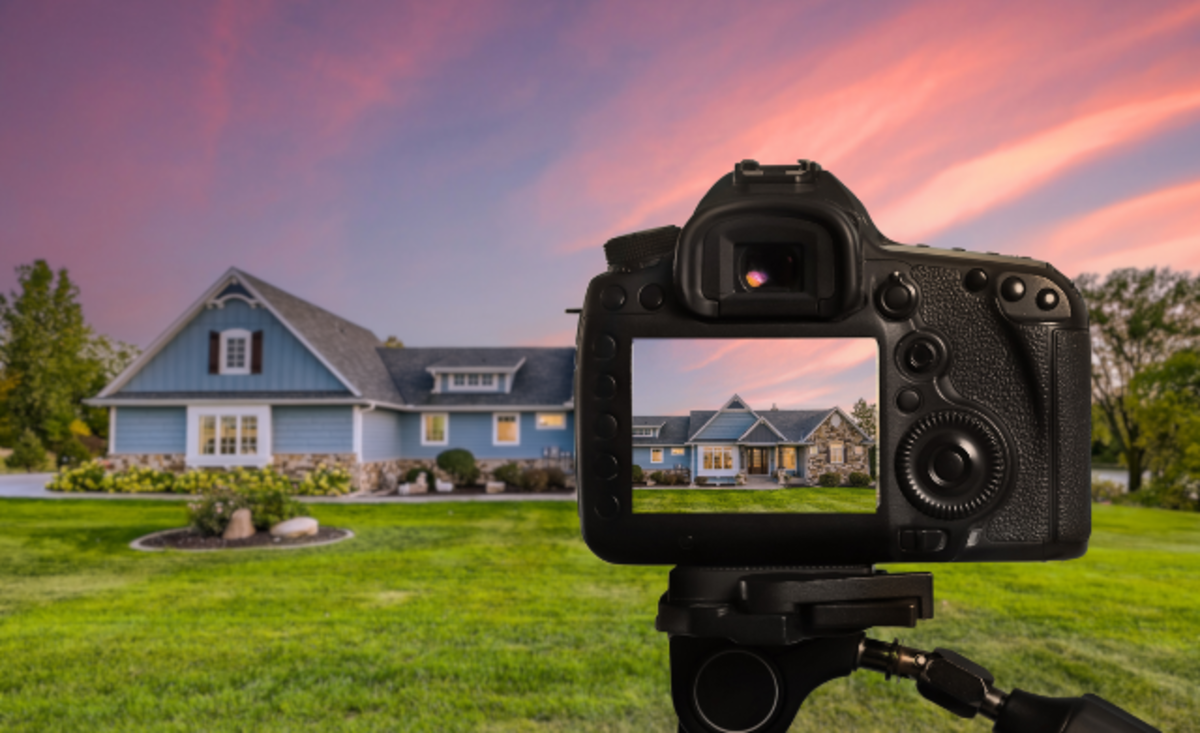
Is twilight photography worth it?
Often, yes, especially when:
- The home has strong exterior lighting, a clean facade, or a warm interior glow
- There’s a pool, deck, or view orientation that benefits from sunset light
- The home is in a price band where presentation expectations are higher
Twilight photos can elevate the perceived finish level, even if the home is not fully renovated. The key is that the home must be prepared to look good at twilight. If the yard is messy or lighting is inconsistent, twilight can backfire.
When does drone photography help?
Drone is most valuable when it clarifies:
- Lot shape on curving streets and cul-de-sacs
- Privacy and distance from neighbors
- Elevation and how the home sits relative to the street
- Proximity to greenbelts or the feel of the surrounding canopy
In areas like Cat Mountain, drone can also help explain view corridors and orientation. Done well, it reassures buyers that the setting is real, not a single lucky angle.
Do floor plans matter as much as photos?
In Northwest Hills, yes. A clean floor plan reduces uncertainty, and uncertainty is what makes buyers hesitate.
Floor plans are especially helpful for:
- Split-level homes
- Additions where the bedroom count is accurate but flow needs explanation
- Homes with multiple living areas that can be used in different ways
If there’s one “marketing move” that quietly supports top dollar, it’s making the home easy to understand.
What marketing sequence attracts serious buyers instead of casual clicks?
Marketing isn’t a single event. It’s a sequence. The strongest results usually come when everything launches together: photography, pricing, narrative, and timing.
Why does the launch week matter more than the second week?
The most motivated buyers are watching. They get alerts. They compare new listings against what they’ve already toured. If a home enters the market with weak photos or an unclear story and then “improves” later, many buyers never come back. They’ve already formed an opinion.
A clean launch plan typically includes:
- Prep completed before photography
- Photography, floor plan, and property details finalized before going live
- A showing plan that allows buyers to tour with minimal friction
- A clear offer deadline strategy only when demand supports it
If the home is likely to attract multiple offers, the plan should support that without creating chaos.
What does targeted digital marketing look like in a neighborhood like Northwest Hills?
Good marketing isn’t trying to reach everyone. It’s reaching likely buyers:
- Families prioritizing AISD patterns in 78731 and 78759
- Move-up buyers coming from central Austin who want more space and trees
- Out-of-state buyers who need to understand layout and setting before they fly in
I also see buyers who anchor on specific schools. If school zoning is a key part of the buyer pool, it helps to link directly to the campuses buyers ask about, like Highland Park Elementary. https://www.austinisd.org/schools/highlandpark
The goal is not to oversell. It’s to reduce the number of unanswered questions.
What local Northwest Hills patterns should your photos and marketing address?
Northwest Hills isn’t one uniform product. Micro-areas behave differently, and your marketing should reflect that.
What do Cat Mountain buyers tend to prioritize?
- Views and outdoor living that feels intentional
- Privacy and a sense of separation from the street
- Clean lines and a calmer, more modern presentation, even in older homes
For Cat Mountain, photos should not just show finishes. They should show horizon, deck scale, and how the interior connects to the setting.
What about Courtyard and Chimney Corners?
In these areas, I often see buyers paying attention to:
- Functional floor plans with everyday usability
- Kitchen-to-living connection and natural light
- Yard usability, including flat space and shade patterns
- The feel of the street: quiet, walkable pockets, and curb presence
Marketing should highlight how the home lives day-to-day. It’s less about dramatic features and more about comfort and rhythm.
What floor plan preferences show up again and again in Northwest Hills?
Across price points, the most common “yes” patterns include:
- A primary suite that feels separate, not an afterthought
- A real office space or flexible second living area
- Fewer odd level changes between kitchen and primary living spaces
- A backyard that feels usable, even if it’s not huge
Photography should support those preferences. If the office is small, shoot it in a way that shows it can hold a desk and still feel calm. If the backyard is shaded and pleasant, show it at a time of day when it reads that way.
What documentation and accuracy moves support top-dollar outcomes?
Buyers in Northwest Hills tend to do homework. When details don’t match, it creates distrust. Two practical resources come up often:
How do you verify basic property facts buyers check?
Many buyers will look up property records on the Travis Central Appraisal District site. https://traviscad.org/propertysearch/
That means it’s worth confirming basics like:
- Square footage reporting consistency
- Year built and additions
- Exemptions and ownership history context, when relevant
The point isn’t to litigate numbers. It’s to avoid surprises.
What about permits and renovation history?
If a home has meaningful improvements, buyers may ask what was permitted. The City of Austin Development Services portal is a common reference point. https://www.austintexas.gov/dsd
You don’t need a binder of paperwork to sell a home well, but you do want a clean story. When the story is clean, buyers stay focused on value instead of risk.
How do you balance “show-ready” with real life during showings?
In Northwest Hills, the homes that earn strong offers are often the ones that show consistently well for a week or two. That doesn’t mean living in a museum. It means keeping the baseline steady:
- Clear counters and sinks
- Floors and high-traffic surfaces clean
- Lights on, blinds consistent, temperature comfortable
- Pets managed and odors minimized
Marketing creates interest. Showings convert it. If the showing experience matches the photos, buyers feel grounded and confident.
Q&A: What do Northwest Hills sellers ask about photography and marketing?
How much does professional photography really matter if the home will sell anyway?
It matters because it influences which buyers show up and how they feel when they arrive. Strong photography typically increases showing quality and reduces discounting. In Northwest Hills, the difference often shows up in competitive pressure, not just speed.
Should we stage, or can we use our own furniture?
Often, your own furniture works well with the right editing and styling. Staging is most helpful when rooms feel empty, furniture is oversized for the space, or the home needs a more consistent style to photograph cleanly.
Is video necessary, or are photos and a floor plan enough?
For many Northwest Hills homes, photos and a floor plan do the heavy lifting. Video becomes more valuable when the home has a distinctive setting, unique architecture, or a layout that benefits from motion to understand flow.
What if our home isn’t fully updated?
That’s common here. The goal is to present the home honestly and remove avoidable distractions. Clean, bright, and well-sequenced photography helps buyers evaluate the home fairly, rather than assuming the worst.
How do we decide what to fix before listing?
The best approach is selective prep that reduces friction: paint touch-ups, lighting consistency, minor repairs that stand out in photos, and exterior cleanup. In Northwest Hills, buyers tend to accept “not new” more easily than they accept “not maintained.”
Conclusion
Top-dollar outcomes in Northwest Hills usually come from a simple idea: make the home easy to understand and easy to trust. That starts with photography that shows light, layout, and setting accurately, and it continues with marketing that speaks to how people actually shop in this neighborhood. If you’re thinking about selling in 78731 or 78759, it’s worth starting the conversation early, even if you’re a few months out. A calm plan tends to beat a rushed one.
#NWHills
Check out this article next